
CME INDIA Presentation by Dr. Shambo Samrat Samajdar,MBBS MD DM (Clinical Pharmacology) PG Dip Endo & Diabetes (RCP, UK) Consultant, Diabetes & Allergy-Asthma Therapeutics Specialty Clinic, Kolkata; Dr. Shashank R. Joshi, Endocrinologist, Mumbai; Dr. N. K. Singh, Editor-in Chief, CME INDIA, Dhanbad.
Introduction
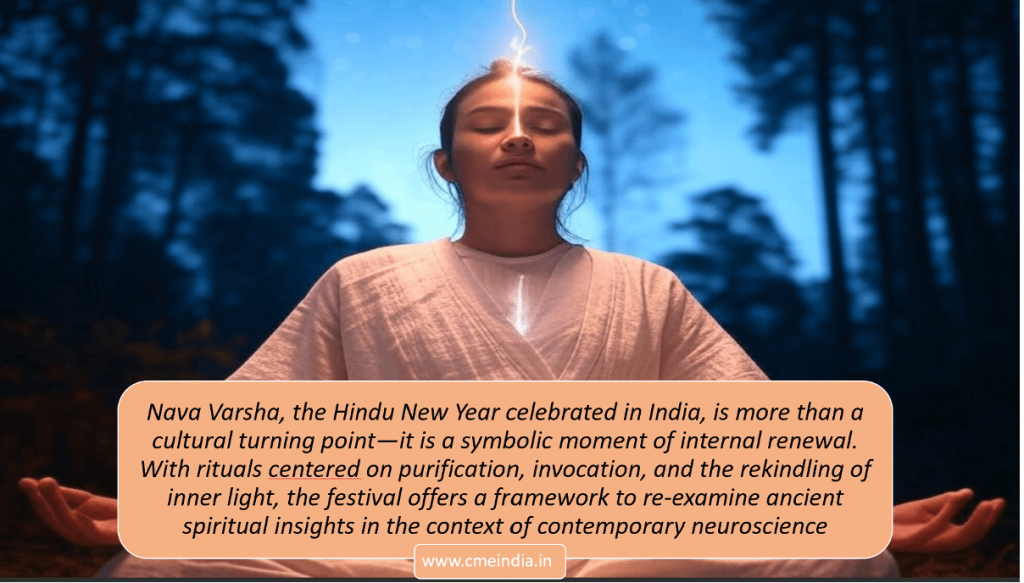
- Nava Varsha, the Hindu New Year celebrated in India, is more than a cultural turning point—it is a symbolic moment of internal renewal. With rituals centered on purification, invocation, and the rekindling of inner light, the festival offers a framework to re-examine ancient spiritual insights in the context of contemporary neuroscience. Across the millennia, yogic traditions have described the body not only as a biological vessel but as an energy matrix—an internal cosmos with its own geography of consciousness. The central channel, or Merudanda (spinal axis), becomes the stage upon which life force (prana) moves, ascending toward union with higher awareness.
- Modern biomedicine, in its study of autonomic regulation, brain-heart interactions, and the physiology of meditation, is now beginning to illuminate mechanisms that mirror these ancient intuitions. This review bridges these paradigms—yogic metaphors and modern physiology—highlighting how symbolic constructs such as the Jyotirlinga, chakras, Kundalini, and the Triveni Sangam may resonate with anatomical and neurophysiological structures relevant to internal medicine and psychophysiological well-being.
The Spine as the Axis of Light: Revisiting the Jyotirlinga
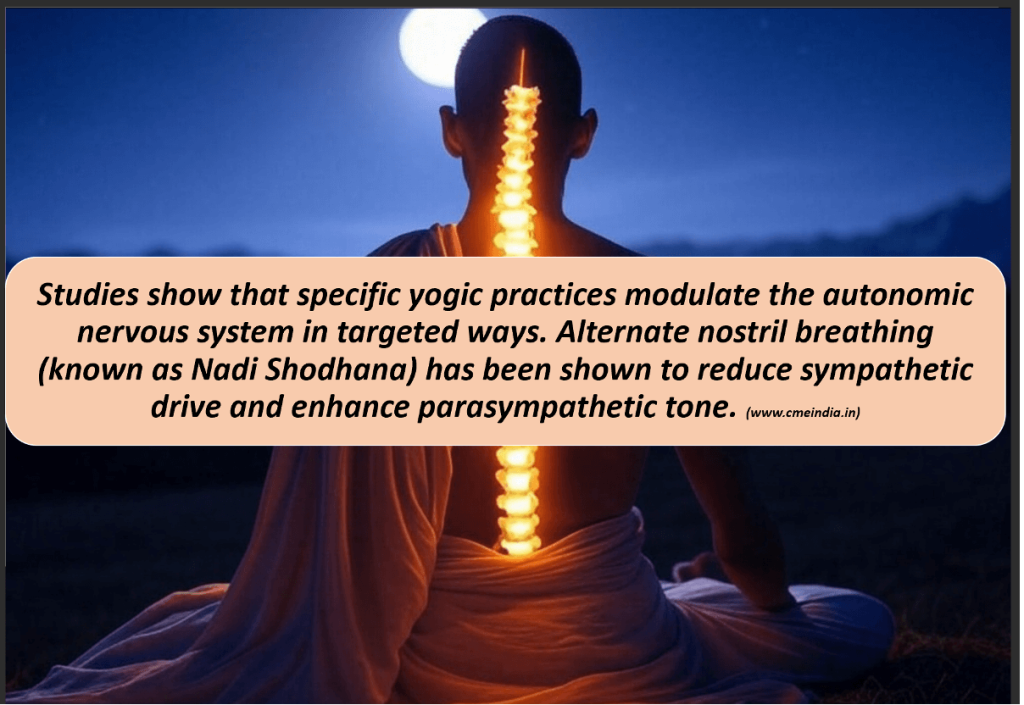
- In Shaivite tradition, a Jyotirlinga is a sacred pillar of light, a symbolic manifestation of infinite consciousness. Anatomically, the human spinal cord serves as the biological axis of consciousness—conveying sensory input, autonomic signals, and motor commands. Yogic texts liken this Merudanda to Mount Meru, the mythical axis mundi. When viewed through the lens of integrative physiology, the metaphor becomes rich with layered meaning: the spine as a conductor of light, a pillar of neuroelectrical activity, and the seat of transformation.
- Each segment of the spinal column houses neural plexuses and endocrine structures that align with traditional chakralocations. The Muladhara sits atop the pelvic plexus, Manipura near the solar plexus, and Anahata overlays the cardiac plexus. These overlaps suggest that yogis, through internal observation, may have intuited functional nexuses in the nervous and endocrine systems long before anatomical science charted them.
- Some traditions even equate the twelve Jyotirlingas of Shiva with twelve energy centers along the spine—paralleling the twelve thoracic vertebrae. While speculative, the symmetry is striking, suggesting a model where symbolic cosmology and segmental anatomy reflect a shared logic of layered organization and spiritual ascent.
Chakras and Autonomic Plexuses: Mapping the Mind-Body Interface
- Chakras are often misunderstood as esoteric constructs, yet they offer a surprisingly intuitive map of autonomic, endocrine, and emotional integration. Each of the seven classical chakras corresponds with a major nerve plexus and a nearby endocrine gland. From a systems physiology perspective, this alignment makes sense.
- Take the Manipura chakra—its association with fire and willpower mirrors the function of the solar plexus and adrenal glands, which regulate metabolic energy and sympathetic arousal. The Anahata chakra, positioned near the heart, is linked to love and balance—states mediated by vagal activity and the regulation of heart rate variability. The Vishuddha chakra, centered in the throat, governs expression and is closely tied to the vagus and laryngeal nerves, which influence both vocalization and parasympathetic outflow.
- These correlations are not merely poetic. Studies show that specific yogic practices modulate the autonomic nervous system in targeted ways. Alternate nostril breathing (known as Nadi Shodhana) has been shown to reduce sympathetic drive and enhance parasympathetic tone. Right-nostril breathing activates left hemispheric and sympathetic pathways, while left-nostril breathing favors parasympathetic balance. This lateralization mirrors the ancient division of Pingala and Ida nadis, energy channels said to modulate activity and calmness, respectively.
Kundalini and the Awakening of the Spinal Axis
- Perhaps no concept in yogic literature is as evocative—and as physiologically provocative—as Kundalini. Described as a coiled energy at the base of the spine, Kundalini is said to ascend through the central Sushumna channel, piercing each chakra and culminating in union at the crown. This journey mirrors the neurological activation from brainstem to cortex, from reflexive function to conscious awareness.
- Scientific explorations of Kundalini states—though nascent—have documented distinct physiological shifts. These include decreased respiratory rate, enhanced alpha and theta brain wave activity, and increased heart rate variability. Notably, the transition into these states often involves deep diaphragmatic breathing, shifts in EEG rhythm, and autonomic reorganization. Practitioners describe sensations of heat, light, or movement along the spine—possibly reflective of ascending activation through the reticular formation and brainstem nuclei.
- While the metaphor of a “serpent power” may challenge conventional language, the physiological correlates—heightened arousal with parasympathetic control, endocrine release, and emotional euphoria—are measurable and reproducible. Kundalini, in this framework, becomes a compelling candidate for future research into neuroplasticity, trauma recovery, and mind-body integration.
Mantra Meditation and the Neurocardiac Axis
- Among the simplest yet most profound practices in yoga is mantra repetition. The utterance of sacred syllables such as “Om” or “Shivoham” (meaning “I am Shiva”) combines breath regulation, vocal resonance, and focused attention. These elements together influence the brain-heart axis.
- Neuroimaging and HRV studies show that mantra chanting can deactivate limbic structures like the amygdala and hippocampus while increasing vagal tone—leading to a quieting of emotional reactivity and a promotion of parasympathetic dominance. Even short-term practice enhances high-frequency HRV components, indicating better cardiac vagal control. The mechanical vibration of sound through the vocal tract is thought to stimulate the auricular branch of the vagus nerve, offering a non-invasive pathway to modulate autonomic tone.
- Interestingly, the affirmation “I am Shiva” may also engage prefrontal regions involved in self-referential processing and identity restructuring. In clinical terms, this cognitive re-framing has parallels with positive psychology and trauma reprocessing techniques, suggesting that mantra may serve as both a somatic and narrative intervention.
The Inner Triveni: Ida, Pingala, and Sushumna in Autonomic Harmony
- The Triveni Sangam, where the Ganga, Yamuna, and the invisible Saraswati rivers meet, is revered as a sacred convergence. In yogic physiology, this metaphor maps onto the confluence of Ida, Pingala, and Sushumna nadis—subtle energy channels aligned with left-right hemispheric and autonomic balance. When breath flows evenly through both nostrils, it is said that Sushumna is activated, allowing for meditative absorption.
- Physiologically, this corresponds to a state of autonomic coherence—where sympathetic and parasympathetic branches are harmonized, baroreflex sensitivity is optimized, and HRV peaks. Alternate nostril breathing, which facilitates this balance, has been shown to improve mood, reduce systolic blood pressure, and enhance frontal EEG synchronization.
- This internal Triveni becomes a map for homeostasis, and the act of achieving balance through breath mirrors the principles of cardiac coherence now employed in biofeedback therapy. The yogic framing enriches this understanding with a narrative of spiritual union, but the physiological endpoint—autonomic stability and cognitive clarity—is strikingly familiar to modern science.
Clinical Implications and Future Horizons
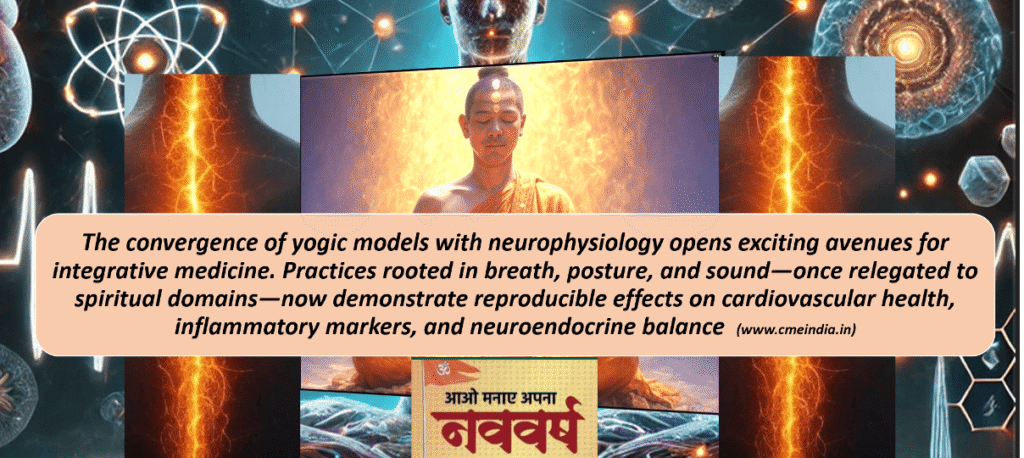
- The convergence of yogic models with neurophysiology opens exciting avenues for integrative medicine. Practices rooted in breath, posture, and sound—once relegated to spiritual domains—now demonstrate reproducible effects on cardiovascular health, inflammatory markers, and neuroendocrine balance. In conditions ranging from hypertension and arrhythmia to anxiety and inflammatory disorders, the autonomic nervous system plays a pivotal role. Techniques like alternate nostril breathing or mantra chanting offer non-pharmacologic means to restore autonomic equilibrium.
- Moreover, the yogic emphasis on spinal integrity, endocrine centers, and breath awareness presents a holistic template for somatic therapy—one that dovetails with emerging paradigms in trauma-informed care, psychocardiology, and vagal nerve stimulation. Whether one frames the practice in terms of Kundalini ascent or vagal upregulation, the outcomes—reduced stress, improved resilience, enhanced coherence—are measurable and significant.
Conclusion
- In the symbolic light of Naba Barsha, we are reminded that renewal is not only seasonal but internal. The ancient vision of the body as a sacred geography—spine as Jyotirlinga, chakras as control hubs, breath as a river of life—now finds resonance in biomedical inquiry.
- Integrating these perspectives does not dilute science; it enriches it. As we seek more effective, affordable, and culturally resonant strategies for chronic disease and emotional imbalance, the wisdom of the yogic body awaits rediscovery—not as metaphor alone, but as a map toward physiological mastery and inner equilibrium.
References:
- Saher S. Anatomical Correlation of Vishuddha Chakra with Cervical Plexus. Biomed Rev J Basic Appl Med Sci. 2023;10(1):31–3.
- Shiva and Lingam: Unraveling the Symbolism and Physiology of Reproductive Energy [Internet]. Adikka Channels. [cited 2025 Mar 28]. Available from: https://adikkachannels.com/shiva-and-lingam-unraveling-the-symbolism-and-physiology-of-reproductive-energy/
- Demystifying Kundalini. Kundalini is like engine fuel and energy is like ignition from spark plug that produce awakening blast [Internet]. 2021 Jul 11 [cited 2025 Mar 28]. Available from: https://demystifyingkundalini.com/2021/07/11/kundalini-is-assisted-by-dhyana-shivbindu-human-form-deity-shivling-jyotirlinga-breath-hold-brain-pressure-self-learning-positive-thinking-relentless-practice-selflessness-perseverance-or-p/
- Ghiya S, Lee CM. Influence of alternate nostril breathing on heart rate variability in non-practitioners of yogic breathing. Int J Yoga. 2012;5(1):66–9.
- Pal GK, Agarwal A, Karthik S, Pal P, Nanda N. Slow yogic breathing through right and left nostril influences sympathovagal balance, heart rate variability, and cardiovascular risks in young adults. N Am J Med Sci. 2014;6(3):145–51.
- Kalyani BG, Venkatasubramanian G, Arasappa R, Rao NP, Kalmady SV, Behere RV, et al. Neurohemodynamic correlates of ‘OM’ chanting: A pilot functional magnetic resonance imaging study. Int J Yoga. 2011;4(1):3–6.
- Arambula P, Peper E, Kawakami M, Gibney KH. The physiological correlates of Kundalini Yoga meditation: a study of a yoga master. Appl Psychophysiol Biofeedback. 2001;26(2):147–53.
- Maxwell RW, Katyal S. Characteristics of Kundalini-Related Sensory, Motor, and Affective Experiences During Tantric Yoga Meditation. Front Psychol. 2022;13:863091.
- Inbaraj G, Rao RM, Ram A, Bayari SK, Belur S, Prathyusha PV, et al. Immediate Effects of OM Chanting on Heart Rate Variability Measures Compared Between Experienced and Inexperienced Yoga Practitioners. Int J Yoga. 2022;15(1):52–8.
- Telles S, Sharma SK, Balkrishna A. Blood pressure and heart rate variability during yoga-based alternate nostril breathing practice and breath awareness. Med Sci Monit Basic Res. 2014;20:184–93.
- Capilupi MJ, Kerath SM, Becker LB. Vagus Nerve Stimulation and the Cardiovascular System. Cold Spring Harb Perspect Med. 2020;10(2):a034173.

Discover CME INDIA

- Explore CME INDIA Repository
- Examine CME INDIA Case Study
- Read History Today in Medicine
- Register for Future CMEs