
CME INDIA Presentation by Dr. Shambo S. Samajdar (Diabetes and Allergy-Asthma Therapeutics Specialty Clinic, Kolkata), Dr. Shashank R. Joshi (Department of Endocrinology, Joshi Clinic, Mumbai).
Abstract
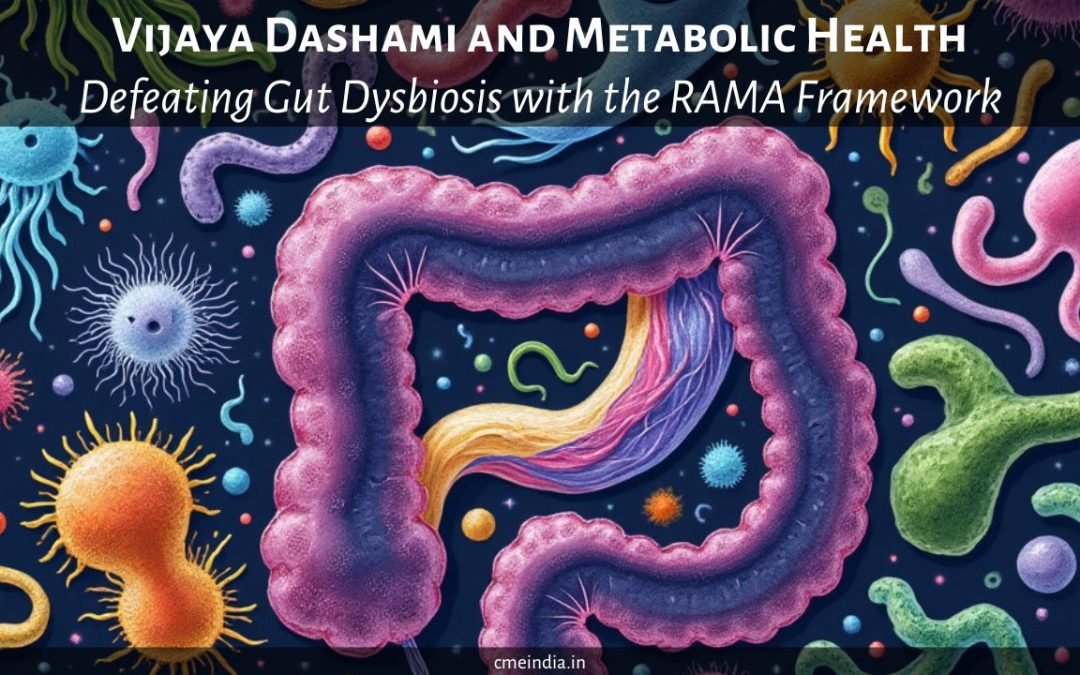
Vijaya Dashami, symbolizing the triumph of good over evil, offers a profound message for modern healthcare, particularly in the battle against metabolic diseases. This review explores the concept of gut dysbiosis, a critical factor in the development of metabolic disorders such as obesity, type 2 diabetes, and metabolic syndrome. Drawing a parallel with the ten-headed Ravana from Indian mythology, we identify ten etiological factors contributing to metabolic syndrome and gut dysbiosis, including dietary changes, sedentary lifestyle, stress, sleep disturbances, and environmental pollutants. To guide recovery, we propose the mnemonic RAMA (Right Eating, Activity, Mindfulness, Adequate Sleep) as a holistic approach to metabolic health. The metaphor of Durga slaying Mahishasura underscores the importance of overcoming internal and external disruptions to restore gut and metabolic balance, celebrating the ultimate victory of health and harmony.
Introduction
In the ancient epic Ramayana, the demon Ravana is depicted with ten heads, each representing a different form of evil. Similarly, metabolic diseases, particularly metabolic syndrome, arise from multiple interconnected etiologies, with gut dysbiosis playing a central role. Gut dysbiosis refers to the imbalance of gut microbiota that disrupts host metabolism, leading to inflammation, insulin resistance, and lipid metabolism disturbances (1). Vijaya Dashami, the festival celebrating the victory of Lord Rama over Ravana, and Goddess Durga over Mahishasura, carries a timeless message for addressing the “demonic” etiologies of metabolic syndrome.
This review article explores ten critical factors that contribute to gut dysbiosis and metabolic syndrome. Drawing on the symbolism of Vijaya Dashami, we propose lifestyle changes that align with traditional wisdom to restore gut health and metabolic balance. As we battle the modern-day “Mahishasura” of dysbiosis, we can reclaim our health by addressing each of these ten factors.
The Ten Heads of Ravana: Critical Etiologies of Gut Dysbiosis and Metabolic Syndrome
1. Dietary Changes (1, 2)
The modern diet, rich in processed foods, refined sugars, and unhealthy fats, contributes to a significant reduction in gut microbial diversity. This shift promotes pro-inflammatory bacteria that exacerbate insulin resistance and chronic inflammation—hallmarks of metabolic syndrome. A return to a balanced diet, rich in fiber, whole grains, and fermented foods, can restore microbial harmony and metabolic health.
2. Sedentary Lifestyle (3)
Physical inactivity reduces the abundance of beneficial bacteria, such as Akkermansia muciniphila, and impairs gut microbial diversity. Regular physical activity, including practices like yoga, can improve gut health and contribute to better metabolic outcomes by enhancing microbial diversity and supporting energy homeostasis.
3. Qualitative and Quantitative Changes in Sleep (4)
Sleep disturbances, including poor sleep quality and insufficient duration, disrupt the gut microbiome, contributing to metabolic disorders such as obesity and type 2 diabetes. Sleep deprivation alters gut microbial composition and leads to metabolic imbalances. Prioritizing adequate, high-quality sleep helps realign circadian rhythms and promotes gut and metabolic health.
4. Chronic Stress (5)
Chronic stress elevates cortisol levels, increasing gut permeability and allowing harmful bacteria to enter the bloodstream. This triggers systemic inflammation and worsens metabolic conditions. Stress-reducing practices such as meditation and mindfulness, derived from traditional teachings, play a crucial role in maintaining gut health by reducing inflammation and restoring microbial balance.
5. Exposure to Chemicals via Food or Other Sources (6, 7)
Antibiotics, endocrine disruptors, and pesticides significantly impact gut health. Frequent antibiotic use disrupts microbial homeostasis, depleting beneficial bacteria. Endocrine disruptors found in plastics and pesticides alter hormonal balance, contributing to obesity and insulin resistance. Reducing exposure to these chemicals through mindful food choices and lifestyle changes can help protect gut integrity.
6. Deviation from Our Ancestors’ Teachings: Yoga and Meditation (8)
Yoga and meditation, practices embraced by our ancestors, have been shown to enhance gut health by reducing stress and promoting better digestion and immune function. Modern lifestyles have led to a deviation from these teachings, contributing to the rise in gut dysbiosis and metabolic disturbances. Reintegrating these practices can foster physical, mental, and metabolic well-being.
7. Disruption of Circadian Rhythm (9)
The gut microbiota follows a circadian rhythm that is closely aligned with our body’s biological clock. Disruptions in circadian rhythms, caused by shift work, irregular eating, or inconsistent sleep patterns, impair gut microbial diversity and lead to metabolic imbalances. Realigning our daily routines with natural circadian rhythms is key to restoring gut health.
8. Smoking and Smoking-Induced Epigenetic Changes (10)
Smoking is associated with profound changes in gut microbiota, leading to increased inflammation and oxidative stress. Epigenetic changes induced by smoking exacerbate these effects. Quitting smoking and avoiding exposure to secondhand smoke can protect gut health and reduce the risk of metabolic diseases.
9. Alcohol Consumption (11)
Excessive alcohol intake impairs gut barrier function, allowing harmful substances to enter circulation and trigger systemic inflammation. Alcohol consumption is also linked to metabolic disturbances such as dyslipidemia and insulin resistance. Reducing alcohol intake can improve gut barrier integrity and reduce the risk of metabolic diseases.
10. Environmental Pollution (12)
Airborne pollutants and toxins, particularly particulate matter, can alter gut microbiota through ingestion or inhalation, leading to increased gut permeability and systemic inflammation. Addressing environmental exposure through preventive measures and detoxifying practices can support gut health and reduce susceptibility to metabolic diseases.
RAMA: A Holistic Approach to Metabolic Health (1,2)
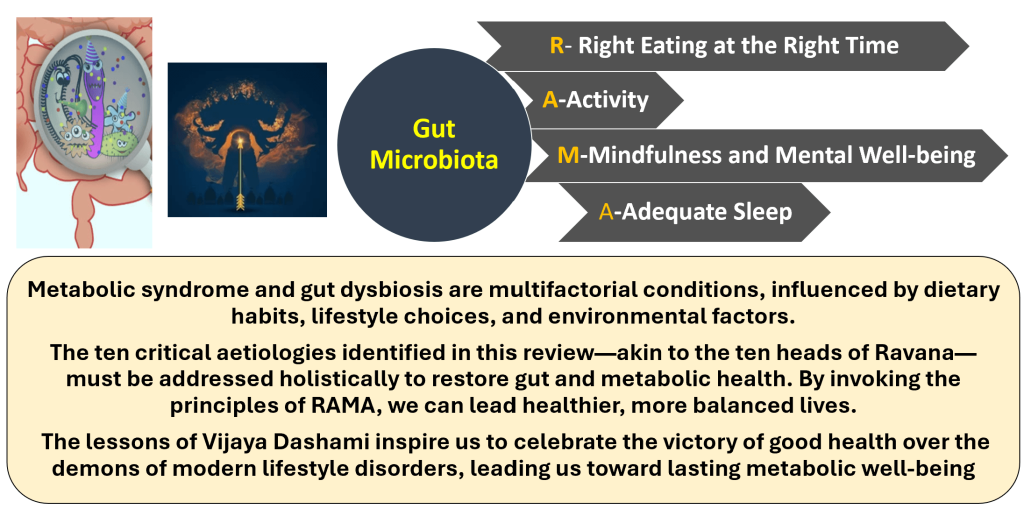
In the spirit of Vijaya Dashami, we introduce RAMA, a mnemonic designed to guide individuals toward lifestyle changes that can restore gut and metabolic health:
R: Right Eating at the Right Time – Consuming a balanced, fiber-rich diet that includes fermented foods and antioxidants supports beneficial gut bacteria and promotes metabolic health.
A: Activity – Regular physical exercise, including yoga, enhances gut microbial diversity and supports energy metabolism.
M: Mindfulness and Mental Well-being – Meditation and stress-reducing practices are crucial for reducing gut inflammation and promoting a healthy microbiome.
A: Adequate Sleep – Prioritizing sufficient, high-quality sleep is essential for aligning with circadian rhythms and supporting microbial diversity.
By following the RAMA framework, individuals can achieve a holistic approach to health that aligns with the wisdom of ancient traditions and modern science.
Vijaya Dashami: A Spiritual Message for Gut Health
- In Indian mythology, Mahishasura symbolizes egoism and disorder, traits that disrupt inner balance. Similarly, gut dysbiosis represents a state of imbalance within the body, contributing to metabolic diseases. The victory of Goddess Durga over Mahishasura represents the triumph of health and harmony over chaos and disease. Through the symbolic destruction of Mahishasura within ourselves, we can reclaim our gut health and metabolic balance.
- Vijaya Dashami, which celebrates the defeat of Ravana by Lord Rama, also reminds us to address the ten critical etiologies of metabolic syndrome, symbolized by Ravana’s ten heads. By following a lifestyle rooted in right eating, regular activity, mindfulness, and proper sleep, we can overcome the metabolic challenges of the modern world, much like the victory of Lord Rama and Goddess Durga over their respective adversaries.
Conclusion
- Metabolic syndrome and gut dysbiosis are multifactorial conditions, influenced by dietary habits, lifestyle choices, and environmental factors. The ten critical etiologies identified in this review—akin to the ten heads of Ravana—must be addressed holistically to restore gut and metabolic health. By invoking the principles of RAMA, we can lead healthier, more balanced lives. The lessons of Vijaya Dashami inspire us to celebrate the victory of good health over the demons of modern lifestyle disorders, leading us toward lasting metabolic well-being.
Acknowledgments
We seek the blessings of Goddess Durga to guide us in overcoming the “Mahishasura” of gut dysbiosis and restoring metabolic balance. The wisdom of Lord Rama inspires us to make lifestyle changes that lead to holistic health and harmony.
Further Reading:
- Hur KY, Lee MS. Gut Microbiota and Metabolic Disorders. Diabetes Metab J. 2015 Jun;39(3):198-203. doi: 10.4093/dmj.2015.39.3.198.
- Wolters M, Ahrens J, Romaní-Pérez M, Watkins C, Sanz Y, Benítez-Páez A, Stanton C, Günther K. Dietary fat, the gut microbiota, and metabolic health – A systematic review conducted within the MyNewGut project. Clin Nutr. 2019 Dec;38(6):2504-2520. doi: 10.1016/j.clnu.2018.12.024.
- Monda V, Villano I, Messina A, Valenzano A, Esposito T, Moscatelli F, Viggiano A, Cibelli G, Chieffi S, Monda M, Messina G. Exercise Modifies the Gut Microbiota with Positive Health Effects. Oxid Med Cell Longev. 2017;2017:3831972. doi: 10.1155/2017/3831972. Epub 2017 Mar 5.
- Sun J, Fang D, Wang Z, Liu Y. Sleep Deprivation and Gut Microbiota Dysbiosis: Current Understandings and Implications. Int J Mol Sci. 2023 May 31;24(11):9603. doi: 10.3390/ijms24119603.
- Madison A, Kiecolt-Glaser JK. Stress, depression, diet, and the gut microbiota: human-bacteria interactions at the core of psychoneuroimmunology and nutrition. Curr Opin Behav Sci. 2019 Aug;28:105-110. doi: 10.1016/j.cobeha.2019.01.011. Epub 2019 Mar 25.
- Patangia DV, Anthony Ryan C, Dempsey E, Paul Ross R, Stanton C. Impact of antibiotics on the human microbiome and consequences for host health. Microbiologyopen. 2022 Feb;11(1):e1260. doi: 10.1002/mbo3.1260.
- Hampl R, Stárka L. Endocrine disruptors and gut microbiome interactions. Physiol Res. 2020 Sep 30;69(Suppl 2):S211-S223. doi: 10.33549/physiolres.934513.
- Sun Y, Ju P, Xue T, et al. Alteration of faecal microbiota balance related to long-term deep meditation. General Psychiatry 2023;36:e100893. doi: 10.1136/gpsych-2022-100893
- Bishehsari F, Voigt RM, Keshavarzian A. Circadian rhythms and the gut microbiota: from the metabolic syndrome to cancer. Nat Rev Endocrinol. 2020 Dec;16(12):731-739. doi: 10.1038/s41574-020-00427-4. Epub 2020 Oct 26.
- 10.Shapiro H, Goldenberg K, Ratiner K, Elinav E. Smoking-induced microbial dysbiosis in health and disease. Clin Sci (Lond). 2022 Sep 30;136(18):1371-1387. doi: 10.1042/CS20220175.
- 11.Chen G, Shi F, Yin W, Guo Y, Liu A, Shuai J, Sun J. Gut microbiota dysbiosis: The potential mechanisms by which alcohol disrupts gut and brain functions. Front Microbiol. 2022 Jul 29;13:916765. doi: 10.3389/fmicb.2022.916765.
- 12.Gupta N, Yadav VK, Gacem A, Al-Dossari M, Yadav KK, Abd El-Gawaad NS, Ben Khedher N, Choudhary N, Kumar P, Cavalu S. Deleterious Effect of Air Pollution on Human Microbial Community and Bacterial Flora: A Short Review. Int J Environ Res Public Health. 2022 Nov 22;19(23):15494. doi: 10.3390/ijerph192315494.
Discover CME INDIA

- Explore CME INDIA Repository
- Examine CME INDIA Case Study
- Read History Today in Medicine
- Register for Future CMEs
Informative and useful