

CME INDIA Presentation by Dr. Shambo Samrat Samajdar (JMN Medical College and Hospital, Nadia, West Bengal), Dr. Shashank R. Joshi (Joshi Clinic, Mumbai, Maharashtra), Dr. N. K. Singh (Diabetes and Heart Research Centre, Dhanbad, Jharkhand), Dr. Jitendra Singh (Minister of Science and Technology and Minister of Earth Sciences, Government of India, New Delhi).
Abstract
Ayurveda, the ancient Indian system of holistic medicine, has provided comprehensive health guidelines for millennia. These guidelines, passed down through aphorisms, emphasize key aspects of health, such as diet, lifestyle, and mental well-being. With the rising incidence of metabolic disorders, including obesity, type 2 diabetes, and cardiovascular diseases, there is increasing interest in integrating traditional wisdom with modern medical practices. This review explores classical Sanskrit health aphorisms and interprets their meaning in the context of contemporary metabolic health science. Our objective is to assess the relevance of ancient Indian health practices in addressing current metabolic challenges and discuss how Ayurvedic principles can complement modern healthcare systems. Additionally, the role of Lord Dhanvantari, the divine figure associated with Ayurveda, is examined, focusing on how his teachings continue to influence the integration of holistic health approaches into contemporary medicine.
Introduction
The global prevalence of metabolic disorders, such as obesity, insulin resistance, dyslipidemia, hypertension, and type 2 diabetes, is increasing at an alarming rate. Metabolic syndrome, which clusters these conditions, has become a significant public health issue, leading to increased morbidity and mortality. The rise of lifestyle-related diseases can be attributed to poor dietary choices, physical inactivity, chronic stress, and sleep disturbances1. Ayurveda, a traditional health system practiced in India for over 3,000 years, offers a holistic approach to health, addressing many of the root causes of these disorders.
Ayurveda emphasizes balance between the body, mind, and spirit as the foundation of health. Its principles resonate with modern understandings of physiology, nutrition, and lifestyle management. Ancient Indian sages codified these health principles into succinct aphorisms, providing guidance on maintaining optimal health2. This review will explore a few aphorisms, interpreting their meaning through the lens of modern metabolic health science. We will also discuss the role of Lord Dhanvantari, the deity associated with Ayurveda, and examine how Ayurvedic principles align with and complement modern medical practices.
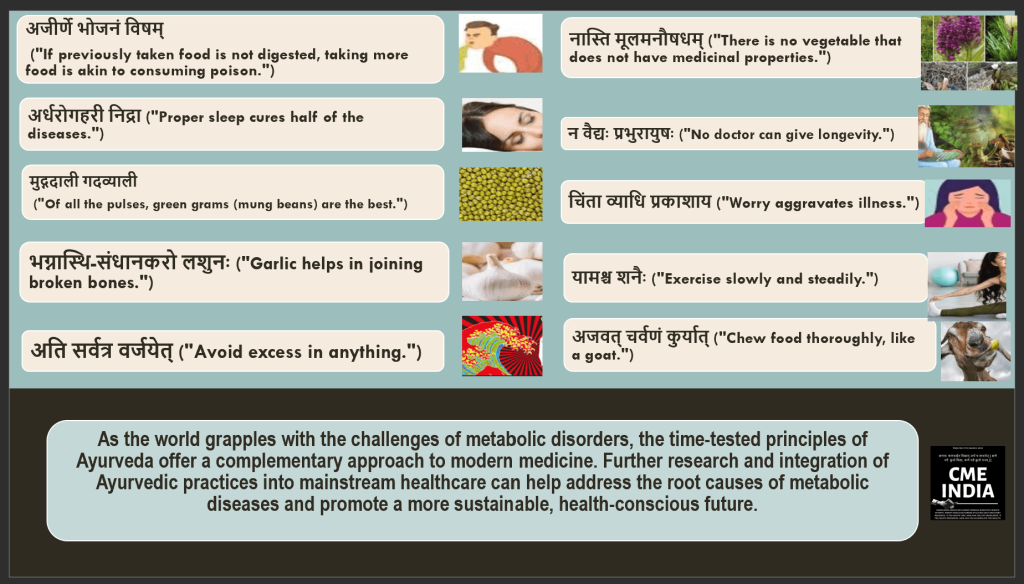
Ancient Sanskrit Health Aphorisms and Modern Metabolic Health:

1. “If previously taken food is not digested, taking more food is akin to consuming poison.”
This aphorism highlights the importance of recognizing and respecting the body’s digestive processes. In contemporary medical science, the concept of indigestion leading to metabolic disorders is well supported. Overeating before the digestion of a prior meal can contribute to gastrointestinal distress, which is linked to insulin resistance, obesity, and gut dysbiosis. Evidence from studies on intermittent fasting and time-restricted eating shows that giving the digestive system sufficient time to rest between meals can improve insulin sensitivity, reduce systemic inflammation, and promote better metabolic outcomes3.

2. “Proper sleep cures half of the diseases.”
Sleep plays a critical role in maintaining metabolic health. Chronic sleep deprivation has been shown to disrupt circadian rhythms, leading to metabolic dysregulation and hormonal imbalances. Poor sleep alters the balance of ghrelin (the hunger hormone) and leptin (the satiety hormone), causing increased appetite and cravings for high-calorie, sugary foods4. Additionally, studies have demonstrated that inadequate sleep can increase insulin resistance and raise the risk of type 2 diabetes5. Adequate and regular sleep is thus essential for preventing and managing metabolic disorders.

3. “Of all the pulses, green grams i.e mung beans are the best.”
Mung beans (Vigna radiata) are highly valued in both traditional and modern nutrition due to their rich nutrient profile. Research confirms that mung beans are a good source of plant-based protein, fiber, antioxidants, and bioactive compounds with anti-inflammatory and anti-diabetic properties. Their high fiber content helps regulate blood sugar levels and promotes beneficial gut bacteria, which play a key role in metabolic health6. Furthermore, the low glycemic index of mung beans makes them an ideal food for individuals with type 2 diabetes, as they prevent rapid spikes in blood glucose levels7.

4. “Garlic helps in joining broken bones.”
While the specific claim of bone healing is not well-supported in modern medicine, garlic (Allium sativum) is known for its health-promoting properties, particularly in cardiovascular health. Garlic’s anti-inflammatory and antioxidant compounds, such as allicin, can reduce oxidative stress and improve lipid profiles by lowering cholesterol and triglycerides8. Garlic may indirectly support tissue healing by improving blood circulation and reducing inflammation, which are critical factors in the recovery of injured tissues.

5. “Avoid excess in anything.”
Moderation is a core principle of both Ayurveda and modern nutrition. Overeating—whether it involves high-calorie processed foods or healthy foods—can lead to metabolic dysregulation. Excess caloric intake contributes to weight gain, which in turn increases the risk of insulin resistance and type 2 diabetes9. Maintaining a balanced diet, with appropriate portions of proteins, carbohydrates, and fats, is essential for preventing metabolic disorders. Overconsumption of processed foods rich in sugars and unhealthy fats has been shown to exacerbate conditions such as metabolic syndrome and cardiovascular disease10.

6. “There is no vegetable that does not have medicinal properties.”
The health benefits of vegetables are well-documented in modern nutritional science. Vegetables provide essential vitamins, minerals, antioxidants, and phytonutrients that are critical for metabolic health. Leafy greens and cruciferous vegetables, such as broccoli and kale, contain compounds that enhance detoxification pathways and reduce oxidative stress11. Fibre-rich vegetables support gut health by promoting a diverse gut microbiome, which is associated with improved insulin sensitivity and reduced systemic inflammation12. The inclusion of a variety of vegetables in the diet is a cornerstone of both metabolic health and disease prevention.

7. “No doctor can give longevity.”
This aphorism emphasizes the limitations of medical interventions in prolonging life and underscores the importance of prevention and self-care. While modern medicine excels in treating diseases, preventing the onset of chronic conditions such as diabetes and cardiovascular disease remains heavily dependent on lifestyle management. Factors such as diet, physical activity, stress reduction, and adequate sleep are crucial for long-term health and longevity. This perspective aligns with the growing emphasis on preventive medicine in modern healthcare13.

8. “Worry aggravates illness.”
Chronic stress has a well-established role in the development and progression of metabolic disorders. The activation of the hypothalamic-pituitary-adrenal (HPA) axis during prolonged stress increases cortisol levels, promoting fat storage, particularly visceral fat, and contributing to insulin resistance and metabolic syndrome14. Stress management techniques such as meditation, yoga, and mindfulness—central to Ayurvedic practice—have been shown to reduce cortisol levels, improve glycemic control, and lower the risk of cardiovascular diseases15, 16.

9. “Exercise slowly and steadily.”
Regular, moderate exercise is essential for maintaining metabolic health. Ayurveda’s recommendation for steady, sustainable physical activity aligns with current guidelines that prioritize consistency over intensity. High-intensity exercise can increase oxidative stress and the risk of injury, particularly in individuals who are untrained or have pre-existing conditions17. Low-impact exercises such as yoga, walking, and aerobic activities improve insulin sensitivity, enhance cardiovascular health, and reduce the risk of metabolic syndrome18.

10. “Chew food thoroughly, like a goat.”
Chewing food thoroughly is essential for proper digestion, as it allows food to mix with digestive enzymes in saliva and initiates the breakdown of carbohydrates. Research shows that eating slowly and chewing thoroughly can prevent overeating by allowing the brain sufficient time to register satiety signals19. This practice is particularly beneficial for managing portion sizes and preventing weight gain, which is crucial for preventing metabolic disorders such as obesity and type 2 diabetes.
Ayurvedic Concepts and Their Integration with Metabolic Health
1. Gut Health and the Microbiome
Ayurveda’s emphasis on digestive health (Agni) is supported by modern research on the gut microbiome. The gut microbiota plays a critical role in nutrient absorption, immune regulation, and metabolic health. Dysbiosis, or an imbalance in gut bacteria, has been linked to metabolic disorders such as obesity, insulin resistance, and inflammation20. Ayurvedic practices that promote gut health, such as consuming fermented foods and dietary fibers, align with modern recommendations for maintaining a healthy gut microbiome21.
2. Intermittent Fasting and Time-Restricted Eating
The Ayurvedic recommendation to eat only when hungry and allow time for digestion mirrors modern approaches to intermittent fasting and time-restricted eating. These practices have been shown to improve metabolic flexibility, enhance fat oxidation, and lower insulin levels22. Clinical studies on intermittent fasting demonstrate its potential to improve glucose metabolism, reduce inflammation, and promote weight loss—key factors in maintaining metabolic health23.
3. Circadian Rhythms and Metabolic Health
Ayurveda’s focus on daily routines (Dinacharya) and maintaining balance through consistent wake and sleep times is supported by research on circadian rhythms and their role in metabolic regulation. Disruptions in circadian rhythms, such as irregular sleep patterns or late-night eating, increase the risk of metabolic disorders, including obesity, type 2 diabetes, and cardiovascular diseases24. Aligning eating patterns with natural circadian rhythms has been shown to improve insulin sensitivity and glucose metabolism25.
Lord Dhanvantari: The Divine Physician
Lord Dhanvantari, regarded as the god of Ayurveda, symbolizes the integration of spirituality and science in the field of healing. According to Hindu mythology, Dhanvantari emerged from the ocean with the pot of Amrita (nectar of immortality), representing the healing power of Ayurveda. His teachings emphasize balance and the prevention of disease through diet, lifestyle, and natural remedies26.
In modern medicine, Ayurvedic principles such as personalized treatment (Prakriti) and the use of herbal remedies continue to gain relevance. Ayurvedic herbs like Ashwagandha, Triphala, and Turmeric have been extensively studied for their anti-inflammatory, antioxidant, and adaptogenic properties27. These herbs have shown potential in managing metabolic disorders by improving glucose metabolism, enhancing insulin sensitivity, and reducing chronic inflammation28.
Integration of Ayurveda into Modern Healthcare Systems
The Indian government’s recognition of Ayurveda, particularly through the establishment of National Ayurveda Day, underscores the growing interest in integrating traditional medicine with modern healthcare. The Ministry of AYUSH (Ayurveda, Yoga & Naturopathy, Unani, Siddha, and Homeopathy) promotes research and development in Ayurveda, particularly its application in managing non-communicable diseases such as metabolic syndrome29.
Ayurveda’s holistic approach, which considers diet, lifestyle, and mental well-being, complements modern medical practices. Clinical trials have demonstrated the efficacy of Ayurvedic interventions in managing metabolic disorders. For example, Guduchi (Tinospora cordifolia) has shown promise in managing type 2 diabetes, and Triphala has been found to improve gut health and metabolic outcomes30. Future research should focus on further validating these interventions through randomized controlled trials, with the goal of integrating them into mainstream healthcare systems.
Conclusion
Ancient Indian health practices, as reflected in Ayurvedic aphorisms, offer valuable insights into the prevention and management of metabolic disorders. These guidelines emphasize balance, moderation, and harmony between the body, mind, and environment, aligning with modern scientific principles of metabolic health. Integrating Ayurvedic practices with contemporary healthcare approaches has the potential to create a more comprehensive model for addressing the global epidemic of metabolic diseases.
The wisdom of Ayurveda, embodied by Lord Dhanvantari, continues to inspire healthcare practitioners and researchers. As the world grapples with the challenges of metabolic disorders, the time-tested principles of Ayurveda offer a complementary approach to modern medicine. Further research and integration of Ayurvedic practices into mainstream healthcare can help address the root causes of metabolic diseases and promote a more sustainable, health-conscious future.
CME INDIA Tail Piece
By Dr. D.P. Khaitan , MD (General Medicine) , Gaya.
This article on ‘Revisiting Ancient Indian Health Practices : Implications for Modern Metabolic Health Care’ would prove itself a new milestone in building the concept for managing the metabolic disorders under the conjoint efforts of Ayurvedic principles with those of modern healthcare system. It would be a holistic approach to re-setup the health of suffering humanity from the burden of metabolic disorders , namely obesity , insulin resistance , dyslipidemia , hypertension , Type 2 Diabetes , cardiovascular diseases , etc.
This group of authors who have presented this analytic review deserves a special thanks with salutation – they have tried their best to revive the glory of Ayurveda in searching the basic principles which are also within the accepted perview of modern healthcare system. The authors have truly realized the fact that health is not valued until sickness comes and metabolic health is the foundation of vitality of human health, which is gifted by cultivating certain principles , as laid down by the science of Ayurveda , and approved by modern healthcare system as well.
The wisdom of Ayurveda as embodied within this ancient science of medicine continues to instill certain ‘Health Aphorisms’ , the time tested principles for promoting the health. A special emphasis how to keep the metabolic health in intactness has beeen suggested , as covered under the subheads of food habits , proper sleep and exercise , etc. They have rightly mentioned that the beneficial food habits must be imparted to the general population. Food should not be accessed only in the term of calories intake and accordingly , the following food habits must be communicated to the general public:
If previously taken food is not digested , taking more food is akin to poison.
Chew food thoroughly like a goat.
Of all the pulses , green grams i.e. moong beans are the best.
There is no vegetable that does not have medicinal properties.
Garlic helps in joining broken bones
Intermittent fasting and time-restricted eating habits
They have also evaluated the wonderful value of sleep by saying that proper sleep cures half of the diseases. And equal emphasis should also be extended to regular exercise with slowly and steadily pacing steps. They have also mentioned the principle of moderation in having the quantum and quality of nutrition in the diet. It is also a realized fact that worry aggravates illness , including those of metabolic disorders as well.
All the ‘Health Aphorisms’ as laid down in the article operate as per the modern principle of oxidative stress , commonly associated with metabolic disorders. This oxidative stress may be understood as a hazardous cellular health disruption by unbalanced bombardment of ‘Reactive Oxygen Species’ (ROS). In metabolic disorders ROS can cause mitochondrial dysfunction – the disruption in the production of energy , the chemical reactions leading to energy molecules (ATP) production become impaired to a greater extent. The health practices of lifestyle changes may help in reducing oxidative stress.
If the life on this planet is to be sustained , there is a dire need of understanding Ancient Indian health practices as reflected and approved also in modern healthcare system , otherwise no power on the cosmos can prevent the premature wiping out of human race from the earth.
The Indian government must recognise the importance in integrating the ancient medicine of Ayurveda with that of modern healthcare system , then and there only would be the possibility of emerging a solution for controlling the metabolic health hazards.
References:
- Ambroselli D, Masciulli F, Romano E, Catanzaro G, Besharat ZM, Massari MC, Ferretti E, Migliaccio S, Izzo L, Ritieni A, Grosso M, Formichi C, Dotta F, Frigerio F, Barbiera E, Giusti AM, Ingallina C, Mannina L. New Advances in Metabolic Syndrome, from Prevention to Treatment: The Role of Diet and Food. Nutrients. 2023 Jan 26;15(3):640. doi: 10.3390/nu15030640.
- Jaiswal YS, Williams LL. A glimpse of Ayurveda – The forgotten history and principles of Indian traditional medicine. J Tradit Complement Med. 2016 Feb 28;7(1):50-53. doi: 10.1016/j.jtcme.2016.02.002.
- Mattson MP, Longo VD, Harvie M. Impact of intermittent fasting on health and disease processes. Ageing Res Rev. 2017 Oct;39:46-58. doi: 10.1016/j.arr.2016.10.005. Epub 2016 Oct 31.
- Taheri S, Lin L, Austin D, Young T, Mignot E. Short sleep duration is associated with reduced leptin, elevated ghrelin, and increased body mass index. PLoS Med. 2004 Dec;1(3):e62. doi: 10.1371/journal.pmed.0010062. Epub 2004 Dec 7.
- Reutrakul S, Van Cauter E. Interactions between sleep, circadian function, and glucose metabolism: implications for risk and severity of diabetes. Ann N Y Acad Sci. 2014 Apr;1311:151-73. doi: 10.1111/nyas.12355. Epub 2014 Mar 14.
- Afzaal M, Saeed F, Shah YA, Hussain M, Rabail R, Socol CT, Hassoun A, Pateiro M, Lorenzo JM, Rusu AV, Aadil RM. Human gut microbiota in health and disease: Unveiling the relationship. Front Microbiol. 2022 Sep 26;13:999001. doi: 10.3389/fmicb.2022.999001.
- Hou D, Yousaf L, Xue Y, Hu J, Wu J, Hu X, Feng N, Shen Q. Mung Bean (Vigna radiata L.): Bioactive Polyphenols, Polysaccharides, Peptides, and Health Benefits. Nutrients. 2019 May 31;11(6):1238. doi: 10.3390/nu11061238.
- Ried K. Garlic Lowers Blood Pressure in Hypertensive Individuals, Regulates Serum Cholesterol, and Stimulates Immunity: An Updated Meta-analysis and Review. J Nutr. 2016 Feb;146(2):389S-396S. doi: 10.3945/jn.114.202192. Epub 2016 Jan 13.
- Fryk E, Olausson J, Mossberg K, Strindberg L, Schmelz M, Brogren H, Gan LM, Piazza S, Provenzani A, Becattini B, Lind L, Solinas G, Jansson PA. Hyperinsulinemia and insulin resistance in the obese may develop as part of a homeostatic response to elevated free fatty acids: A mechanistic case-control and a population-based cohort study. EBioMedicine. 2021 Mar;65:103264. doi: 10.1016/j.ebiom.2021.103264. Epub 2021 Mar 9.
- Mambrini SP, Menichetti F, Ravella S, Pellizzari M, De Amicis R, Foppiani A, Battezzati A, Bertoli S, Leone A. Ultra-Processed Food Consumption and Incidence of Obesity and Cardiometabolic Risk Factors in Adults: A Systematic Review of Prospective Studies. Nutrients. 2023 May 31;15(11):2583. doi: 10.3390/nu15112583.
- Mitra S, Emran TB, Chandran D, Zidan BMRM, Das R, Mamada SS, Masyita A, Salampe M, Nainu F, Khandaker MU, Idris AM, Simal-Gandara J. Cruciferous vegetables as a treasure of functional foods bioactive compounds: Targeting p53 family in gastrointestinal tract and associated cancers. Front Nutr. 2022 Aug 4;9:951935. doi: 10.3389/fnut.2022.951935.
- Fu J, Zheng Y, Gao Y, Xu W. Dietary Fiber Intake and Gut Microbiota in Human Health. Microorganisms. 2022 Dec 18;10(12):2507. doi: 10.3390/microorganisms10122507.
- Vodovotz Y, Barnard N, Hu FB, Jakicic J, Lianov L, Loveland D, Buysse D, Szigethy E, Finkel T, Sowa G, Verschure P, Williams K, Sanchez E, Dysinger W, Maizes V, Junker C, Phillips E, Katz D, Drant S, Jackson RJ, Trasande L, Woolf S, Salive M, South-Paul J, States SL, Roth L, Fraser G, Stout R, Parkinson MD. Prioritized Research for the Prevention, Treatment, and Reversal of Chronic Disease: Recommendations From the Lifestyle Medicine Research Summit. Front Med (Lausanne). 2020 Dec 22;7:585744. doi: 10.3389/fmed.2020.585744.
- Rosmond R. Role of stress in the pathogenesis of the metabolic syndrome. Psychoneuroendocrinology. 2005 Jan;30(1):1-10. doi: 10.1016/j.psyneuen.2004.05.007.
- Rosenzweig S, Reibel DK, Greeson JM, Edman JS, Jasser SA, McMearty KD, Goldstein BJ. Mindfulness-based stress reduction is associated with improved glycemic control in type 2 diabetes mellitus: a pilot study. Altern Ther Health Med. 2007 Sep-Oct;13(5):36-8.
- Samajdar SS, Joshi SR, Mukherjee S, Samajdar S, Moitra S, Dutta RN. Evaluating the impact of Gayatri Mantra chanting and meditation on treatment outcomes in patients with chronic spontaneous urticaria: A prospective study. Aesthet Int. 2024;2(1):28-33. doi: 10.4103/ASIL.ASIL_5_24.
- Radak Z, Chung HY, Koltai E, Taylor AW, Goto S. Exercise, oxidative stress and hormesis. Ageing Res Rev. 2008 Jan;7(1):34-42. doi: 10.1016/j.arr.2007.04.004. Epub 2007 Aug 2.
- Boulé NG, Kenny GP, Haddad E, Wells GA, Sigal RJ. Meta-analysis of the effect of structured exercise training on cardiorespiratory fitness in Type 2 diabetes mellitus. Diabetologia. 2003 Aug;46(8):1071-81. doi: 10.1007/s00125-003-1160-2. Epub 2003 Jul.
- Zhu Y, Hsu WH, Hollis JH. Increased number of chews during a fixed-amount meal suppresses postprandial appetite and modulates glycemic response in older males. Physiol Behav. 2014 Jun 22;133:136-40. doi: 10.1016/j.physbeh.2014.05.011. Epub 2014 May 21.
- Moreno-Indias I, Cardona F, Tinahones FJ, Queipo-Ortuño MI. Impact of the gut microbiota on the development of obesity and type 2 diabetes mellitus. Front Microbiol. 2014 Apr 29;5:190. doi: 10.3389/fmicb.2014.00190.
- Leeuwendaal NK, Stanton C, O’Toole PW, Beresford TP. Fermented Foods, Health and the Gut Microbiome. Nutrients. 2022 Apr 6;14(7):1527. doi: 10.3390/nu14071527.
- Patterson RE, Laughlin GA, LaCroix AZ, Hartman SJ, Natarajan L, Senger CM, Martínez ME, Villaseñor A, Sears DD, Marinac CR, Gallo LC. Intermittent Fasting and Human Metabolic Health. J Acad Nutr Diet. 2015 Aug;115(8):1203-12. doi: 10.1016/j.jand.2015.02.018. Epub 2015 Apr 6.
- Cienfuegos S, Gabel K, Kalam F, Ezpeleta M, Wiseman E, Pavlou V, Lin S, Oliveira ML, Varady KA. Effects of 4- and 6-h Time-Restricted Feeding on Weight and Cardiometabolic Health: A Randomized Controlled Trial in Adults with Obesity. Cell Metab. 2020 Sep 1;32(3):366-378.e3. doi: 10.1016/j.cmet.2020.06.018. Epub 2020 Jul 15.
- Scheer FA, Hilton MF, Mantzoros CS, Shea SA. Adverse metabolic and cardiovascular consequences of circadian misalignment. Proc Natl Acad Sci U S A. 2009 Mar 17;106(11):4453-8. doi: 10.1073/pnas.0808180106. Epub 2009 Mar 2.
- Poggiogalle E, Jamshed H, Peterson CM. Circadian regulation of glucose, lipid, and energy metabolism in humans. Metabolism. 2018 Jul;84:11-27. doi: 10.1016/j.metabol.2017.11.017. Epub 2018 Jan 9.
- Murthy AR. Dhanwantari: the God of Hindu medicine. Bull Indian Inst Hist Med Hyderabad. 1997 Jan;27(1):1-14.
- Peterson CT, Denniston K, Chopra D. Therapeutic Uses of Triphala in Ayurvedic Medicine. J Altern Complement Med. 2017 Aug;23(8):607-614. doi: 10.1089/acm.2017.0083. Epub 2017 Jul 11.
- Salehi B, Ata A, V Anil Kumar N, Sharopov F, Ramírez-Alarcón K, Ruiz-Ortega A, Abdulmajid Ayatollahi S, Tsouh Fokou PV, Kobarfard F, Amiruddin Zakaria Z, Iriti M, Taheri Y, Martorell M, Sureda A, Setzer WN, Durazzo A, Lucarini M, Santini A, Capasso R, Ostrander EA; Atta-ur-Rahman; Choudhary MI, Cho WC, Sharifi-Rad J. Antidiabetic Potential of Medicinal Plants and Their Active Components. Biomolecules. 2019 Sep 30;9(10):551. doi: 10.3390/biom9100551.
- Nedungadi P, Salethoor SN, Puthiyedath R, Nair VK, Kessler C, Raman R. Ayurveda research: Emerging trends and mapping to sustainable development goals. J Ayurveda Integr Med. 2023 Nov-Dec;14(6):100809. doi: 10.1016/j.jaim.2023.100809. Epub 2023 Oct 11.
- Sharma S, Godatwar P, Pareek M, Meena H, Sharma A, Tamoli S. Safety and Efficacy of the Ayurvedic Formulation Guduchi Ghana Vati as a Preventive Remedy in COVID-19. Cureus. 2024 Apr 23;16(4):e58807. doi: 10.7759/cureus.58807.
Discover CME INDIA

- Explore CME INDIA Repository
- Examine CME INDIA Case Study
- Read History Today in Medicine
- Register for Future CMEs
Very nice information
Good article to know integration of ancient and modern medicine.
Good article to know integration of ancient and modern medicine.
👍 Ancient Indian practices—rooted in Ayurveda, yoga, meditation, and dietary regulations—can significantly impact modern metabolic health issues like diabetes, obesity, and heart disease. Key concepts include Dinacharya (daily routines) and Ritucharya (seasonal routines), which align daily activities and diets with natural cycles, potentially helping balance bodily functions and prevent metabolic disorders.
Ayurvedic principles, like consuming fresh, natural foods, incorporating herbs and spices, and following mindful eating practices, are highlighted for their role in enhancing digestion and nutrient absorption. The article also discusses Pranayama (breath control) and Yoga Asanas as effective tools to reduce stress, enhance metabolic rates, and improve insulin sensitivity.
Overall, these practices provide a holistic approach that could complement modern medical interventions for metabolic health, offering a preventative and lifestyle-based strategy for long-term wellness.
Attempt at Integration of traditional practices with understanding of modern advances is praiseworthy! Best wishes, Prof ME Yeolekar, fmr HoD Medicine, Dean, DMER. Mumbai. Consultant Cardiometabolic Physician.1.1.2025.