
CME INDIA Presentation by Dr. Parimal Swamy, Consultant Physician JH & RC, Professor (Medicine) HIDS, Director Apollo Asthma & Diabetes Care Centre, Ex Member Executive Council M.P. Medical Science University, Jabalpur.
What is Artificial Intelligence?
- Artificial intelligence (AI) is a computer system able to perform tasks that ordinarily require human intelligence such as receiving perceptions from the environment and solving a problem or initiating an action using algorithms, heuristics, pattern matching, rules, deep learning, and cognitive computing.
- Generative AI refers to a type of artificial intelligence that can create new content, such as text, images, music, or code, based on patterns learned from existing data. It uses machine learning models, particularly deep learning techniques like neural networks, to generate outputs that resemble human-created work. Popular examples include large language models (LLMs) like ChatGPT, image generators like DALL·E, and music generators like Jukebox.
- Machine learning (ML) is a subfield of AI which enables an AI system to learn and refine it’s performance with the help of outside training or ‘self learning’ (based on it’s own output).
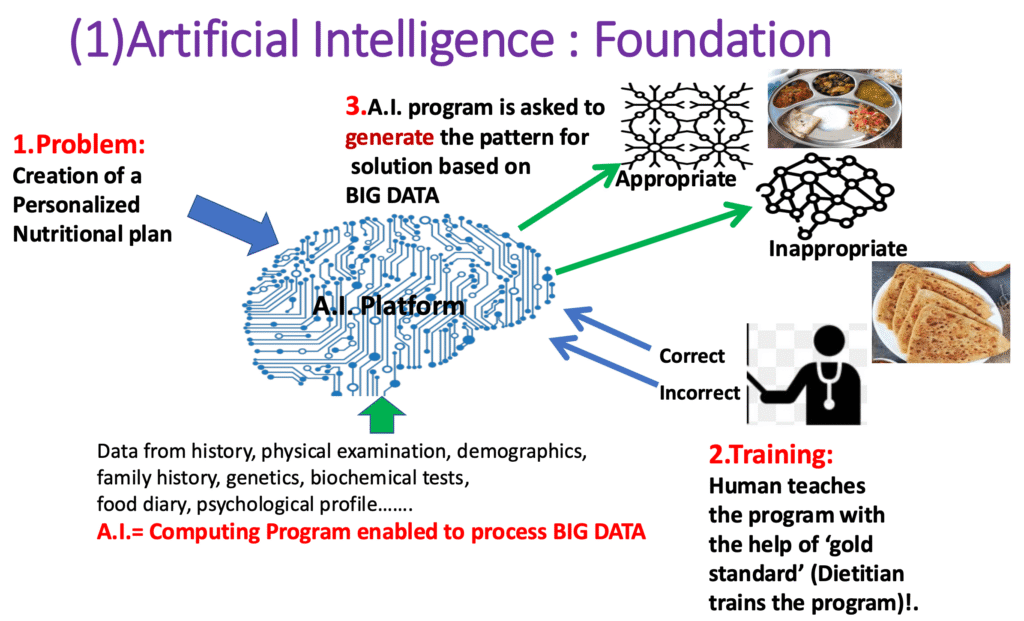
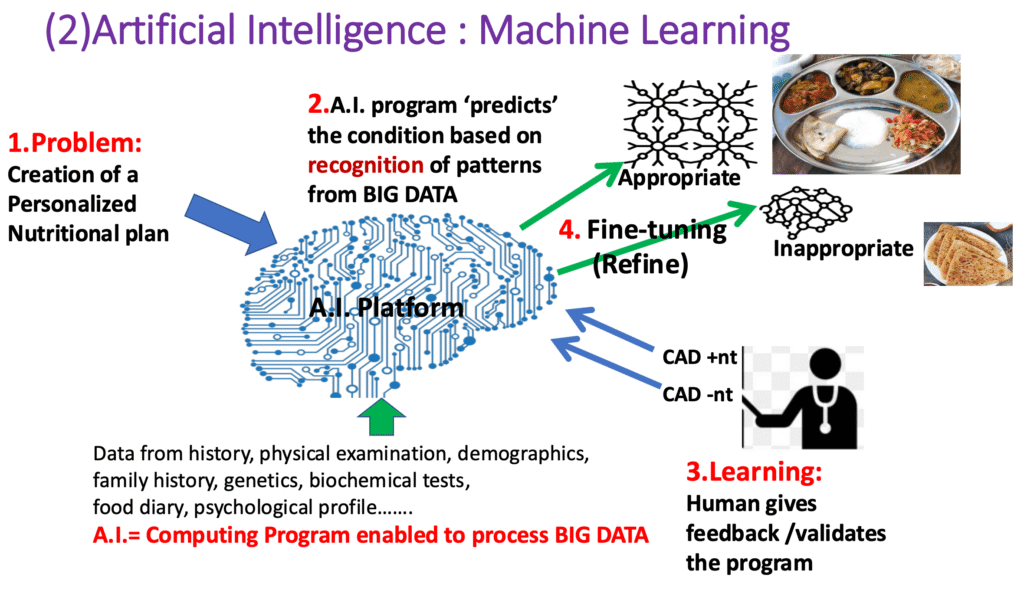
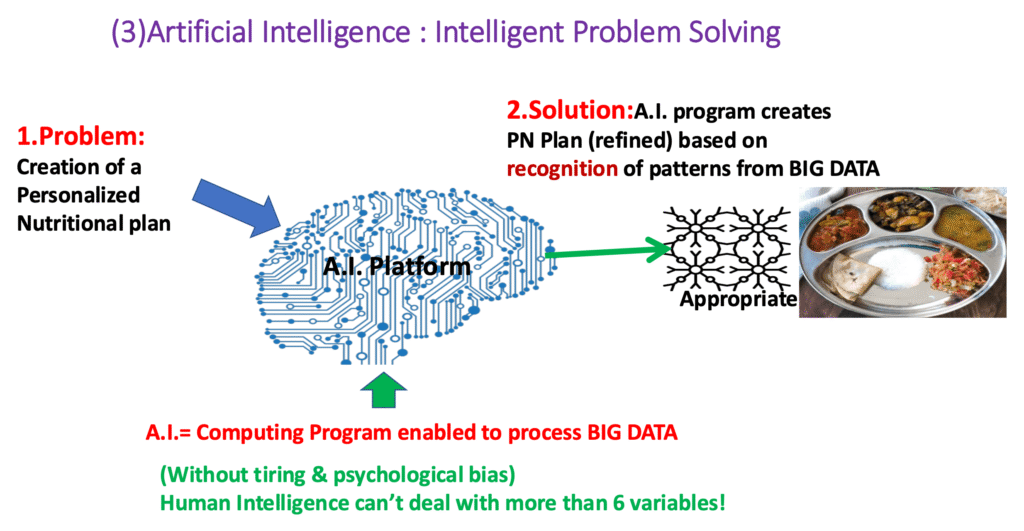
AI will find unusual biomedical associations and biomarkers
- AI is poised to become an invaluable tool for uncovering hidden patterns and connections in the vast landscape of medical data. Like a detective with superhuman perception, AI can spot subtle anomalies or correlations that elude even the most experienced human physicians. Etiologic prediction from X-rays, diagnosing disease from a child’s cry or diabetes detection through voice analysis – these are just early examples of AI identifying biomarkers no human anticipated.
- Imagine AI uncovering previously unseen risk factors for devastating diseases or pinpointing the subtle markers that predict which patients will best respond to specific therapies.
- These unusual associations aren’t just AI curiosities; they challenge us to decipher the algorithm’s logic and unlock new frontiers of medical understanding. Medical detective work will have a new aim: to understand how AI finds what it finds, ensuring these groundbreaking insights are used ethically and for the betterment of patient care- (Reverse learning→ from ML (machine learning) to HL (Human learning)
What is an Ideal Clinical Consultation? An ideal consultation is not a moment… it is a process
1. Comprehensive Data Collection:
- History (symptoms, lifestyle, medications)
- Investigations (labs, ECG, imaging)
2. Triage & Safety Assessment:
- Identify emergencies vs routine care
3. Contextual Understanding:
- Past history
- Comorbidities
- Social & behavioral context
4. Integrated Analysis:
- History + examination + labs + imaging
- Integration of data from wearables (CGM, fitness watches etc….)
5. Decision Points:
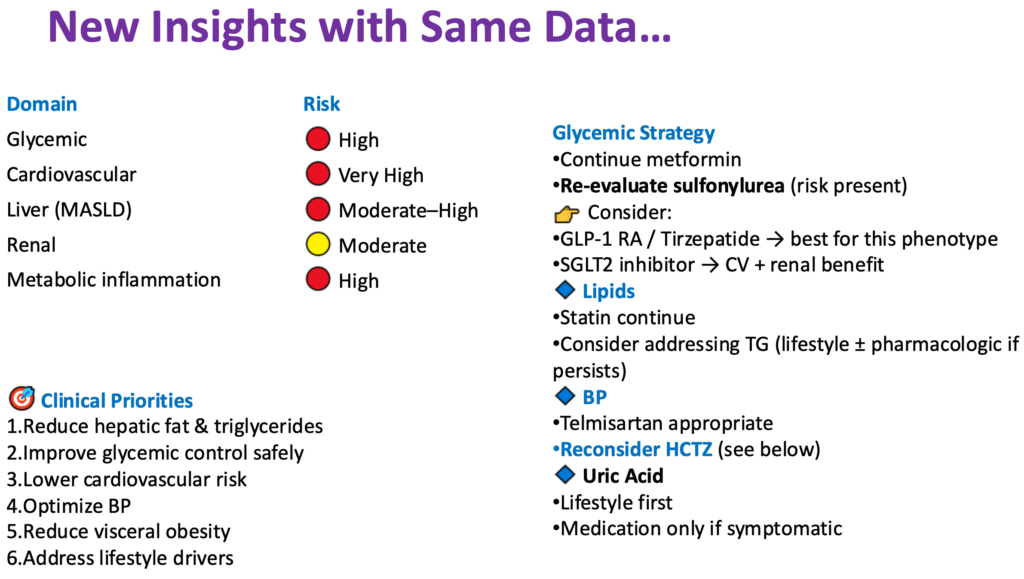
- What matters most now?
- What can wait?
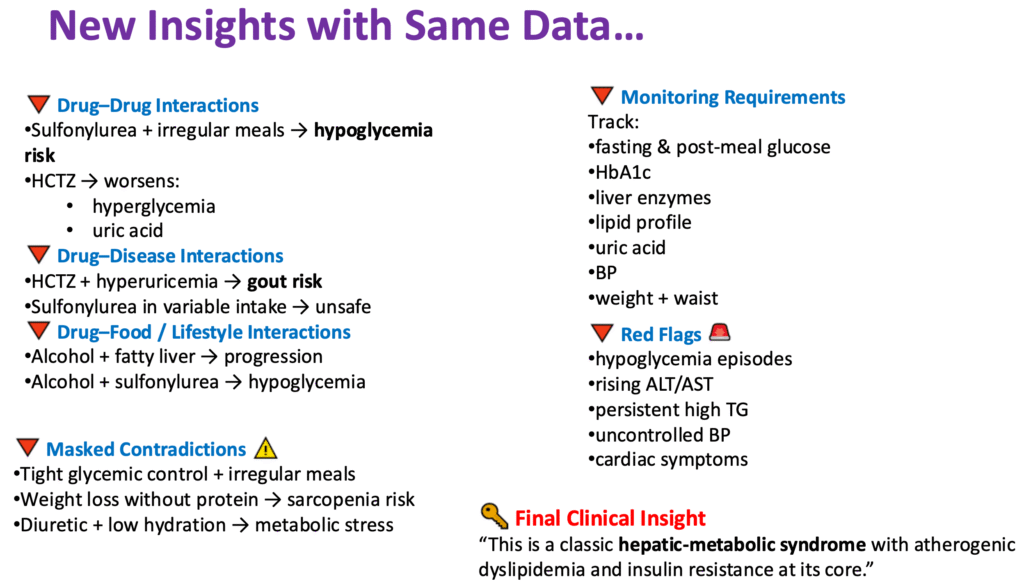
- Recognizing & preventing iatrogenic issues
6. Intervention Design
- Lifestyle
- Pharmacological
7. Follow-up Planning
- Monitoring schedule
- Predicting problems & risk-based review
8. Documentation & Data Storage
- Digitization
- Secure indexing
- Future retrieval
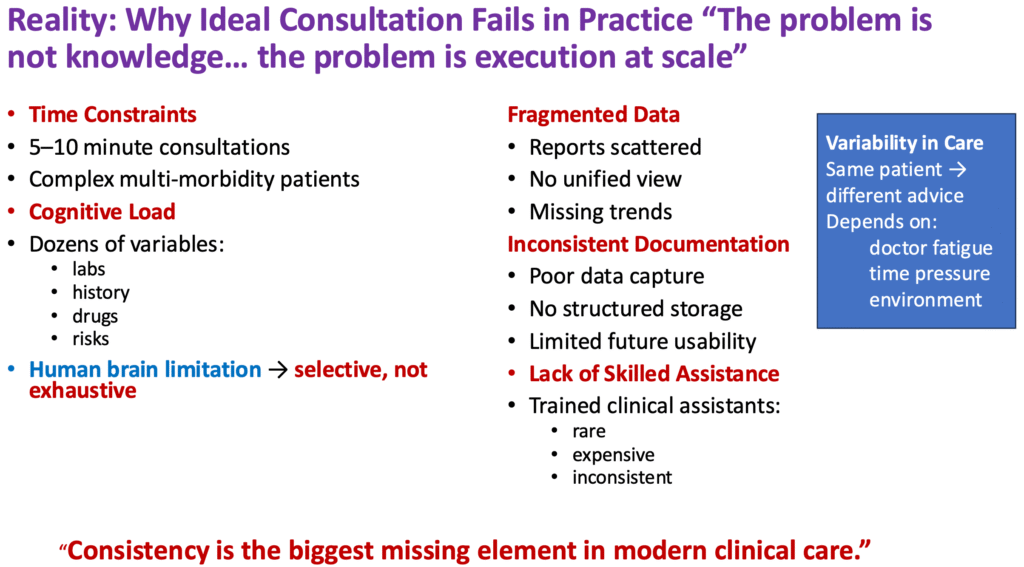
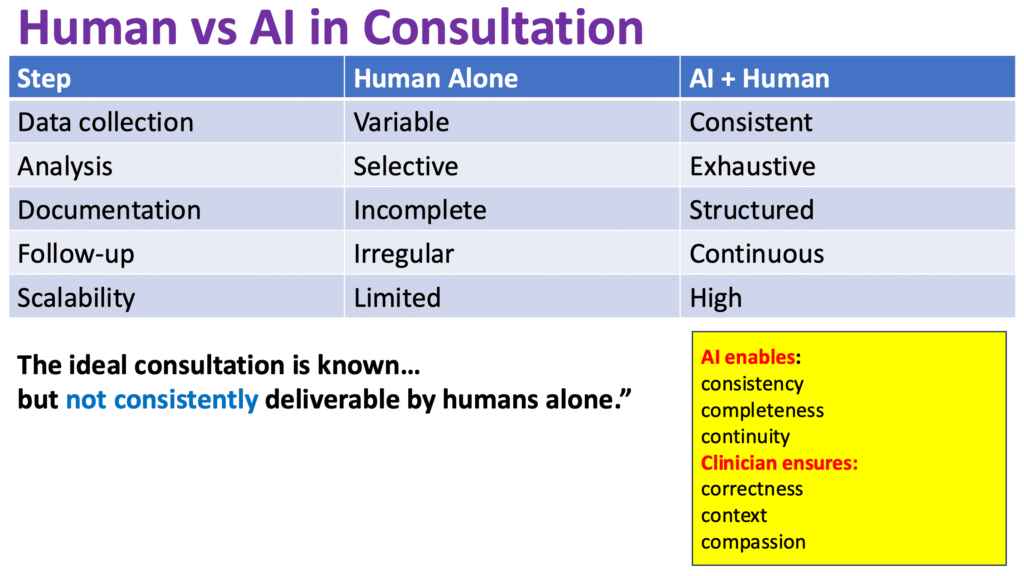
Can AI Deliver the Ideal Consultation Process?
Data Capture at Scale
- structured intake
- auto-extraction from reports
Continuous Triage
- flags high-risk patients
- never “misses” thresholds
Integration of Data
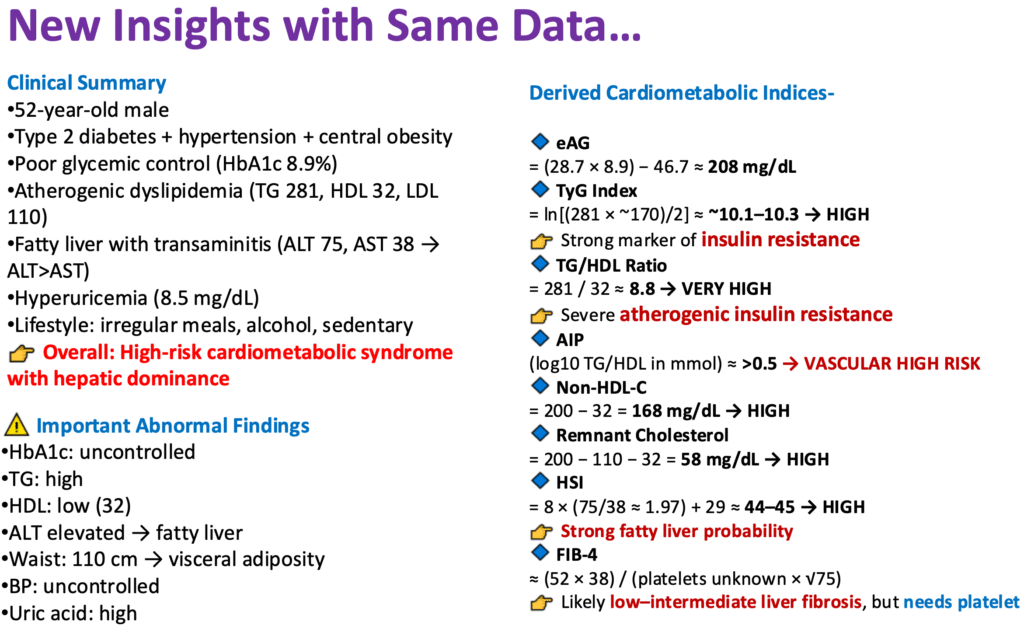
- combines – history, labs, ECG, imaging
Systematic Analysis
- calculates – indices, trends, risks
Standardized Output
- structured summaries
- consistent recommendations
Follow-Up Automation
- reminders
- monitoring
- alerts
Data Preservation
- digitization
- indexing
- longitudinal tracking
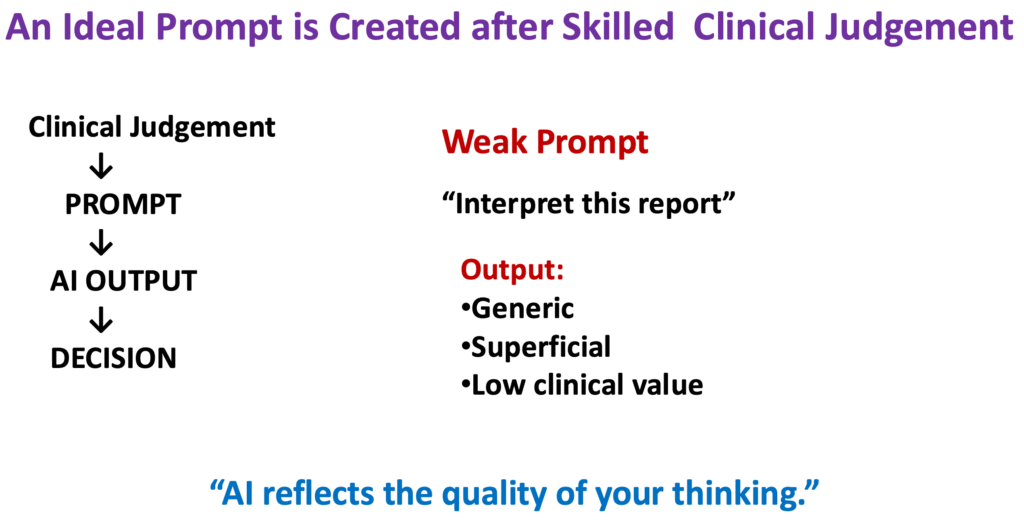
AI is only as good as the clinician using it; The Power of Prompts: The New Clinical Skill
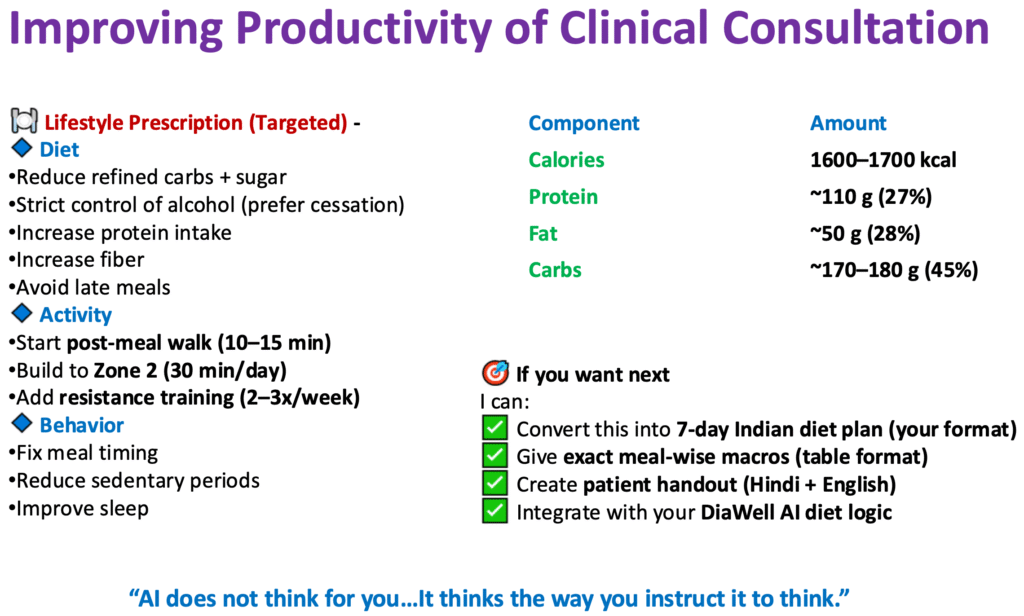
What is a Prompt in Clinical AI?
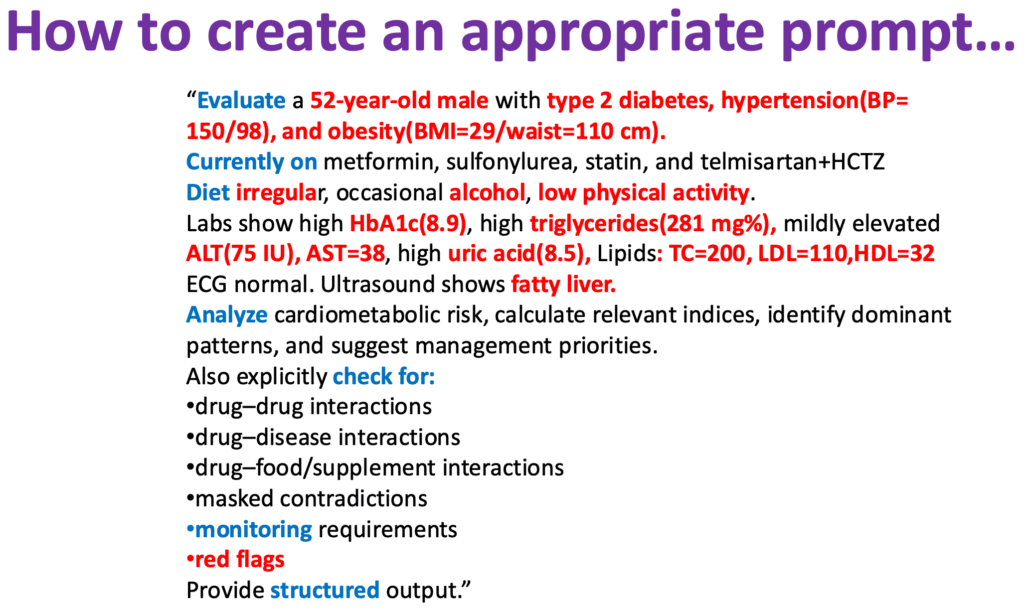
Prompt = how you ask the question + what context you provide
It includes:
- patient data
- clinical context
- specific question/safety nets
- expected output
Why Prompts Matter?
Poor Prompt → Poor Output
incomplete data → incomplete reasoning
vague question → generic answer
wrong framing → misleading suggestion
Good Prompt → Clinical-Grade Output
structured data
clear objective
defined constraints
Result – relevant, actionable, safer
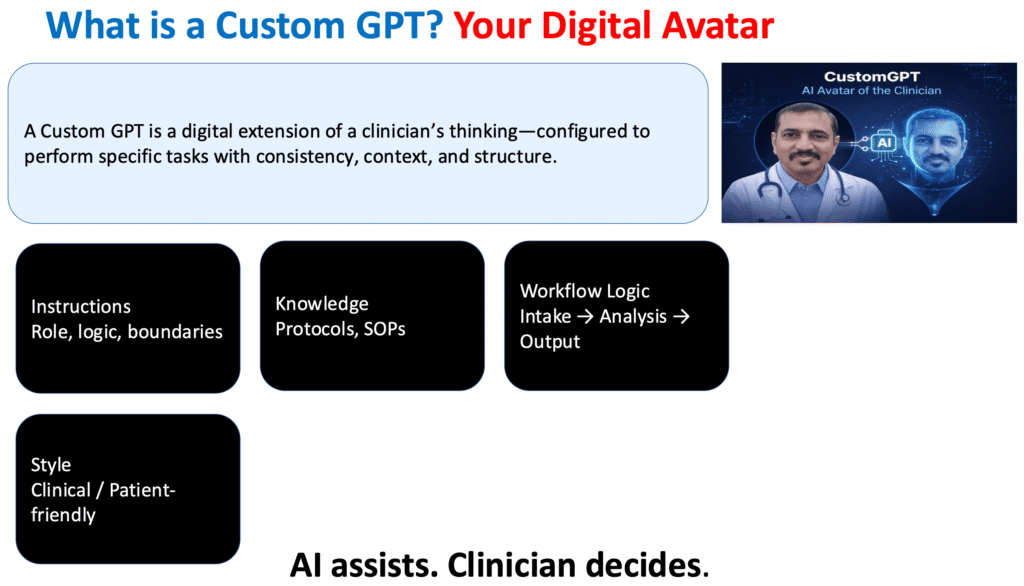
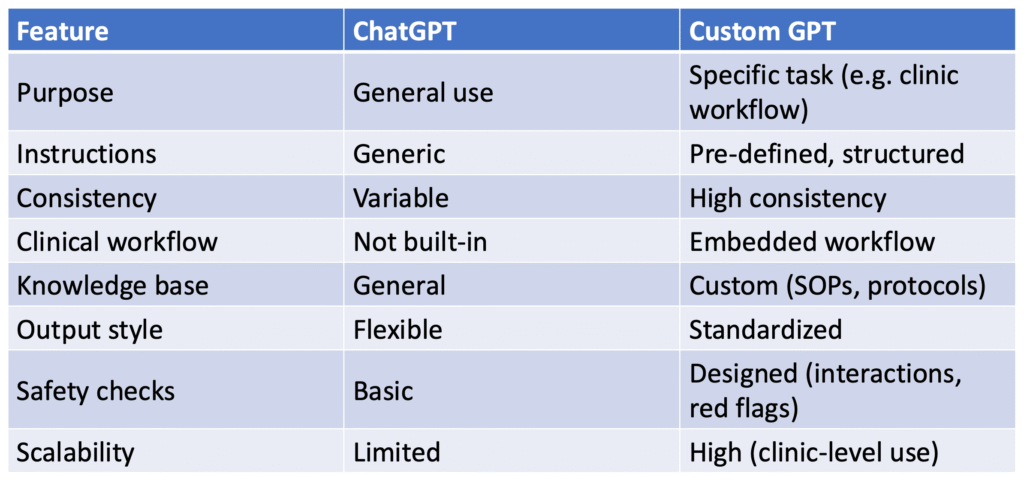
AI will primarily take over repetitive and data-based tasks
- AI’s most immediate impact in healthcare won’t be stealing doctors’ jobs, but rather stealing away the drudgery.
- The repetitive, data-driven tasks that weigh down physicians – from analyzing scans to sifting through medical records – are prime targets for AI automation.
- This won’t just save time; it will transform the very nature of medical practice as the human role shifts away from the mundane and toward tasks demanding creativity, connection, and complex problem-solving.
- As research consistently shows, the best outcomes arise from intelligent human-machine collaboration. By taking on the analytical heavy lifting, AI will free physicians to focus on the art of medicine. This means more time for patient interaction, greater space for nuanced diagnoses, and the exploration of novel treatment strategies.
AI will not replace physicians or make specialties vanish.
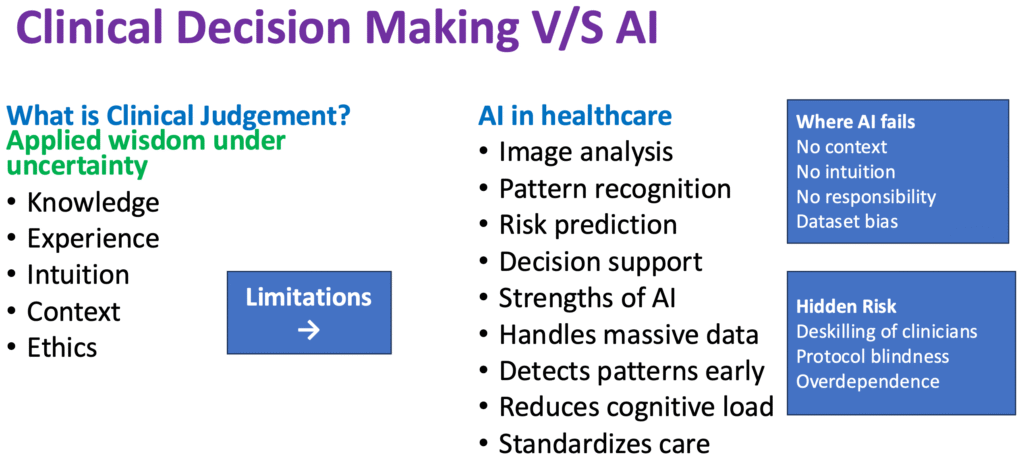
AI is a tool. Clinical judgement is a compass. Success in medicine depends on who is holding the tool.
For most purposes, a man with a machine is better than a man without a machine – Henry Ford.
The real problem is not whether machines think, but whether men do? – B. F. Skinner.
References:
1. Silvia Romiti et al: Artificial Intelligence (AI) and Cardiovascular Diseases: An Unexpected Alliance; Cardiology Research & Practice, Volume 2020 |Article ID 4972346
Discover CME INDIA

- Explore CME INDIA Repository
- Examine CME INDIA Case Study
- Read History Today in Medicine
- Register for Future CMEs
CME