
CME INDIA Presentation by Dr. Shambo Samrat Samajdar (MBBS MD DM (Clinical Pharmacology) PG Dip Endo & Diabetes (RCP, UK) Diploma Allergy Asthma Immunology (Gold Medal), Fellowship in Respiratory and Critical Care (WBUHS),Fellow of Allergy-Asthma Specialist Course(AAAAI), Consultant, Diabetes & Allergy-Asthma Therapeutics Specialty Clinic, Kolkata; Dr. N. K. Singh (MD, FIACP, FACP, F RSSDI, F Diabetes India, Director Diabetes and Heart Research Centre, Dhanbad, Bharat, Editor:CME INDIA); Dr. Shashank R. Joshi (Department of Endocrinology, Joshi Clinic, Mumbai); Dr. Aloke Kumar Gupta (MD, FICP, FISH, FUPDA, Fellow Diabetes India, Consultant Diabetes Education and Research Centre, Gorakhpur UP India)
Humanity’s profound connection with the cosmic force
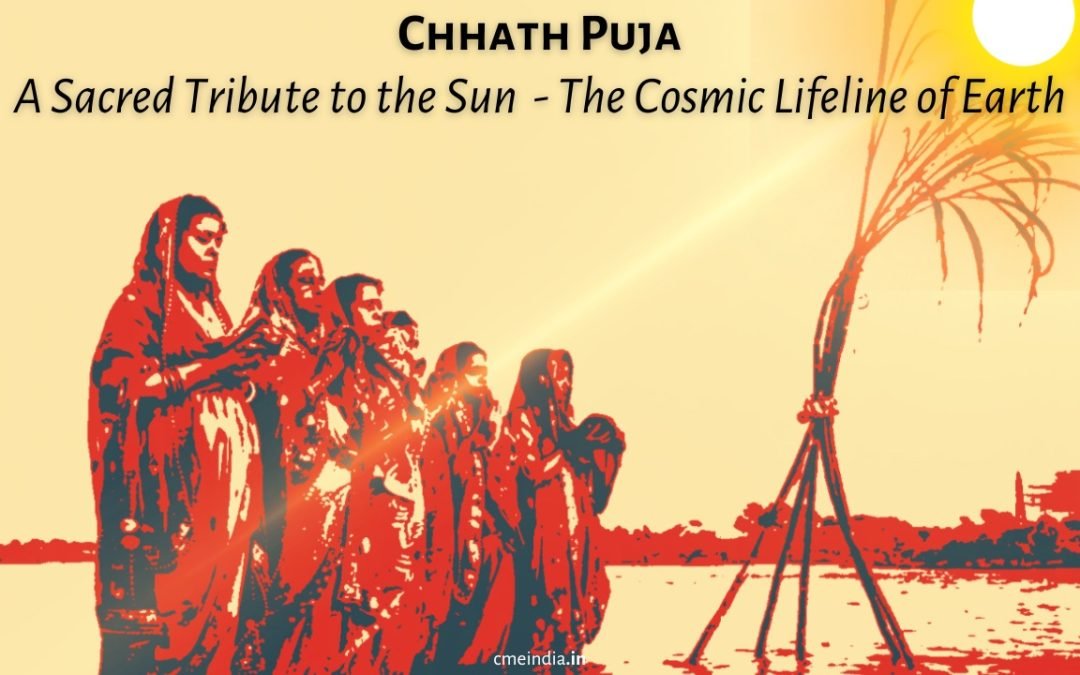
- Chhath Puja, one of the oldest festivals dedicated to the worship of the Sun God, transcends mere ritual to embody humanity’s profound connection with the cosmic force that sustains all life.
- Celebrated widely across India and Nepal, especially in Bihar and the Terai region, this four-day festival invites devotees to embrace the Sun not only as a celestial body but as the very source of vitality, wellness, and spiritual illumination. By offering gratitude to the Sun and embracing ancient rituals,
- Chhath Puja bridges science and spirituality, revealing the timeless wisdom of our ancestors and their reverence for the natural world.
The Science and Spirituality of the Sun: Life’s Core Energy Source
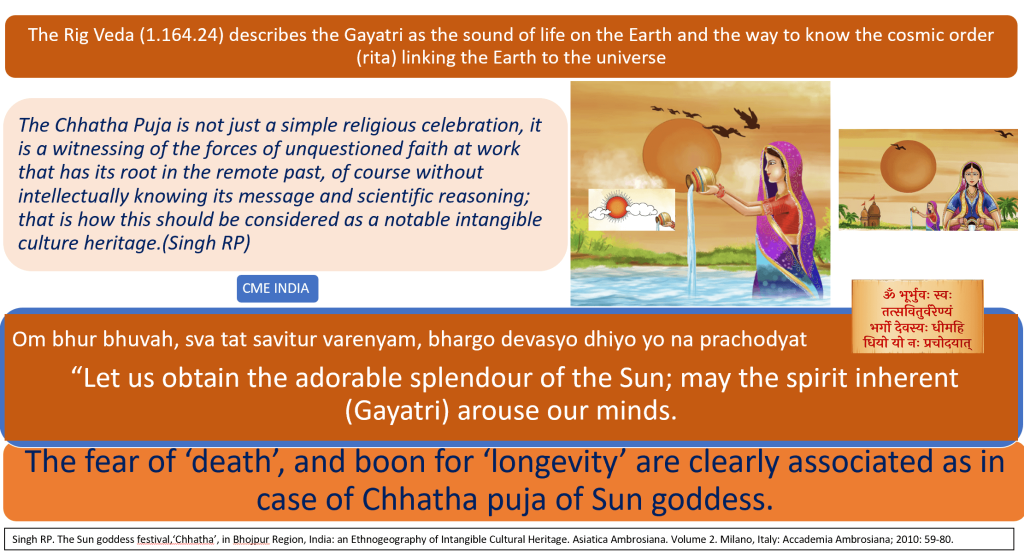
- Scientifically, the Sun is the closest star to Earth, situated about 150 million kilometers away, yet it holds our planet in orbit with its immense gravitational pull, sustaining the delicate balance that allows life to flourish. Through its radiant energy, the Sun drives essential processes such as photosynthesis, wind generation, and ocean currents. It is this solar energy that shapes the Earth’s climate and makes life possible, nourishing ecosystems and supporting agriculture. Plants rely on sunlight to produce food, and animals, including humans, depend on plants for sustenance and oxygen. Without the Sun, Earth would be a barren, frozen sphere, devoid of movement, warmth, and life.
- Chhath Puja is a ritual acknowledgment of this cosmic gift. By venerating the Sun, devotees align themselves with the primal force that sustains all living things. In Hindu cosmology, the Sun, or Surya, is not only a physical entity but a divine symbol of consciousness, energy, and enlightenment. The Sun’s daily journey from dawn to dusk is seen as a metaphor for life’s cyclical nature, reminding us of the inevitability of beginnings, transformations, and endings.
Chhath Puja Rituals: Harmonizing with the Natural and Divine
- Chhath Puja’s four-day observance is a transformative experience where devotees purify their bodies, minds, and spirits to attune with the divine essence of the Sun. The rituals are an homage to the cosmic cycles, a symbolic return to nature, and a spiritual journey to inner clarity. The festival begins with “Nahay Khay,” a day of cleansing, where devotees bathe in holy waters and consume simple, vegetarian food.
- The subsequent day, “Kharna,” involves fasting and preparation, while the main event, the “Sandhya Arghya” (evening offering) and “Bhor Arghya” (morning offering), are dedicated to worshipping the setting and rising Sun respectively. These sacred moments create a serene harmony between humanity and the cosmos.
- The rituals symbolize the concept of surrender, as devotees stand in water and offer prayers with humility, asking for the Sun’s blessings on their families, health, and spiritual well-being. The Sun, as a force of boundless energy, is believed to dissolve the ego and renew the soul, connecting the devotee to a higher consciousness that transcends the self. Thus, Chhath Puja becomes a pathway to spiritual growth, self-purification, and inner peace.
The Health Science of Chhath Puja: Detoxification and Rejuvenation
- While Chhath Puja is deeply spiritual, the scientific benefits of its practices are also profound. During the festival, devotees engage in fasting, avoiding food and water for up to 36 hours. This intermittent fasting stimulates autophagy, the body’s natural detoxification process, where cells break down and remove damaged components, leading to physical rejuvenation. Modern science has shown that fasting can regulate blood sugar, improve metabolism, and enhance immunity, while also giving the digestive system a much-needed rest.
- Moreover, the ritual bathing in rivers and ponds exposes devotees to sunlight, allowing for natural Vitamin D synthesis. Known for its critical role in bone health, immunity, and mood regulation, Vitamin D production is essential for well-being. The Sun exposure during Chhath Puja may also stimulate serotonin release, enhancing mental clarity and emotional balance. Thus, the festival incorporates a holistic approach to health that integrates the physical, emotional, and spiritual dimensions of well-being.
Spiritual and Social Dimensions: A Festival of Unity, Equality, and Sustainability
- Chhath Puja is unique in its inclusivity and emphasis on social harmony. It transcends caste, economic, and gender distinctions, inviting people from all backgrounds to gather on riverbanks to celebrate the Sun’s light. The festival does not require male priests, Sanskrit mantras, or elaborate rituals, thus making it accessible to all. By sharing in simple offerings and mutual prayers, devotees embody values of equality, fraternity, and interconnectedness, reinforcing the idea that we are all sustained by the same cosmic energy.
- In addition, Chhath Puja promotes ecological awareness. Devotees clean rivers, ponds, and surrounding areas before the festival, a practice that not only sanctifies these spaces for worship but also encourages environmental stewardship. The collective act of caring for water sources underscores the festival’s ecological message, reminding us that we are guardians of the Earth and must preserve its purity for future generations.
Suryanamaskar: Embracing the Sun’s Power through Yogic Wisdom
- In the context of Sun worship, the ancient yogic practice of Suryanamaskar, or Sun Salutation, holds a special place. This series of twelve physical postures, synchronized with breath, is a form of moving meditation that aligns the body, mind, and spirit with the Sun’s energy. Suryanamaskar strengthens muscles, improves cardiovascular health, and enhances flexibility, contributing to physical vitality. It also promotes mental clarity, reduces stress, and cultivates gratitude, resonating with the essence of Chhath Puja.
- Through regular practice, Suryanamaskar becomes a personal ritual of acknowledging the Sun’s life-sustaining presence. The sequence of movements, combined with controlled breathing, fosters a deep sense of connection with the universe, instilling a sense of peace and alignment with cosmic rhythms. Just as Chhath Puja honors the Sun through ritual, Suryanamaskar pays tribute through mindful action, channeling the Sun’s energy to empower and heal the practitioner.
The Ancient Wisdom of the Sun: Embracing Timeless Truths in Modern Times
- In a world increasingly distanced from nature, Chhath Puja offers a poignant reminder of the Sun’s role as our ultimate source of energy, life, and spiritual awakening. By honoring the Sun, we tap into an ancient wisdom that has guided civilizations for millennia—a wisdom that recognizes the interdependence of all life and the divine essence that resides in the natural world. This festival, with its roots in Vedic traditions, transcends cultural and religious boundaries, inviting humanity to reconnect with the rhythms of the cosmos and find peace in the divine light that surrounds and sustains us.
- Chhath Puja’s message is clear: the Sun is not merely a distant star but an intimate part of our existence, a cosmic guide whose energy permeates every aspect of life. This understanding inspires us to live mindfully, respect the Earth, and embrace a holistic view of health that integrates physical well-being with spiritual fulfillment. In this way, Chhath Puja becomes a celebration of life itself, a testament to the enduring power of nature, and a reminder that the divine is ever-present, radiating warmth, light, and wisdom for all who choose to see.
CME INDIA Learning Edge
- Chhath Puja rituals are designed to be performed in a serene and peaceful environment, which supports a state of mental focus and calm. The practice of standing in water for prolonged periods, a central element of the Puja, promotes a meditative state that can have significant therapeutic effects on the brain. Research indicates that mindfulness practices, including meditation and deep concentration, reduce stress and anxiety by lowering cortisol levels and enhancing the brain’s production of neurotransmitters like serotonin. [Reference: Goyal, M., et al. (2014). JAMA Internal Medicine, 174(3), 357-368.]
- The communal aspect of Chhath Puja, where families and communities gather to perform the rituals, fosters strong social bonds and emotional support. Scientific evidence supports the positive impact of social connections on mental health, showing that a sense of belonging and shared experience can significantly reduce feelings of loneliness and contribute to overall well-being. [Reference: Holt-Lunstad, J., Smith, T. B., & Layton, J. B. (2010). PLOS Medicine, 7(7), e1000316.]
- Chhath Puja, with its rich traditions and rituals, represents a unique synthesis of spirituality and science. Beyond its religious and cultural significance, the festival supports health through its practices of fasting, sun exposure, and immersion in water. These elements have scientifically documented benefits: fasting promotes cellular repair and metabolic health through autophagy, sunlight exposure enhances vitamin D synthesis and mood regulation, and immersion in water can stimulate circulation and promote relaxation. Additionally, the environmentally conscious practices of Chhath Puja align with principles of ecological sustainability, reflecting the festival’s commitment to health, balance, and harmony with nature.
CME INDIA Tail-Piece
- Chhath Puja, originally a regional festival of Bihar, has spread to other parts of India due to the migration of Bihari communities, becoming popular in major metropolitan and industrial cities like Delhi and Mumbai. This expansion has transformed the celebration into a larger, more intense event with greater participation, yet the core message of fostering harmony between humanity and nature to support ecological balance has not gained the same emphasis.
- The festival involves devotees gathering at the banks of rivers, particularly the Ganga, to bathe in sacred waters, pray, and offer rituals to the Sun God, symbolizing the integration of natural elements—fire and water—with human cognition. Known for its vibrant display of colorful costumes, music, singing, and elaborate rituals. The festival highlights the deep cultural and spiritual traditions that underscore the interconnection between humans and the natural world.
- The idea that Surya Namaskar was linked to the Sun to encourage early rising and reset the biological clock has some practical merit. It aligns with modern understanding of circadian rhythms and their health impacts. However, to claim this as the original intention of ancient sages without direct historical references may be an oversimplification.
- Ancient literature, particularly in the context of Ayurvedic teachings, suggests practices that balance the body’s elements for optimal health. One such belief is the idea that having wet feet while eating channels the body’s Agni (Fire element) towards the abdomen, enhancing the digestive process. Conversely, going to sleep with dry feet is said to prevent unnecessary stimulation of the digestive fire during rest.
- In the context of Chhath Puja, devotees offer prayers to both the setting and rising Sun while standing in waist-deep water. This practice could be hypothesized to direct the Fire element towards the heart and mind, fostering heightened concentration and mental focus during prayer. The immersion in water, a cooling element, may create a balanced state that supports meditative mindfulness and the connection of physical and spiritual energies.
- After winning the presidential election, Pramod Mahajan asked APJ Abdul Kalam if he would like to take his oath of office at an auspicious time. Dr. Kalam reportedly responded, “As long as the Earth is in its place in the solar system and revolving around the Sun, every moment is an auspicious moment.” This statement exemplifies Dr. Kalam’s well-known blend of rational scientific thought with a deep appreciation for spiritual and philosophical wisdom. His words are scientifically grounded, acknowledging the Earth’s stable and continuous position within the solar system, while also resonating with the broader Vedic understanding that true auspiciousness lies in intent and purpose rather than rigid adherence to specific times. Dr. Kalam’s perspective harmonizes modern rationality with a profound respect for the natural order of the universe.
Further Readings:
- Mizushima, N., & Levine, B. (2010). Autophagy in human diseases. New England Journal of Medicine, 368(7), 651-66
- Mattson, M. P., Longo, V. D., & Harvie, M. (2017). Impact of intermittent fasting on health and disease processes. Ageing Research Reviews, 39, 46-58
- Anton, S. D., et al. (2018). Flipping the metabolic switch: Understanding and applying the health benefits of fasting. Obesity, 26(2), 254-268
- Ming-Li Sun ∙ Wei Yao∙ Xiao-Ying Wang. Intermittent fasting and health outcomes: an umbrella review of systematic reviews and meta-analyses of randomised controlled trials. eClinicalMedicine,2024,Volume 70, 102519
- Goyal M, Singh S, Sibinga EM, Gould NF, Rowland-Seymour A, Sharma R, Berger Z, Sleicher D, Maron DD, Shihab HM, Ranasinghe PD, Linn S, Saha S, Bass EB, Haythornthwaite JA. Meditation programs for psychological stress and well-being: a systematic review and meta-analysis. JAMA Intern Med. 2014 Mar;174(3):357-68. doi: 10.1001/jamainternmed.2013.13018. PMID: 24395196; PMCID: PMC4142584.
- Holt-Lunstad J, Smith TB, Layton JB (2010) Social Relationships and Mortality Risk: A Meta-analytic Review. PLoS Med 7(7): e1000316. https://doi.org/10.1371/journal.pmed.1000316
- Singh RP. The Sun goddess festival,‘Chhatha’, in Bhojpur Region, India: an Ethnogeography of Intangible Cultural Heritage. Asiatica Ambrosiana. Volume 2. Milano, Italy: Accademia Ambrosiana; 2010: 59-80.
Discover CME INDIA

- Explore CME INDIA Repository
- Examine CME INDIA Case Study
- Read History Today in Medicine
- Register for Future CMEs
Impressive
Nice