
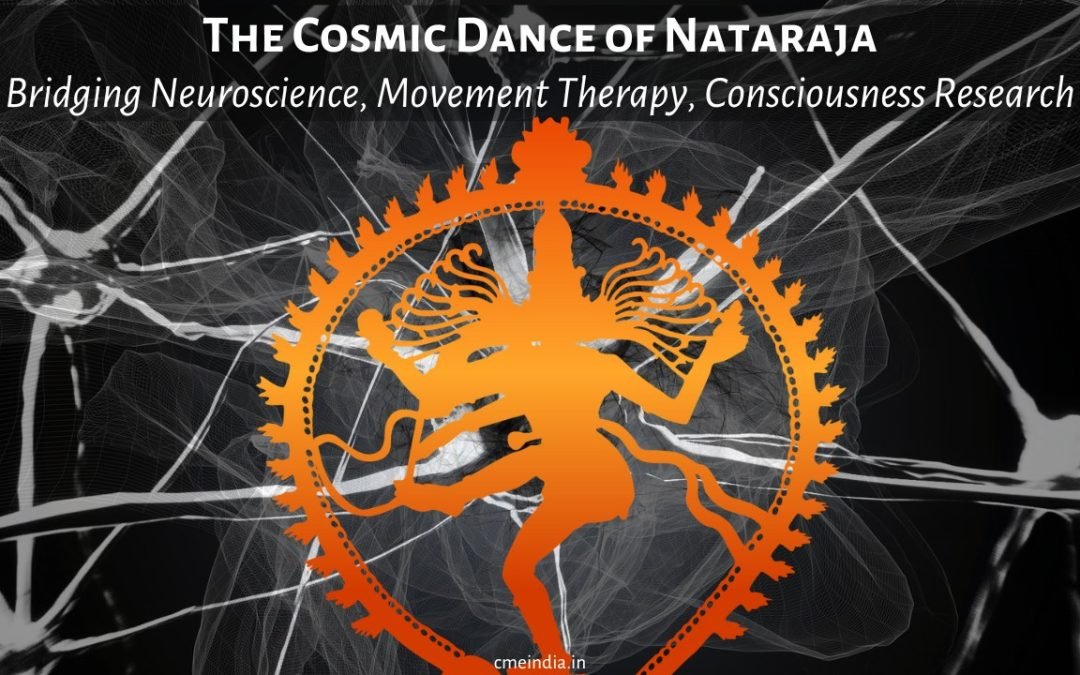
CME INDIA Presentation by Dr. Shambo Samrat Samajdar, MBBS MD DM (Clinical Pharmacology) PG Dip Endo & Diabetes (RCP, UK), Consultant, Allergy Asthma Treatment Centre, Kolkata Consultant, Diabetes & Allergy-Asthma Therapeutics Specialty Clinic, Kolkata, Dr. N. K. Singh, Editor – CME INDIA, Director, Diabetes and Heart Research Centre, Dhanbad, Dr. Shinjini Samajdar, Clinical Psychologist, Kolkata, Dr. Shashank R. Joshi, Endocrinologist, Mumbai.
Abstract
The cosmic dance of Nataraja, a profound symbol of energy flow, transformation, and consciousness, bridges the ancient wisdom of Vedic philosophy with modern neuroscience and movement therapy. This study explores the neurophysiological implications of Nataraja’s Pancha Krityas (five divine acts), correlating them with brain plasticity, cognitive restructuring, and emotional regulation. The symbolism of Apasmara Purusha, the demon crushed under Shiva’s foot, is examined in the context of cognitive suppression, neurodegenerative disorders, and emotional resilience.
From a neurological perspective, dance therapy has been shown to enhance brain connectivity, modulate neural oscillations, and regulate the autonomic nervous system (ANS). The interplay between Lasya and Tandava, representing creation and destruction, is linked to the balance between the sympathetic and parasympathetic nervous systems, offering therapeutic benefits in psychiatric and neurological rehabilitation. The Damaru (drum of creation) symbolizes rhythmic entrainment in neural synchronization, mirroring research on theta, alpha, and gamma wave activity in dance, meditation, and mindfulness-based therapies.
The study further explores the clinical applications of dance therapy, particularly in Parkinson’s disease, dementia, PTSD, and cognitive rehabilitation. The Abhaya Mudra (fearlessness gesture) is examined through the lens of fear extinction pathways, amygdala regulation, and vagus nerve stimulation, reinforcing its potential in trauma recovery and stress management. Additionally, the fire of destruction (Agni) in Nataraja’s dance serves as a metaphor for neuroplasticity, synaptic pruning, and adaptive learning, supporting its role in cognitive restructuring and resilience building.
By integrating symbolic iconography with empirical science, this study underscores the therapeutic potential of movement-based practices in mental health, neurological disorders, and consciousness research. The convergence of Eastern metaphysics and Western neuroscience highlights Shiva’s cosmic dance as a transformative framework for understanding embodied cognition, neural entrainment, and holistic healing. Future research should explore the neurological underpinnings of movement, dance-based rehabilitation, and the impact of rhythmic therapies on cognitive function and emotional resilience, offering new pathways for integrating ancient wisdom into modern clinical practice.
Introduction
The cosmic dance of Nataraja, an iconic representation of Lord Shiva, is a profound symbol of movement, energy, and cosmic balance. Rooted in ancient Vedic philosophy, Nataraja’s dynamic posture captures the eternal cycle of the universe—creation, preservation, destruction, concealment, and liberation—which correspond to fundamental principles governing both the physical and metaphysical realms. This dance is not merely an artistic expression but a metaphor for energy flow, consciousness, and transformation, with profound implications for modern neuroscience, cognitive science, and therapeutic movement practices.
At the heart of Nataraja’s symbolism lies the concept of Pancha Krityas, the five divine acts of Shiva, which parallel key physiological and neurological processes:
- Srishti (Creation) – Represented by the Damaru (drum), symbolizing the rhythmic vibration of creation, akin to the entrainment of neural oscillations and the generation of new synaptic connections in the brain.
- Sthiti (Preservation) – Embodied in the Abhaya Mudra (fearlessness gesture), reflecting neurophysiological homeostasis, autonomic nervous system balance, and emotional resilience.
- Samhara (Destruction/Transformation) – Represented by Agni (fire), analogous to neuroplasticity, apoptosis (programmed cell death), and the restructuring of neural pathways in response to learning and adaptation.
- Tirodhana (Concealment/Obscuration) – Symbolized by Maya (illusion), reflecting cognitive suppression, subconscious processes, and the modulation of awareness in altered states of consciousness.
- Anugraha (Liberation) – Manifested through the uplifted left foot, signifying transcendence, neural integration, and the experience of self-realization and enlightenment, similar to the activation of theta and gamma wave patterns during deep meditation.
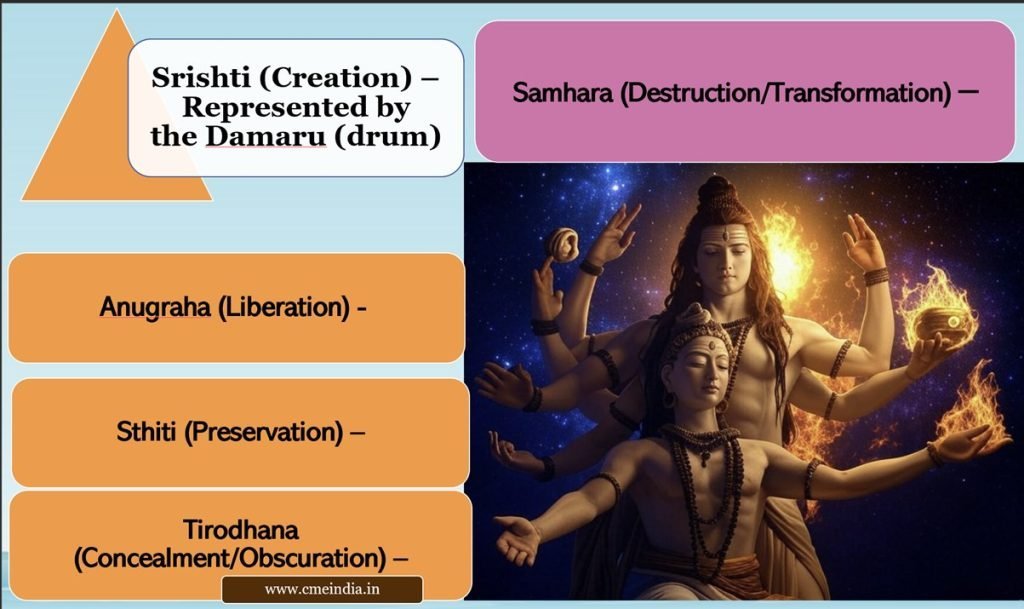
One of the most compelling elements of the Nataraja iconography is Apasmara Purusha, the demon trampled beneath Shiva’s right foot. Apasmara, meaning “forgetfulness” or “ignorance,” is a metaphor for cognitive suppression, mental inertia, and neurological disorders. In medical terms, Apasmara aligns with neurodegenerative conditions, cognitive impairments, and the suppression of higher-order executive functions. The act of crushing Apasmara underfoot represents the triumph of awareness over ignorance, neuroplasticity over degenerative decline, and higher consciousness over cognitive dysfunction.
This interplay of symbolism, physiology, and cognition provides a rich framework for understanding the neurological basis of movement, the therapeutic potential of dance, and the transformative power of rhythm in brain function. By examining Nataraja through the lens of neuroscience and medicine, this study explores how dance therapy, neural entrainment, and embodied cognition can contribute to mental health, cognitive rehabilitation, and consciousness research.
Neurophysiology of Dance
Dance is a multisensory and motor-integrated activity that engages the brain on multiple levels, influencing connectivity, neuroplasticity, cognition, and emotional regulation. The symbolic dance of Nataraja, representing cosmic balance and rhythmic motion, finds its neurological counterpart in the intricate interplay of motor coordination, rhythmic entrainment, and cognitive engagement observed in dance. From a neurophysiological perspective, dance stimulates multiple brain regions, leading to enhanced synaptic plasticity, improved motor-sensory integration, and heightened states of consciousness.
Dance and Brain Connectivity
Neuroimaging studies suggest that dance significantly enhances connectivity across motor, sensory, and cognitive networks, particularly in the:
- Basal ganglia and cerebellum – involved in motor control, coordination, and rhythm processing.
- Primary motor cortex (M1) and premotor cortex – responsible for planning and executing movement.
- Somatosensory cortex – facilitates proprioception and body awareness.
- Prefrontal cortex – enhances cognitive flexibility, decision-making, and memory.
- Hippocampus – associated with spatial memory and learning, which are activated during complex movement sequences.
Engaging in structured rhythmic movement, such as dance therapy, has been shown to counteract cognitive decline, improve working memory, and enhance executive function, making it a promising intervention for neurodegenerative conditions such as Parkinson’s disease and Alzheimer’s disease.
Rhythm, Brain Wave Entrainment, and Meditative States
The Damaru (drum) held by Nataraja symbolizes the rhythmic pulse of creation, mirroring the role of rhythm in neural synchronization and brain wave entrainment. Rhythmic movements in dance have been shown to entrain theta (4–8 Hz) and alpha (8–12 Hz) brain wave activity, promoting:
- Deep relaxation and meditative states similar to those induced by chanting and mantra meditation.
- Neuroplastic changes that facilitate learning and memory consolidation.
- Autonomic nervous system regulation, reducing stress and anxiety.
Rhythmic entrainment also plays a crucial role in sensorimotor synchronization, where the brain aligns movement with external beats. Studies show that drumming, rhythmic dance, and musical engagement activate the auditory-motor network, which has therapeutic implications for patients with movement disorders such as Parkinson’s disease.
Motor and Sensory Cortex Activation in Dance Therapy
The dynamic movement in dance therapy stimulates both the motor and sensory cortices, leading to:
- Improved motor coordination and proprioception, especially in individuals recovering from stroke or traumatic brain injury.
- Strengthened sensorimotor integration, which is crucial for maintaining balance, gait, and fine motor skills.
- Increased activation of mirror neurons, which play a role in social cognition, empathy, and imitation-based learning.
Neuroscientific research has demonstrated that engaging in dance activates both hemispheres of the brain, fostering hemispheric integration and enhancing cognitive flexibility. In patients with neurodegenerative diseases, dance therapy has been associated with improved motor control, mood stabilization, and enhanced cognitive reserve.
The symbolism of Nataraja’s dance aligns closely with modern neuroscience by illustrating the interplay of rhythm, movement, and cognition. The act of dancing—whether seen as a spiritual practice, a therapeutic intervention, or a neurological exercise—fosters brain connectivity, neuroplastic adaptation, and emotional well-being. By integrating ancient wisdom with contemporary neuroscience, dance therapy emerges as a powerful tool for enhancing cognitive function, mitigating neurological disorders, and promoting holistic mental health.
The Cosmic Dance and Neural Synchronization
The cosmic dance of Nataraja is a powerful metaphor for the intricate synchronization of movement, consciousness, and neural activity. In both ancient Vedic philosophy and modern neuroscience, movement serves as a fundamental mechanism for integrating mind, body, and spirit, aligning with principles of brain wave entrainment, neuroplasticity, and emotional regulation. Nataraja’s Tandava, the rhythmic and vigorous dance, can be understood as a model for how movement and rhythm shape neural activity and mental states. Emerging research in dance therapy highlights the profound neurological, psychological, and therapeutic effects of structured rhythmic movement, particularly in neurodegenerative diseases, cognitive rehabilitation, and mental health management.
Mind-Body-Spirit Integration Through Movement
The symbolism of Nataraja represents an interconnected system where movement transcends the physical realm to influence cognitive and emotional states. The concept of Tandava, which embodies creation, destruction, and renewal, mirrors the dynamic processes of neurogenesis, synaptic pruning, and cognitive restructuring in the human brain.
Movement-based practices, such as yoga, dance therapy, and rhythmic exercises, are known to:
- Enhance sensorimotor integration, strengthening the connection between the brain, nervous system, and musculoskeletal system.
- Regulate the autonomic nervous system, balancing the sympathetic (fight-or-flight) and parasympathetic (rest-and-digest) responses.
- Facilitate deep states of focus and meditation, promoting emotional stability and heightened awareness.
These effects suggest that rhythmic movement serves as a neural bridge between the physical body and higher cognitive functions, aligning with ancient Hindu and yogic traditions that emphasize movement as a pathway to enlightenment and self-awareness.
Dance Therapy in Neurodegenerative and Mental Health Disorders
Modern neuroscience has increasingly recognized dance therapy as an effective intervention for patients suffering from neurodegenerative conditions such as Parkinson’s disease, Alzheimer’s disease, and dementia, as well as mental health disorders including depression, anxiety, and PTSD. Clinical studies suggest that:
- In Parkinson’s disease, dance therapy enhances dopaminergic activity, gait stability, and motor control, reducing symptoms such as bradykinesia (slowness of movement) and tremors.
- In Alzheimer’s and dementia patients, dance improves memory retention, spatial awareness, and emotional connectivity, likely due to its activation of the hippocampus and prefrontal cortex.
- For mental health conditions, rhythmic movement therapy helps regulate mood, lower stress hormone levels, and enhance emotional expression through increased endorphin release and improved limbic system function.
A meta-analysis of dance-based interventions has shown significant improvements in cognitive function, balance, and emotional well-being across various populations, reinforcing the idea that structured movement can delay neurodegeneration and enhance mental resilience.
Rhythmic Movement and Brain Oscillations: Tandava as a Model
The rhythm of Tandava, characterized by sustained, repetitive, and dynamic movement, can be linked to brain wave entrainment and neural synchronization. Scientific studies on rhythmic activities, such as drumming, chanting, and dance, have demonstrated that external rhythmic stimuli can influence internal brain rhythms, leading to:
- Increased theta (4–8 Hz) and alpha (8–12 Hz) wave activity, promoting relaxation and meditative states.
- Enhanced gamma (30–100 Hz) oscillations, associated with higher cognitive processing, memory integration, and peak mental performance.
- Synchronization of sensorimotor networks, improving motor coordination, reaction time, and executive functioning.
The fluctuating rhythm of Tandava, moving between slow and rapid sequences, mirrors the natural oscillatory patterns of the brain, which regulate mood, perception, and cognition. The cyclical motion within Nataraja’s cosmic dance symbolizes the neural cycles of activation and inhibition, much like the brain’s ability to shift between rest and action, integration and adaptation.
The cosmic dance of Nataraja serves as an enduring symbol of neural synchronization, energy flow, and cognitive transformation. Modern research into dance therapy, rhythmic entrainment, and movement-based healing provides scientific validation for the ancient wisdom of Shiva’s dance, illustrating its profound impact on neurological function, mental health, and cognitive longevity. By integrating symbolic, physiological, and neurological perspectives, this framework offers a holistic approach to understanding movement as both a spiritual and therapeutic phenomenon.
Therapeutic Aspects of Nataraja’s Symbolism
The iconography of Nataraja, representing the cosmic dance of Lasya (graceful movement) and Tandava (dynamic motion), offers profound insights into the therapeutic potential of movement, rhythm, and symbolic gestures in neuroscience and mental health. These elements, deeply embedded in Hindu philosophy, align with autonomic nervous system (ANS) regulation, neuronal transformation, and fear extinction mechanisms. By exploring Nataraja’s symbolism through a medical and neuroscientific lens, we can uncover its relevance in modern therapy, neurorehabilitation, and psychiatric interventions.
Lasya and Tandava: Regulating the Autonomic Nervous System
The duality of Lasya and Tandava, representing the harmonious interplay of creation and destruction, parallels the autonomic nervous system (ANS) balance between:
- The Parasympathetic Nervous System (PNS) – associated with relaxation, healing, and emotional regulation, corresponding to the Lasya dance, which is fluid, gentle, and introspective.
- The Sympathetic Nervous System (SNS) – responsible for arousal, stress response, and energy mobilization, aligning with Tandava, a vigorous and forceful dance representing transformation and release.
Rhythmic movement practices such as dance therapy, pranayama (breathwork), and mantra recitation have been shown to modulate ANS function, leading to:
- Reduction in stress and cortisol levels through parasympathetic activation (Lasya).
- Increased alertness, resilience, and emotional catharsis via controlled sympathetic engagement (Tandava).
- Improved heart rate variability (HRV), an indicator of emotional flexibility and mental well-being.
Neuroscientific studies on dance-based therapy have demonstrated its effectiveness in anxiety reduction, PTSD management, and emotional trauma recovery, suggesting that structured rhythmic movement aligns with autonomic balance, much like the interplay between Lasya and Tandava.
The Fire of Destruction (Agni) as a Metaphor for Neuronal Transformation
In Nataraja’s dance, Agni (fire) held in the left hand symbolizes destruction and transformation, a concept deeply relevant to neuroplasticity and synaptic remodeling. The destructive force of fire does not signify mere annihilation but a necessary phase of transformation and renewal, akin to the brain’s ability to rewire itself through learning, adaptation, and synaptic pruning.
In a neurological context, Agni represents:
- Neuroplasticity – the ability of the brain to discard old neural connections and forge new pathways in response to experience, learning, and therapy.
- Synaptic pruning – the brain’s natural mechanism of eliminating weak or redundant synapses, allowing for efficient cognitive processing and memory consolidation.
- Neurogenesis – the creation of new neurons and synaptic circuits, particularly in the hippocampus, which plays a crucial role in memory formation and emotional regulation.
This transformative aspect of fire in Nataraja’s dance is highly relevant in trauma recovery, neurodegenerative disease treatment, and cognitive rehabilitation, where destructive neural patterns must be overridden by constructive rewiring.
Shiva’s Abhaya Mudra and Fear Extinction Pathways
The Abhaya Mudra, or “Fear Not” gesture, seen in Nataraja’s right hand, is a universal symbol of protection, reassurance, and liberation from fear. In neuroscience, this gesture aligns with fear extinction mechanisms in the brain, particularly in the amygdala-prefrontal cortex network, which regulates fear response, emotional resilience, and cognitive control over anxiety.
Key neuroscientific parallels include:
- Fear extinction and exposure therapy – The Abhaya Mudra can be associated with the gradual desensitization of conditioned fear responses, much like cognitive-behavioral therapy (CBT) and exposure therapy for phobias and PTSD.
- Amygdala regulation – The gesture represents emotional regulation by suppressing hyperactive fear responses, promoting a state of psychological security and calmness.
- Activation of the vagus nerve – The Abhaya Mudra, when combined with rhythmic breathwork and meditative movement, stimulates the vagus nerve, which plays a key role in stress reduction and emotional stability.
Studies in embodied cognition and mudra-based therapy suggest that gestural practices like Abhaya Mudra enhance self-regulation, increase resilience to trauma, and promote inner confidence, reinforcing its role in psychotherapy and somatic healing modalities.
The therapeutic aspects of Nataraja’s symbolism extend beyond mythology, offering scientific parallels in neural regulation, emotional balance, and cognitive transformation. By integrating Lasya and Tandava with autonomic nervous system modulation, understanding fire as a metaphor for neuroplasticity, and recognizing Abhaya Mudra as a tool for fear extinction, we gain profound insights into how movement, rhythm, and symbolism can be harnessed for neurological healing and mental well-being. This ancient wisdom, validated through modern neuroscience, underscores the potential of dance-based therapies in cognitive rehabilitation, trauma recovery, and holistic mental health interventions.
Consciousness and the Cosmic Dance
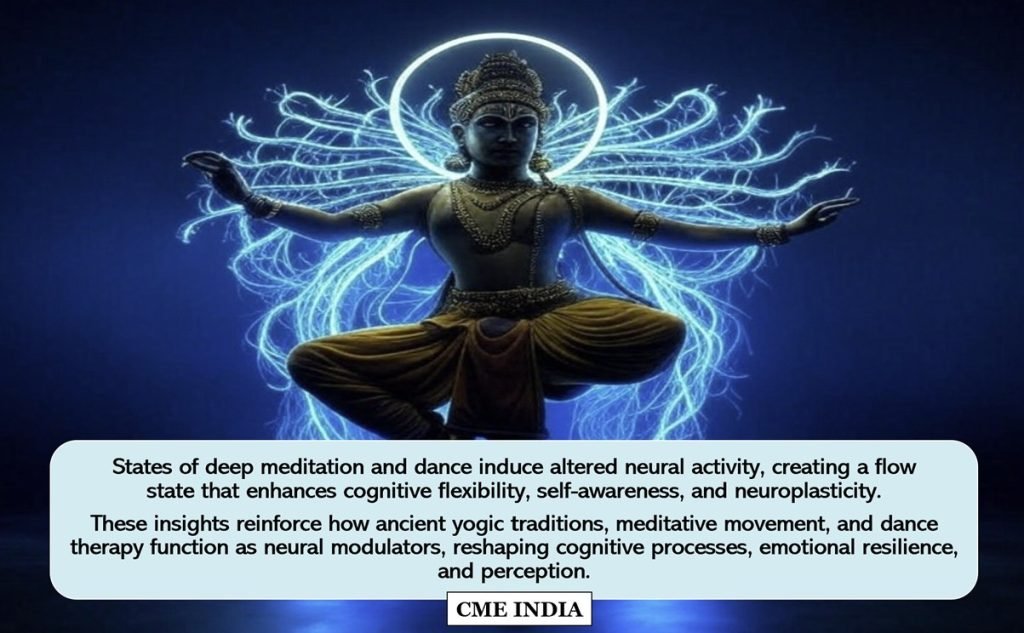
The cosmic dance of Nataraja is not only a representation of the cyclical nature of existence but also an allegory for consciousness, enlightenment, and neural transformation. The third eye of Shiva, the symbol of supreme awareness, parallels modern neuroscientific models of expanded consciousness and cognitive transcendence. Additionally, states of deep meditation and dance induce altered neural activity, creating a flow state that enhances cognitive flexibility, self-awareness, and neuroplasticity. These insights reinforce how ancient yogic traditions, meditative movement, and dance therapy function as neural modulators, reshaping cognitive processes, emotional resilience, and perception.
Shiva’s Third Eye and Neurobiological Models of Enlightenment
In Hindu philosophy, Shiva’s third eye represents transcendental vision, higher perception, and enlightenment. From a neurological perspective, this can be correlated with the activation of prefrontal cortex structures, altered states of consciousness, and neurochemical changes associated with deep introspection.
Neurobiological models of enlightenment suggest:
- The prefrontal cortex, responsible for higher-order cognition, introspection, and self-regulation, is highly active in meditative states, mirroring the symbolism of the third eye as the seat of awareness.
- The pineal gland, historically associated with spiritual insight due to its regulation of melatonin, may play a role in altered states of consciousness, deep sleep, and lucid dreaming, aligning with the symbolism of divine vision.
- Gamma wave synchronization (30–100 Hz), observed in experienced meditators, is associated with heightened awareness, cognitive clarity, and transcendent states, resembling the awakening of the third eye in yogic traditions.
The destruction of illusion (Maya) through the opening of Shiva’s third eye reflects the scientific principle of metacognition, where individuals develop an awareness of their own thought processes, leading to greater self-realization, emotional regulation, and wisdom.
The Flow State in Dancers and Meditators: Neurological Parallels
The concept of Tandava, the vigorous cosmic dance of Shiva, aligns with the flow state, a neurological condition of peak performance, effortless action, and deep focus. Flow states, studied extensively in neuroscience and psychology, occur when an individual is fully immersed in an activity, losing a sense of time and self-consciousness, leading to enhanced cognitive performance and emotional balance.
Neuroscientific studies show that during the flow state, dancers, musicians, and meditators experience:
- Reduced activity in the default mode network (DMN), which is responsible for self-referential thoughts and distractions, leading to an experience of oneness or unity with movement.
- Increased dopamine release, promoting motivation, creativity, and a sense of euphoria, akin to the blissful state described in spiritual practices.
- Theta and alpha wave dominance, creating a state of relaxed focus, enhanced problem-solving, and heightened intuition, mirroring the meditative aspects of Shiva’s dance.
Dancers, much like experienced meditators, exhibit enhanced neural connectivity between motor, sensory, and cognitive centers, reinforcing the idea that movement-based practices can induce a transcendent state akin to meditative enlightenment.
Yoga, Meditation, and Dance as Neuroplasticity-Inducing Practices
The neural effects of dance, yoga, and meditation share common mechanisms that promote neuroplasticity, cognitive resilience, and emotional stability. Shiva’s dance, viewed as a metaphor for movement-based spiritual practice, aligns with modern neurobiological findings on the benefits of structured physical and mental exercise.

Key neuroplasticity-inducing mechanisms include:
- Long-term potentiation (LTP) – The strengthening of synaptic connections in the hippocampus, crucial for learning, memory formation, and cognitive adaptability.
- Increased gray matter density – Studies on long-term meditators show enhanced cortical thickness in regions associated with executive function and emotional regulation, mirroring the mental clarity and insight attributed to yogic wisdom.
- Activation of the vagus nerve – Engaging in dance, deep breathing, and meditative practices stimulates the vagus nerve, reducing stress responses and promoting emotional resilience.
- Enhanced interhemispheric communication – Dance therapy has been shown to increase coordination between the left and right hemispheres, improving cognitive flexibility, motor coordination, and emotional integration.
Neuroscientific research on movement-based therapies suggests that dance, yoga, and meditation foster structural and functional changes in the brain, aligning with the philosophy of Shiva’s cosmic dance as a transformative force in human consciousness.
The cosmic dance of Nataraja provides a symbolic and scientific model for understanding consciousness, altered states, and neuroplasticity. By integrating Shiva’s third eye with neurobiological models of enlightenment, examining the flow state in dancers, and recognizing movement-based therapies as neural modulators, we gain a comprehensive framework that bridges ancient wisdom and modern neuroscience. This convergence offers profound insights into consciousness research, neurorehabilitation, and cognitive transformation, demonstrating that the symbolism of Nataraja extends far beyond mythology into the very fabric of human cognition and neural evolution.
Clinical Applications and Future Directions
The symbolism of Nataraja’s cosmic dance offers profound insights into modern neuroscience, cognitive rehabilitation, and psychiatric therapy. The intricate relationship between movement, consciousness, and energy flow—as depicted in Shiva’s Tandava and Lasya—aligns with emerging scientific evidence on the therapeutic effects of dance, meditation, and rhythmic motion. As the field of movement-based therapy continues to expand, the integration of ancient iconography with modern neuroscientific approaches can revolutionize clinical interventions in mental health, neurology, and rehabilitation.
Dance Therapy in Psychiatry and Neurological Rehabilitation
Dance therapy has gained increasing recognition as an effective intervention for psychiatric and neurodegenerative disorders due to its ability to:
- Regulate mood and emotional processing – Dance therapy has been shown to increase dopamine and serotonin levels, helping individuals with depression, anxiety, and PTSD. The rhythmic and expressive nature of movement promotes emotional release and cognitive reframing.
- Enhance neuroplasticity in neurodegenerative conditions – Studies on Parkinson’s disease and Alzheimer’s disease suggest that rhythmic dance therapy enhances motor control, cognitive function, and neuroplasticity, potentially delaying disease progression.
- Improve sensorimotor coordination and rehabilitation – In stroke patients and individuals recovering from traumatic brain injury (TBI), dance therapy promotes gait retraining, proprioceptive awareness, and fine motor control by activating mirror neuron networks and sensorimotor circuits.
- Modulate autonomic nervous system (ANS) activity – The interplay between Lasya (parasympathetic activation) and Tandava (sympathetic activation) mirrors the ability of dance to balance stress responses, regulate cortisol levels, and improve heart rate variability (HRV), supporting overall physiological resilience.
- Increase mindfulness and cognitive flexibility – Movement practices incorporating symbolic gestures (mudras), breath control (pranayama), and rhythmic motion activate the default mode network (DMN), dorsolateral prefrontal cortex (DLPFC), and anterior cingulate cortex (ACC), regions associated with executive function and self-awareness.
With ongoing research into dance-based interventions, movement therapies could become mainstream treatments for neurological rehabilitation, psychiatric care, and cognitive enhancement.
Ancient Iconography in Modern Neuroscience and Consciousness Research
The depiction of Nataraja’s dance, with its interplay of creation, destruction, and transcendence, finds neuroscientific parallels in consciousness studies, neural oscillations, and embodied cognition. Several aspects of Shiva’s cosmic symbolism align with contemporary models of brain function and altered states of awareness:
- The Third Eye and Higher-Order Cognition – The third eye of Shiva symbolizes heightened awareness, intuition, and enlightenment, which correlates with prefrontal cortex activation, gamma wave synchronization, and peak cognitive performance seen in meditators and experienced dancers.
- Apasmara and Cognitive Suppression – The demon crushed under Shiva’s foot (Apasmara) represents ignorance and cognitive inertia, paralleling modern studies on fear extinction, emotional regulation, and overcoming negative neural conditioning through therapeutic movement and mindfulness practices.
- The Cycle of Rhythm and Neural Entrainment – The Damaru (drum of creation) signifies the sonic vibrations underlying cosmic rhythm, which aligns with studies on neural entrainment, binaural beats, and the role of rhythmic stimulation in neurorehabilitation.
Bridging Metaphysics and Empirical Science in Movement-Based Therapies
The integration of metaphysical concepts with empirical research presents exciting opportunities for interdisciplinary collaboration in medicine, neuroscience, and movement therapy. Several key areas offer potential for bridging ancient wisdom with modern science:
- Yoga, dance, and meditative movement as neuroplasticity-inducing practices – Long-term studies on practitioners of dance, yoga, and mindfulness-based movement have demonstrated enhanced cortical thickness, improved neural connectivity, and increased resilience to age-related cognitive decline.
- Symbolic movement and embodied cognition – The gestures, poses, and rhythmic motions found in Hindu iconography, mudras, and sacred dance traditions offer unique insights into how symbolic movement impacts cognition, emotion, and physiological states.
- Energy flow and neural resonance – The concept of Prana (life energy) in yogic traditions aligns with emerging studies on bioelectromagnetic fields, brain coherence, and neurophysiological mechanisms underlying energy-based therapies.
Future Directions
As research into dance therapy, embodied cognition, and consciousness studies advances, future explorations should focus on:
- Neuroimaging studies of movement-based meditation to assess changes in brain connectivity, neural oscillations, and cognitive states.
- Randomized controlled trials (RCTs) on dance-based therapies for Parkinson’s disease, dementia, PTSD, and depression.
- Integration of Eastern philosophies with modern psychotherapy to develop holistic treatment models for mental health and neurological rehabilitation.
- Exploration of symbolic gestures (mudras) and archetypal movement patterns in improving somatic awareness, trauma recovery, and self-regulation.
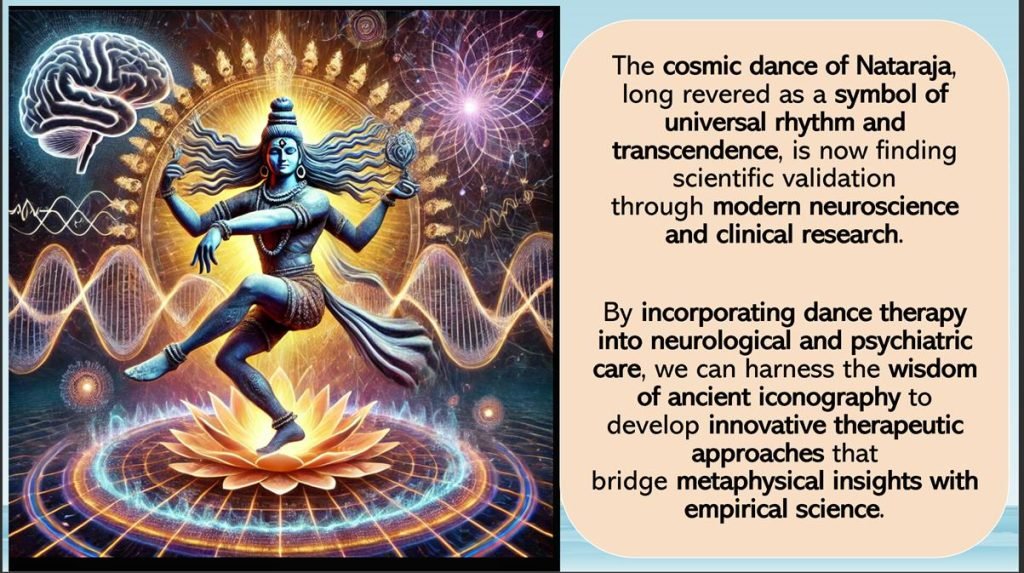
The cosmic dance of Nataraja, long revered as a symbol of universal rhythm and transcendence, is now finding scientific validation through modern neuroscience and clinical research. By incorporating dance therapy into neurological and psychiatric care, we can harness the wisdom of ancient iconography to develop innovative therapeutic approaches that bridge metaphysical insights with empirical science. The future of movement-based medicine lies in recognizing and integrating the transformative power of dance, rhythm, and symbolic motion into contemporary healing practices.
Conclusion:
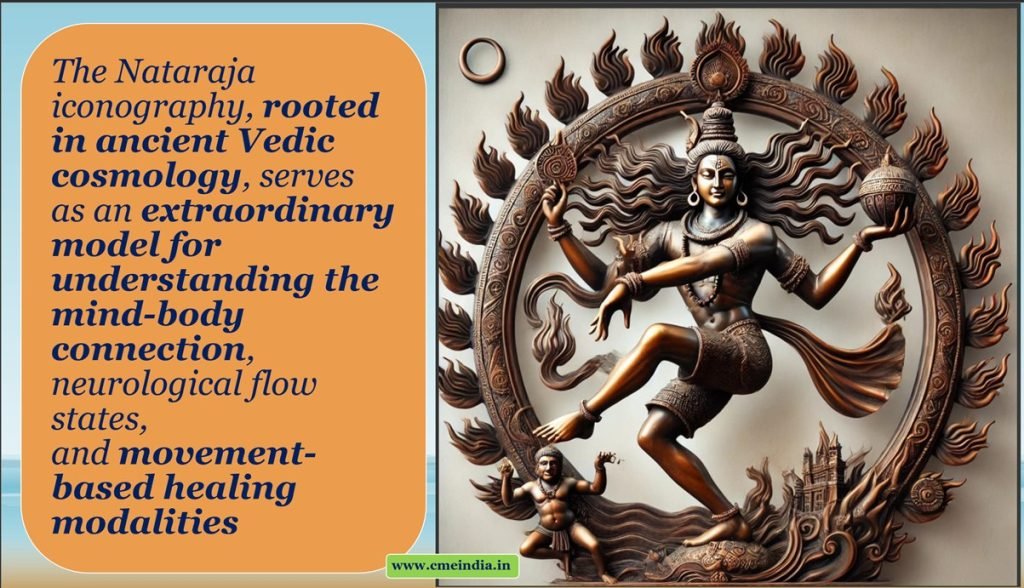
The Nataraja iconography, rooted in ancient Vedic cosmology, serves as an extraordinary model for understanding the mind-body connection, neurological flow states, and movement-based healing modalities. Future research should explore how Shiva’s dance-inspired practices can be leveraged in clinical neurorehabilitation, psychiatric disorders, and consciousness studies.
Further Reading:
- Moratelli JA, Veras G, Lyra VB, Silveira JD, Colombo R, de Azevedo Guimarães AC. Evidence of the Effects of Dance Interventions on Adults Mental Health: A Systematic Review. J Dance Med Sci. 2023 Dec;27(4):183-193. doi: 10.1177/1089313X231178095.
- Lee NY, Lee DK, Song HS. Effect of virtual reality dance exercise on the balance, activities of daily living, and depressive disorder status of Parkinson’s disease patients. J Phys Ther Sci. 2015;27:145-147.
- Akandere M, Demir B. The effect of dance over depression. Coll Antropol. 2011;35(3):651-656.
- Samajdar, Shambo Samrat et al. Evaluating the impact of Gayatri Mantra chanting and meditation on treatment outcomes in patients with chronic spontaneous urticaria: A prospective study. Aesthetics International 2(1):p 28-33, Jan–Jun 2024. | DOI: 10.4103/ASIL.ASIL_5_24
- Samajdar SS, Mukherjee S, Ghosh A, Joshi S, Tripathi SK. Effect of Gayatri Mantra chanting on attention, memory, anxiety and mental state in young athletes:A prospective study. Int J Curr Res Physiol Pharmacol. 2020;4:5–7.
- Mitra R, Samajdar SS, Mukherjee S, Ghosh A, Sutradhar M, Jana D, et al. Effect of ‘OM’chanting in addition with conventional pharmacotherapy in mild to moderate COPD patients:A prospective study. Int J Sci Res. 2020;9:69–71.

Discover CME INDIA

- Explore CME INDIA Repository
- Examine CME INDIA Case Study
- Read History Today in Medicine
- Register for Future CMEs
great insight in traditional customs, practice and modern science needs more exploration and application to authenticate.
From the individual cell to each organ,the living body dances according to a rhythm.We see any aberration as disease.Music and dance have a profound effect on healing and prevention of disease,increasing the release of endorphins and other helpful hormones.Music and dance should be made a part of disease prevention and treatment.
Very impressive. Must be scientifically pursued & incorporated in our daily lives like Yoga .
Thanks for enlightening on effect of dance and meditation on the brain. I am planning to do EEG in persons before and after meditation. If need be I may require some of your material to be used as the source. I need your help and permission.
thanking you
DR. SUDHIR KHETARPAL (M.D.- Medicine)
Q-28
Rajouri Garden
New Delhi- 110027
khetarpal@yahoo.com
Mobile 9810052265
You can use freely