
CME INDIA Presentation by Dr. S. K. Gupta, MD (Med), FICP, CFM (France) Clinical Associate Professor GS Medical College, CCSU, Uttar Pradesh, India. Visiting Consultant, Max Super Specialty Hospital, New Delhi.
World TB Day: A Day of Reflection and Resolve
A Day of Reflection and Resolve
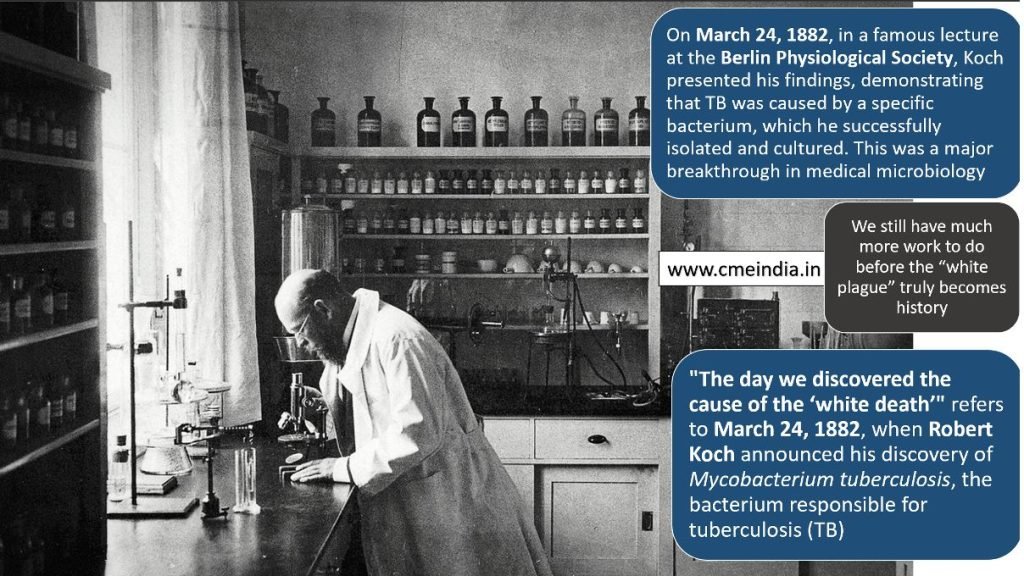
- Each year on March 24, the world commemorates World Tuberculosis (TB) Day, marking the date in 1882 when Dr. Robert Koch announced his discovery of Mycobacterium tuberculosis. Despite the scientific breakthrough over a century ago, TB continues to exact a heavy toll on global health. Today, TB remains the second leading infectious disease killer worldwide after COVID-19, responsible for 1.3 million deaths and over 10.6 million new infections in 2022 alone, according to the World Health Organization (WHO).
- TB is a disease that has long plagued humanity. Yet, unlike other global health threats, it is preventable, curable, and conquerable – given the right policies, funding, technologies, and collective will.
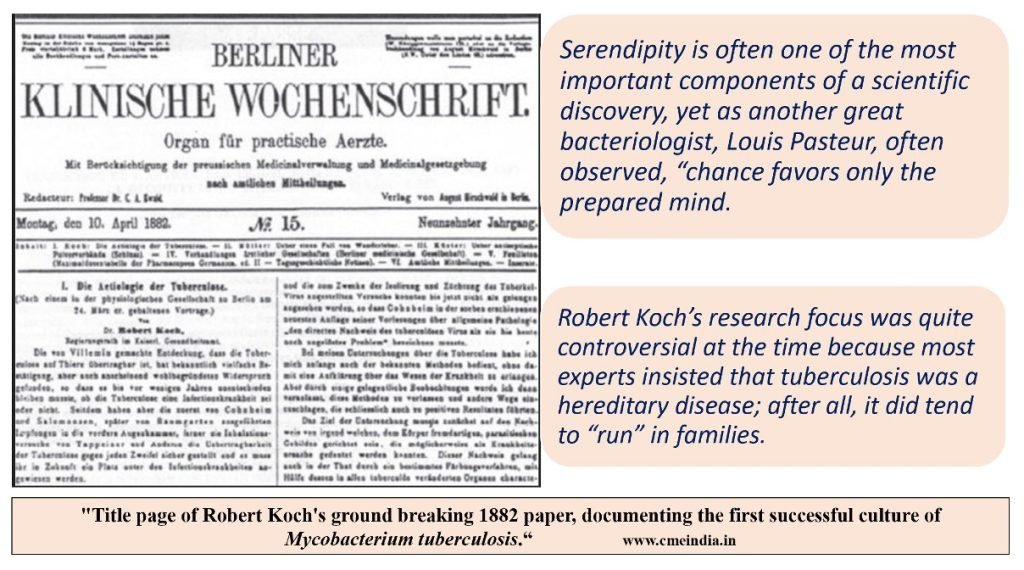
We will throw a glance into the past, watch the present and look into the future of this monster.
The Past: A Grim History of Human Suffering
- Historically known as the “White Plague,” tuberculosis has been one of the deadliest diseases. In the pre-antibiotic era, TB ravaged communities across Europe, Asia, and Africa, often associated with poverty, malnutrition, and overcrowded urban settings.
- The development of antibiotics like streptomycin and isoniazid in the 1940s and 1950s gave hope, but the optimism was short-lived. Inconsistent treatment, incomplete drug courses, and lack of access to healthcare led to the emergence of drug-resistant strains.
- In the 1990s, WHO introduced the DOTS strategy (Directly Observed Treatment, Short-course), a systematic public health approach that significantly improved treatment success rates. However, the emergence of Multidrug-Resistant TB (MDR-TB) and Extensively Drug-Resistant TB (XDR-TB) remains a global concern.
The Present: Global TB Burden
- According to the WHO Global Tuberculosis Report 2023, the statistics are staggering:
- 10.6 million people fell ill with TB in 2022 (up from 10.1 million in 2020).
- 1.3 million deaths occurred among HIV-negative people, and another 187,000 deaths among HIV-positive people.
- Mycobacterium getting resistant to available drugs poses a significant challenge to control and elimination efforts of this deadly disease .
- 3.5% of new cases and 18% of previously treated cases were resistant to rifampicin, the most effective first-line drug.
The burden of TB is unevenly distributed. Just eight countries account for over two-thirds of the global total:
| India (28%) |
| Indonesia |
| China |
| Philippines |
| Pakistan |
| Nigeria |
| Bangladesh |
| Democratic Republic of the Congo |
Impact of COVID-19: A Setback in the Fight Against TB
- The COVID-19 pandemic profoundly disrupted TB services across the globe:
- In 2020, there was a drop of 18% in newly diagnosed TB cases.
- An estimated 1.4 million fewer people received care.
- Health resources were diverted, diagnostics were delayed, and public health staff reassigned.
- By 2022, there was a partial recovery in TB case detection and service delivery. However, backlogs in undiagnosed cases and treatment interruptions have worsened disease outcomes and transmission, especially in low-income nations.
The world is not just watching helplessly – UN, WHO and Nations are in action.
- WHO’s Response: The “End TB Strategy”
- Launched in 2015, WHO’s End TB Strategy aims to reduce TB deaths by 95% and cut new cases by 90% by 2035, compared to 2015 levels. The strategy is based on three pillars:
- Integrated patient-centered care and prevention
- Bold policies and supportive systems
- Intensified research and innovation
- The United Nations High-Level Meetings on TB in 2018 and 2023 reaffirmed these goals. The latest meeting aimed to mobilize US$22 billion annually by 2027 to scale up prevention and care.
Civil Society and Global Partnerships
- Civil society plays a critical role in the fight against TB:
- Community health workers support DOTS programs and ensure treatment adherence.
- TB survivors and advocates help reduce stigma and misinformation.
- NGOs and local groups offer nutritional support and mental health care.
- The Stop TB Partnership, a global advocacy and technical body, unites over 1,500 organizations worldwide to accelerate action.

India’s leadership: Commitment to eliminate TB by 2025
- India carries the highest burden of TB in the world, with an estimated 2.8 million cases annually. Recognizing the scale and urgency, the Government of India has committed to eliminating TB by 2025, five years ahead of the global target.
- Key Initiatives Include:
- National Strategic Plan for TB Elimination (2017–2025)
- Emphasizes early detection, universal drug susceptibility testing, public-private partnerships, nutrition support, and digital surveillance.
- Introduced Nikshay, a real-time digital platform for tracking patients and ensuring adherence.
- Nikshay Poshan Yojana (NPY)
- Provides Rs. 500/month as nutritional support to TB patients.
- Over 50 lakh beneficiaries have received support under the scheme.
- Private Sector Engagement
- More than 60% of TB patients initially seek care from the private sector.
- National Strategic Plan for TB Elimination (2017–2025)
- India’s efforts in integrating private providers into the national response have shown encouraging results.
- JEET: Joint Effort for Elimination of TB: The JEET initiative is a flagship public-private collaboration launched in 2018 under the guidance of the Ministry of Health and Family Welfare, in collaboration with:
- The Clinton Health Access Initiative (CHAI)
- The William J. Clinton Foundation
- The Stop TB Partnership
- USAID
Key achievements of JEET:
- Focuses on urban and high TB burden areas in 400+ districts.
- Deployed field coordinators and treatment support staff to improve linkages between private and public health sectors.
- Ensures free diagnosis and treatment for patients in the private sector.
- Enabled notifications of over 10 lakh TB cases from the private sector since inception.
- Reduced diagnostic delays, increased treatment initiation, and improved adherence.
- JEET has proven to be a game-changer in bridging the gap between the private and public health ecosystems, strengthening India’s efforts toward TB elimination.
Challenges on the road to elimination
- While India and other nations have made substantial progress, multiple challenges remain:
- MDR-TB and XDR-TB require costly, prolonged treatment with lower success rates.
- Stigma and misinformation continue to delay diagnosis and treatment.
- Undernutrition, a major risk factor, remains rampant among TB patients in India.
- Migrant populations and urban slums are difficult to reach.
- Funding gaps, particularly after COVID-19, threaten sustained progress.
The Looming Threat: US Fund Cuts to Global TB Programs
- The United States has historically been the largest donor to global TB programs, contributing nearly US$400 million annually to the Global Fund to Fight AIDS, Tuberculosis and Malaria and other TB initiatives.
- However, proposed budget cuts and reallocation of funds to domestic priorities post-COVID have raised alarms. The Stop TB Partnership warns that reduced funding could:
- Jeopardize drug procurement and vaccine development.
- Limit access to diagnostics and treatment in low-income countries.
- Slow progress toward elimination goals globally.
The Future: Innovation, Integration, and Equity
To truly end TB, the world must invest in next-generation tools and inclusive systems:
- New Diagnostics and Regimens
- GeneXpert, TrueNat, and AI-based imaging tools for faster diagnosis.
- Shorter, safer regimens like BPaL (bedaquiline, pretomanid, linezolid) for drug-resistant TB.
- Vaccine Development
- BCG vaccine offers limited protection.
- Promising new vaccines like M72/AS01E (by GSK and Gates Foundation) are in advanced trials with over 50% efficacy in preventing active TB.
- Digital Health Tools
- Mobile apps for adherence, AI for case detection, and blockchain for supply chain management.
- Integrated Health Services
- Addressing TB alongside HIV, diabetes, malnutrition, and tobacco use.
- Universal Health Coverage (UHC) and Ayushman Bharat in India can provide holistic care.
A Call to Action for Mankind
- Tuberculosis is not just a disease of poverty—it is a reflection of social injustice, inequality, and neglect. Eliminating TB is not only a medical challenge but a moral imperative.
- As we observe World TB Day, let us remind ourselves:
- That no one should die of a disease we know how to prevent and treat.
- That India’s bold vision of eliminating TB by 2025 offers hope to millions.
- That communities, clinicians, scientists, and governments must act in unison.
- Together, we can make TB history—by investing in people, science, and solidarity.
CME INDIA Highlight
World TB Day 2025
Observed annually on March 24, World TB Day highlights the urgent need to eliminate tuberculosis (TB)—one of the world’s deadliest infectious diseases. Despite being preventable and curable, TB continues to affect millions globally, leading to devastating health, social, and economic consequences.
Theme: ‘Yes! We Can End TB: Commit, Invest, Deliver’
The 2025 theme is a powerful call to action, emphasizing hope, urgency, and accountability in the fight against TB.
- Commit – At the 2023 UN High-Level Meeting, world leaders pledged to accelerate efforts to end TB. Now, real action is needed—implementing WHO policies, strengthening national strategies, and ensuring full funding.
- Invest – TB cannot be eradicated without proper financing. A bold, diversified funding approach is essential to drive innovation, expand access to prevention, treatment, and care, and advance research.
- Deliver – Turning commitments into action requires scaling up proven interventions, including early detection, diagnosis, preventive treatment, and high-quality care—especially for drug-resistant TB. Success depends on community leadership, civil society engagement, and cross-sector collaboration.
Why it matters?
- Each day, over 3,400 people die from TB, and nearly 30,000 fall ill. TB remains the leading cause of death among people with HIV and a major contributor to antimicrobial resistance.
- World TB Day serves as a crucial reminder to amplify global efforts, support affected communities, and drive urgent action toward ending TB suffering and deaths.

References:
- World Health Organization (WHO) Global Tuberculosis Report 2023 https://www.who.int/publications/i/item/9789240061729
- WHO Tuberculosis Fact Sheet (Updated 2023) https://www.who.int/news-room/fact-sheets/detail/tuberculosis
- Stop TB Partnership – Global Plan to End TB 2023–2030 https://www.stoptb.org/global-plan-to-end-tb/global-plan-2023-2030
- JEET Initiative (Joint Effort for Elimination of TB) – Overview by CHAI https://www.clintonhealthaccess.org/our-work/tuberculosis/
- India’s National Strategic Plan for TB Elimination (2017–2025) – Ministry of Health and Family Welfare https://tbcindia.nic.in/WriteReadData/NSP%20Draft%2020.02.2017%201.pdf
- Nikshay Poshan Yojana – Government of India https://tbcindia.nic.in/showfile.php?lid=3316
- India TB Report 2023 – Central TB Division, Ministry of Health and Family Welfare https://tbcindia.nic.in/showfile.php?lid=3654
- United Nations High-Level Meeting on TB (2023) Political Declaration https://www.un.org/pga/77/wp-content/uploads/sites/105/2023/09/TB-Final-Text.pdf
- M72/AS01E TB Vaccine Candidate – Phase III Clinical Trial Initiation by Gates MRI https://www.gatesmri.org/mri-initiates-phase-3-clinical-trial-tuberculosis-vaccine-candidate/
- Global Fund – TB Program Funding Information https://www.theglobalfund.org/en/tuberculosis/
Discover CME INDIA

- Explore CME INDIA Repository
- Examine CME INDIA Case Study
- Read History Today in Medicine
- Register for Future CMEs
Fantastic
Wow
Amazing