

CME INDIA Presentation by Dr. Shambo Samrat Samajdar1, Dr. Iryna Vlasenko2, Dr. N. K. Singh3, Dr. Banshi Saboo4, Dr. Shashank R Joshi5, Dr. V. Mohan6
- Consultant, Diabetes & Allergy-Asthma Therapeutics Specialty Clinic, Kolkata
- Dr Iryna Vlasenko is an international expert in diabetes, currently a Vice President of the International Diabetes Federation.
- Editor-in Chief, CME INDIA.
- Chair, South-East Asia Region, International Diabetes Federation (IDF-SEA).
- Endocrinologist, Mumbai.
- Chairman of Dr. Mohan’s Diabetes Specialities Centre, Foundation, Chennai.
Globally, the number of people living with diabetes is alarmingly high and projected to rise further, with nearly half of those affected remaining undiagnosed. Diabetes can be identified through fasting plasma glucose, the 2-hour oral glucose tolerance test (OGTT), or glycated haemoglobin (HbA1c), using universally accepted diagnostic thresholds, yet these methods often lack alignment.
Screening for undiagnosed diabetes is crucial to pinpoint individuals who could benefit from early intervention. Intermediate hyperglycaemia (IH), commonly known as prediabetes, encompasses impaired glucose tolerance (IGT), impaired fasting glucose (IFG), and intermediate HbA1c levels, though definitions vary—WHO and ADA criteria differ for IFG, and WHO excludes HbA1c as a marker.
The prevalence of IH exceeds that of diabetes, but it fluctuates depending on the screening method, with these tests showing inconsistency; notably, IGT detection relies solely on the 2-hour OGTT. Recently, the 1-hour OGTT has emerged as a potential alternative. Screening for IH highlights those who could prevent progression to type 2 diabetes mellitus (T2DM) through targeted interventions.
Diabetes prevention strategies encompass both individual-focused high-risk approaches and broader population-based efforts. Structured lifestyle modification programs effectively prevent or delay T2DM in individuals with IGT, though not in those with isolated IFG, while evidence for HbA1c-detected IH remains scarce; certain medications also show promise in delaying T2DM onset. Successful prevention programs have been implemented in community and national settings across various countries. These programs differ in their target populations, screening methods, and the intensity and delivery of lifestyle interventions, with limited data on diabetes prevention outcomes, though weight loss and increased physical activity offer encouraging signs.
Decisions to launch high-risk individual prevention programs should hinge on local resources, health system capacity, and cost, with tailored design and adaptation being key. Population-wide strategies aim to curb modifiable diabetes risk factors—promoting healthier diets, regular exercise, and the prevention and management of overweight and obesity. Promisingly, diabetes incidence appears to be stabilizing or declining in many higher-income countries.
Introduction
- Scope and urgency: >537 million with diabetes globally; expected to reach 783 million by 2045.
- Aims: Provide global, evidence-based, practical clinical guidance adaptable across all healthcare settings.
- Structure: All chapters are divided into “Optimal Care” and “Basic Care” to reflect resource availability.
Chapter 1: Screening, Detection, and Prevention
Key Diagnostic Thresholds
| Test | Diabetes | Intermediate Hyperglycaemia |
| FPG | ≥7.0 mmol/L | 6.1–6.9 (WHO), 5.6–6.9 (ADA) |
| 2h OGTT | ≥11.1 mmol/L | 7.8–11.0 mmol/L |
| HbA1c | ≥6.5% | 5.7–6.4% (ADA), 6.0–6.4% (IEC) |
- 1h OGTT (≥8.6 mmol/L) is promising for early detection.
- Global concern: 43% of diabetes cases remain undiagnosed.
Glycaemic Targets Summary
| Metric | Target (Preferred) | Target (Acceptable) |
| HbA1c | <7.0% (<53 mmol/mol) | Personalised by patient |
| Fasting glucose | 4.0–8.0 mmol/L (70–144 mg/dL) | |
| Post-prandial glucose (1–2h post meal) | 4.0–8.0 mmol/L (70–144 mg/dL) | 4.0–9.0 mmol/L (70–160 mg/dL) |
Prevention Strategies
- Lifestyle programs targeting 5–7% weight loss significantly reduce risk.
- Medications (e.g. metformin) effective for high-risk individuals, especially those with GDM history or BMI >35.
- National programs like the US DPP, NHS DPP, and Life! Australia show scalability.
Chapter 2: Glycaemic Management
Targets
| Measure | General Target | Notes |
| HbA1c | <7.0% | Adjust per comorbidity/frailty |
| Fasting Glucose | 4–8 mmol/L | Less stringent for older adults |
| Postprandial Glucose | 4–8 mmol/L | Target peak <9 mmol/L if possible |
Monitoring Tools
- HbA1c for long-term control.
- CGM preferred for insulin-treated patients; SMBG for broader use.
- Time-in-range (TIR): >70% ideal (3.9–10 mmol/L); <4% hypoglycaemia recommended.
Chapter 3: Non-Insulin Glucose-Lowering Therapies
First-Line
- Metformin: Remains the foundation.
Key Drug Classes
| Class | CV Benefit | Renal Benefit | Weight Effect | Hypo Risk | Notes |
| SGLT2i | Yes | Strong | Loss | Low | Use in HF, CKD, ASCVD |
| GLP-1 RAs | Yes | Moderate | Strong Loss | Low | GI side effects; injectables |
| DPP-4 inhibitors | Neutral | Neutral | Neutral | Very Low | Well-tolerated |
| TZDs | Harmful (HF) | Neutral | Gain | Low | Contraindicated in HF |
| Sulfonylureas | Neutral | Neutral | Gain | Moderate | Inexpensive but risk hypoglycaemia |
| Alpha-glucosidase inhibitors | Limited | Neutral | Neutral | Low | Mainly in Asia |
Chapter 4: Insulin Therapy
When to Start?
- HbA1c >10%, symptoms, or failure of dual/triple therapy.
- Basal insulin first (10 units/day or 0.1–0.2 U/kg/day).
Intensification
| Step | Options |
| Still uncontrolled | Add prandial insulin, switch to premixed, or use GLP-1 RA |
| Over basalisation | Avoid >0.5 U/kg/day without adding prandial insulin |
| Frailty or tight control | Consider insulin deintensification (to basal-only) |
Insulin Therapy Overview
| Step | Recommendation |
| Initiation | Basal insulin 10 units/day or 0.1–0.2 units/kg/day |
| Titration | Increase 2–4 units/week until FPG target achieved |
| Intensification Options | Add prandial insulin, switch to premixed, or add GLP-1 RA |
| Deintensification Criteria | Frailty, HbA1c <6.5%, frequent hypoglycaemia, polypharmacy |
| Deintensification Options | Switch from basal-bolus to basal ± non-insulin agents |
Chapter 5: Weight Management
Key Concepts
- Obesity is linked to >40% of T2DM globally.
- Asians require lower BMI cut-offs due to visceral adiposity risks.
BMI Targets (Ethnicity-Specific)
| Classification | General BMI | Asian BMI |
| Overweight | 25–29.9 | 23–27.4 |
| Obese | ≥30 | ≥27.5 |
Interventions
- First-line: Intensive behavioral therapy.
- Pharmacotherapy: GLP-1 RA or newer agents like tirzepatide (if accessible).
- Bariatric surgery for BMI ≥35 with comorbidities or ≥40.
Chapter 6: Cardio-Renal Protection
Integrated Risk Reduction
| Intervention | Impact |
| SGLT2 inhibitors | Reduce HF hospitalization, CKD decline, CV death |
| GLP-1 RAs | Lower MACE, mortality |
| ACEi/ARB | Protect kidneys, reduce BP |
| Statins | Reduce CV events |
| Finerenone | Improves renal/cardiac outcomes in CKD |
- Screen all patients for eGFR and UACR annually.
- Prioritize SGLT2i + GLP-1 RA in high-risk individuals.
Chapter 7: Liver Disease (MASLD)
Relevance
- MASLD (formerly NAFLD) affects >60% of T2DM patients.
- Associated with CV risk and progression to cirrhosis.
Recommendations
| Screen using ALT + FIB-4 score. |
| Encourage weight loss ≥10%. |
| Consider GLP-1 RAs and pioglitazone (if no HF). |
| Avoid hepatotoxic drugs; refer for biopsy if FIB-4 high. |
Implementation Strategies for All Settings
| Use risk scores where lab access is limited. |
| Adapt monitoring (SMBG, symptom-based) if HbA1c/CGM not feasible. |
| Use combination therapy early where possible. |
| Promote team-based care, including trained non-physician providers. |
15-point executive summary of the IDF Global Clinical Practice Recommendations for Managing Type 2 Diabetes – 2025, ideal for physicians:
| 1. Dual Care Model: Recommendations are divided into Optimal Care (resource-rich) and Basic Care (resource-constrained) to support global implementation. |
| 2. Screening Strategy: Use risk scores, FPG, OGTT, and HbA1c (if available). Early detection is key—over 43% of diabetes cases are undiagnosed globally. |
| 3. Diagnosis Thresholds: Diabetes defined by FPG ≥7.0 mmol/L, 2h OGTT ≥11.1 mmol/L, or HbA1c ≥6.5% (if standardised and available). |
| 4. Lifestyle-first Prevention: Structured programs with 5–7% weight loss and 150 min/week of physical activity can reduce diabetes incidence by up to 60%. |
| 5. Glycaemic Targets: Aim for HbA1c <7.0%, fasting glucose 4–8 mmol/L, and postprandial <9 mmol/L; personalize based on comorbidities and frailty. |
| 6. Monitoring Tools: Use CGM in insulin users where feasible; SMBG remains vital in all settings; monitor Time in Range (TIR) (>70%). |
| 7. First-line Therapy: Metformin is the universal first-line agent unless contraindicated; safe, effective, and low-cost. |
| 8. Cardio-Renal Therapies: SGLT2 inhibitors and GLP-1 receptor agonists are prioritized in patients with ASCVD, CKD, or HF for organ protection. |
| 9. Combination Therapy at Diagnosis: Starting with dual therapy improves glycaemic durability and reduces long-term complications. |
| 10. Insulin Initiation: Indicated when HbA1c >10%, symptomatic, or uncontrolled; start with basal insulin (0.1–0.2 U/kg/day). |
| 11. Insulin Deintensification: In frail or elderly adults, consider simplifying to basal-only or oral regimens to reduce hypoglycaemia risk. |
| 12. Weight Management: Target ≥5–10% weight loss; GLP-1 RAs and bariatric surgery may be considered based on BMI thresholds and comorbidities. |
| 13. MASLD (NAFLD) Management: Screen with ALT + FIB-4; manage with weight loss and GLP-1 RAs; pioglitazone may be considered if no HF. |
| 14. Cardio-Renal Screening: Regularly assess eGFR, UACR, and blood pressure; use ACEi/ARB, SGLT2i, finerenone as appropriate. |
| 15. Equity in Access: Simplified regimens, task-sharing with community health workers, and prioritization of affordable agents enable care in low-resource settings. |
At a Glance
Screening Issues
- The IDF Global Clinical Practice Recommendations for Managing Type 2 Diabetes – 2025 underscore the critical role of glycaemic control in reducing micro- and macrovascular complications, with HbA1c serving as the gold standard for assessment, typically targeting <7.0% (<53 mmol/mol), though personalized to balance benefits, hypoglycaemia risks, and individual factors.
- Alternative markers like fructosamine and glycated albumin offer options when HbA1c is unreliable, while the interplay of fasting and postprandial glucose highlights the need for tailored monitoring. Tools like self-monitoring of blood glucose (SMBG) and continuous glucose monitoring (CGM) enhance management, particularly in insulin-treated patients, with structured use and emerging metrics like glycaemic variability and time in range, though evidence for CGM in non-insulin-treated T2DM remains limited.
- Despite these advances, access to essential tools such as HbA1c testing, SMBG, and CGM remains a significant challenge in low- and middle-income countries, where most people with diabetes reside, emphasizing the need for equitable solutions to improve outcomes globally.
Turing the Tide: Halt Complications
- The persistent challenge of poor glycaemic control in type 2 diabetes mellitus (T2DM) globally underscores an urgent, unmet need that remains a cornerstone of diabetes care.
- Early and intensive glycaemic management not only curtails micro- and macrovascular complications but also delivers a lasting legacy effect, reducing risks for decades, while comprehensive multifactorial approaches targeting glucose, blood pressure, and lipids further lower cardio-renal events and mortality.
- Recent trials highlight the cardio-renal benefits of SGLT2 inhibitors and GLP-1 receptor agonists, sparking discussions on balancing glycaemic focus with organ protection, though their accessibility remains uneven, particularly in lower-resource settings where treatment options are constrained.
- Personalized therapy, rooted in shared decision-making and bolstered by lifestyle interventions, is paramount, with metformin retaining its status as the first-line choice for its proven efficacy, safety, and affordability, while emerging evidence supports adding SGLT2 inhibitors or GLP-1 agonists early to enhance outcomes.
- Initial combination therapies, timely intensification to combat clinical inertia, and judicious deintensification in specific cases further refine management, all tailored to address comorbidities like cardio-renal disease and obesity, reinforcing the need for equitable, evidence-based strategies to transform T2DM care worldwide.
Insulin therapy remains a vital option
- The decision to initiate insulin must account for individual preferences, safety concerns, cultural and religious factors, health literacy, and language barriers.
- A variety of insulin types—human, analogue, and biosimilar—are available, offering similar clinical outcomes, though long-acting analogues slightly reduce hypoglycaemia risk compared to intermediate human insulins.
- However, global access to insulin is limited, with only about half of those who could benefit receiving appropriate therapy due to regulatory, supply chain, cost, and device access barriers, though biosimilars hold promise for improving affordability.
- Diverse insulin pharmacokinetic profiles, from ultra-rapid-acting to long-acting, enable personalized treatment, while premixed insulins combine rapid- or short-acting with intermediate- or long-acting components to target both fasting and postprandial glucose.
- Combining insulin with agents like GLP-1 receptor agonists or SGLT2 inhibitors can enhance glycaemic control, promote weight loss, lower insulin doses, and reduce hypoglycaemia risk. Insulin initiation typically starts with once-daily basal insulin alongside oral medications, with intensification options including prandial insulin, premixed regimens, or additional agents, tailored to glycaemic responses, patient preferences, and resources.
- Regular reassessment is crucial, with deintensification or simplification considered, particularly for older or frail individuals, to minimize hypoglycaemia, reduce treatment burden, and enhance quality of life.
Obesity significantly drives type 2 diabetes mellitus
- Obesity contributes to 43% of cases worldwide and fueling a rise in childhood T2DM, though many Asians develop T2DM at lower body weights, often with ideal weight at diagnosis.
- A intricate mix of biological, genetic, socioeconomic, educational, environmental, and commercial factors links obesity and T2DM, imposing a massive health and economic toll—about 12% of global health expenditure (nearly US $1.015 trillion annually)—with lower- and middle-income countries (LMICs) grappling with both malnutrition and escalating obesity.
- Evidence strongly supports weight reduction strategies to prevent and reverse T2DM and related comorbidities, with a 1 kg weight loss typically lowering HbA1c by 0.1% (1.1 mmol/mol). Ethnic-specific BMI and waist circumference cut-offs are advised, alongside a tailored weight management approach—spanning lifestyle changes (nutrition, exercise, counseling), pharmacotherapy, and metabolic bariatric surgery—based on obesity severity, comorbidities, and resources.
- Intensive lifestyle interventions, very low-calorie diets, and surgery can achieve T2DM remission, though sustaining it long-term is difficult. Incretin-based therapies like semaglutide, tirzepatide, and retatrutide excel in weight loss and glycaemic control but are costly and scarce in resource-poor settings.
- Blood glucose-lowering therapies should be chosen with weight impact in mind: SGLT2 inhibitors, GLP-1 receptor agonists, and metformin aid weight loss, while sulfonylureas and glitazones promote weight gain.
- Metabolic bariatric surgery offers sustained remission, better glycaemic control, and improved micro- and macrovascular outcomes, yet its availability remains limited, particularly in resource-constrained regions.
Catch them Early
- Diabetes complications arise from a complex mix of hyperglycaemia, cardiometabolic risks like high blood pressure and lipids, obesity, and unhealthy lifestyles, with cardio-renal issues—such as atherosclerotic cardiovascular disease (ASCVD), heart failure (HF), and chronic kidney disease (CKD)—being key causes of early death and illness in type 2 diabetes mellitus (T2DM). Cardiovascular disease affects about 30% of T2DM patients, including coronary artery disease, silent heart attacks, and HF, while CKD impacts around 40%, with notable ethnic variations.
- Early and routine screening for CVD (via risk scores, symptoms, ECG, echocardiography, and biomarkers) and CKD (using eGFR and urine albumin-to-creatinine ratio) is vital for prompt action. Effective management hinges on a multi-pillar strategy: glycaemic control, risk factor management (blood pressure, lipids, smoking cessation, weight), and cardio-renal protective therapies.
- Newer agents like SGLT2 inhibitors and GLP-1 receptor agonists stand out, with SGLT2 inhibitors reducing kidney disease progression, HF hospitalizations, and cardiovascular death, and GLP-1 receptor agonists cutting major cardiovascular events, all-cause mortality, and kidney risks. Other glucose-lowering drugs (metformin, sulfonylureas, DPP4 inhibitors, insulin) are largely neutral for cardio-renal outcomes, while thiazolidinediones raise HF risk; non-steroidal mineralocorticoid receptor antagonists like finerenone add further cardio-renal benefits.
- However, global access to screening and optimal treatments remains limited in low-resource settings, underscoring the need for a structured, integrated approach combining traditional and novel therapies to enhance cardio-renal outcomes in T2DM.
MASLD: The Biggest Obstacle Ahead
- Metabolic dysfunction-associated steatotic liver disease (MASLD), formerly non-alcoholic fatty liver disease (NAFLD), is the leading chronic liver condition, strongly tied to type 2 diabetes mellitus (T2DM), intermediate hyperglycaemia, and obesity, heightening risks for liver and cardio-renal complications.
- With a global prevalence of 65% in T2DM patients—32% having metabolic dysfunction-associated steatohepatitis (MASH), 36% fibrosis, and 15% advanced fibrosis—MASLD demands attention, particularly to identify and manage “at-risk” cases to halt progression to cirrhosis.
- Screening in T2DM involves the Fibrosis-4 index (FIB-4) followed by imaging like vibration-controlled transient elastography (VCTE) or magnetic resonance elastography (MRE) where available, though resource-poor settings face challenges with limited diagnostics, preferred medications, and specialist care. Liver biopsy is rarely needed, and management focuses on lifestyle changes and 5%–10% weight loss.
- Resmetirom, the only U.S.-approved MASH therapy, targets non-cirrhotic MASH with moderate-to-advanced fibrosis, while no T2DM glucose-lowering drugs are MASLD-specific. Some GLP-1 receptor agonists (e.g., semaglutide, liraglutide, tirzepatide) and pioglitazone improve MASH histology—semaglutide notably aids fibrosis—though pioglitazone’s availability and side effects limit its use.
- SGLT2 inhibitors reduce liver fat but not fibrosis, tied to weight loss, while insulin is preferred for hyperglycaemia in decompensated cirrhosis. Statins are safe in T2DM and MASLD, including compensated cirrhosis, and metabolic bariatric surgery can resolve MASLD/MASH in severe obesity but not advanced fibrosis.
CME INDIA Special Feature
Dr. Banshi Saboo, Chair, South-East Asia Region, International Diabetes Federation (IDF-SEA) speaks to CME INDIA
CME INDIA
The newly released 11th Edition of the IDF Diabetes Atlas paints a sobering picture of the global diabetes burden, with the South-East Asia (SEA) Region emerging as a critical hotspot. As Chair of the IDF-SEA Region, how do you think the role of Atlas in tackling the issues?
Dr. Banshi Saboo
There are the unique challenges being faced in the SEA region, and the urgent steps are needed to address it. The Atlas highlights a staggering diabetes burden in the SEA region.
CME INDIA
Can you walk us through the key figures?
Dr. Banshi Saboo
The numbers are indeed alarming. In 2024, the SEA region is home to 106.9 million adults aged 20–79 living with diabetes. This is projected to surge by 73% to 184.5 million by 2050. The prevalence rate currently stands at 9.7% and is expected to climb to 13.2%. What’s equally troubling is that 42.7% of these individuals remain undiagnosed, meaning millions are silently progressing toward complications without awareness or care.
CME INDIA
India as the largest country in the region, seems to bear a significant share of this burden. What’s the situation?
Dr. Banshi Saboo
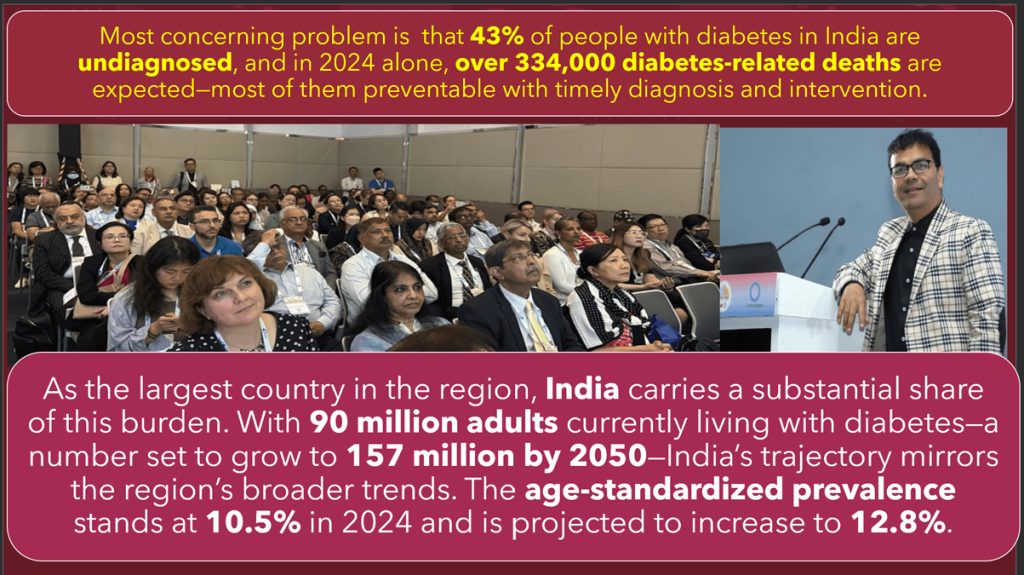
India is at the epicenter of this epidemic. We currently have 90 million adults with diabetes, a number projected to reach 157 million by 2050. The age-standardized prevalence is 10.5% in 2024, expected to rise to 12.8%. Shockingly, 43% of people with diabetes in India are undiagnosed, and this year alone, we anticipate over 334,000 diabetes-related deaths—many of which could be prevented with early intervention.
CME INDIA
The report mentions a significant gap in healthcare expenditure. How does this affect the region’s response?
Dr. Banshi Saboo
It’s a stark disparity. The SEA region shoulders 18.2% of the global diabetes burden but accounts for just 1% of diabetes-related health expenditure, amounting to USD 12 billion. This resource crunch severely limits our ability to invest in prevention, diagnosis, and management. It’s a clear signal that we need greater funding and smarter allocation of resources to tackle this crisis effectively.
CME INDIA
Hyperglycemia in pregnancy stands out as a major concern. Why is this so critical for SEA?
Dr. Banshi Saboo
Absolutely. One in three live births in our region is affected by hyperglycemia in pregnancy—the highest rate among all IDF regions. This not only jeopardizes maternal health but also increases the risk of diabetes and obesity in the nextAV generation. We urgently need to prioritize gestational diabetes screening and management to break this cycle.
CME INDIA
The Atlas also sheds light on Type 1 diabetes. What challenges do these patients face in SEA?
Dr. Banshi Saboo
Nearly 1 million people in the region live with Type 1 diabetes, and their challenges are immense—delayed diagnosis, limited access to insulin, and inadequate support for continuous care. These are systemic issues that demand targeted interventions to ensure no one is left behind.
CME INDIA
What are the broader implications of these findings for SEA and India?
Dr. Banshi Saboo
The Atlas is a wake-up call. We’re grappling with underdiagnosis, limited healthcare access, rising prevalence, and insufficient awareness. In India and across SEA, we need a multi-pronged approach—strengthening primary healthcare, expanding screening, empowering patients, and rallying political commitment. The data gives us a roadmap; now it’s about action.
CME INDIA
How does the global picture tie into this regional crisis?
Dr. Banshi Saboo
Globally, the IDF estimates 589 million adults are living with diabetes today—more than the combined populations of the U.S., Canada, Mexico, and the Caribbean. By 2050, this could hit 853 million. Three in four of these individuals are in low- and middle-income countries, and we’re seeing over 3.4 million diabetes-related deaths each year. SEA’s challenges are part of this larger, urgent narrative.
CME INDIA
What can we expect from the Atlas at this year’s IDF Congress?
Dr. Banshi Saboo
The 11th Edition will be a centerpiece at the Congress, offering a data-driven foundation for evidence-based policymaking and regional collaboration. It’s not just a report—it’s a tool to galvanize action, guide resource allocation, and inspire solutions. I’m hopeful it will spark the momentum we need.
CME INDIA
What’s your call to action for healthcare providers and policymakers?
Dr. Banshi Saboo
We can’t afford complacency. Strengthen primary care, scale up screening, educate communities, and push for policies that prioritize diabetes prevention and care. The tide of this epidemic won’t turn without collective resolve. Let’s use this Atlas as our catalyst to build a healthier future for SEA and beyond.
CME INDIA Tail-Piece
Access the full IDF Diabetes Atlas here:
IDF Position Statement:
https://idf.org/media/uploads/2025/04/IDF_Rec_2025.pdf
Reference:
International Diabetes Federation. IDF Global Clinical Practice Recommendations for Managing Type 2 Diabetes – 2025. Brussels: IDF; 2025.

Discover CME INDIA

- Explore CME INDIA Repository
- Examine CME INDIA Case Study
- Read History Today in Medicine
- Register for Future CMEs
It is still a long way to go in educating , diagnosis, treatment, and managing diabetes in our country. The Government should step in and promote a series of awareness programme through social workers in the form of literature, dramas and simulated cases of the I’ll effects of diabetes.
The Government should take a war footing in the early diagnosis , and treatment. Our country is highly diversified in culture, habits, language, belief’sand food habits. This sector should be given prime importance towards prevention of NCD’s
A step forward is primordial prevention. All pregnant mother’s should get their post prandial sugars checked at 10 th weekofpregnancy. If it is 110 mg%, treat the mother vigorously. This will prevent NCD’s in the new born. The mother’s are prevented from GDM, HT and preclampsia. .