
CME INDIA Presentation by Dr. Parimal Swamy, Diabetologist, Jabalpur.

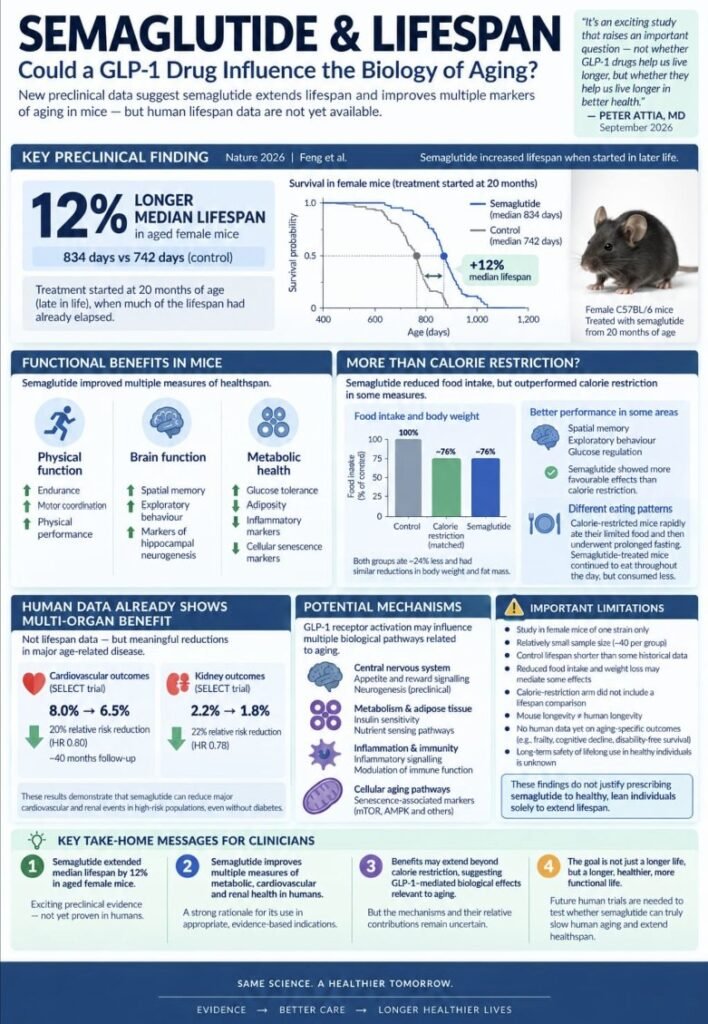
| Abstract Background: Semaglutide has transformed the management of type 2 diabetes and obesity, and outcome trials now show cardiovascular, renal, heart-failure and hepatic benefit. Whether glucagon-like peptide-1 (GLP-1) receptor agonism influences the biology of ageing itself is a new and legitimate question. New evidence: In September 2026, Feng and colleagues reported in Nature that semaglutide started in 20-month-old female C57BL/6 mice increased median lifespan by about 12% (834 vs 742 days) and improved physical, cognitive, metabolic and molecular markers of ageing. A calorie-restriction (CR) comparison suggested that the benefits are not wholly explained by reduced intake. Interpretation: The findings are provocative but preliminary: one sex, one strain, modest group sizes, a short-lived control cohort and no lifespan arm for CR. In humans, semaglutide has a strong case as a healthspan-relevant therapy in selected high-risk patients, but it is not an established geroprotector. We propose a three-tier evidence framework and a function-centred approach to GLP-1 therapy in older adults that protects muscle and physical reserve. Keywords: semaglutide; GLP-1 receptor agonist; geroscience; healthspan; lifespan; calorie restriction; sarcopenia; ageing |
1. Introduction
Semaglutide was developed as a glucose-lowering agent and later became a leading anti-obesity medicine. Over the past three years its evidence base has broadened substantially: the SELECT trial showed a 20% reduction in major adverse cardiovascular events (MACE) in people with obesity and established cardiovascular disease without diabetes,1 FLOW demonstrated renal protection in type 2 diabetes with chronic kidney disease,2 STEP-HFpEF improved symptoms and function in obesity-related heart failure,3 and ESSENCE showed histological resolution of metabolic dysfunction-associated steatohepatitis (MASH).4 When one drug moves so many organ-level outcomes at once, the geroscience question follows naturally: is it acting on a shared upstream biology that drives age-related decline?
A study published in Nature in September 2026 provides the first rigorous preclinical attempt to answer this question.5 This article summarises the study, examines its limitations, places it alongside human outcome data, and considers what it should — and should not — change in clinical practice.
2. The Nature Study: Design and Principal Findings
Feng and colleagues treated 20-month-old female C57BL/6 mice with semaglutide. This age corresponds approximately to later human life rather than young adulthood, so treatment began after much of the animals’ lifespan had already elapsed.5 This design is clinically relevant: any intervention for human healthy ageing will almost always start in middle or later life, not in youth.
Table 1. Snapshot of the late-life semaglutide study (Feng et al., Nature 2026)
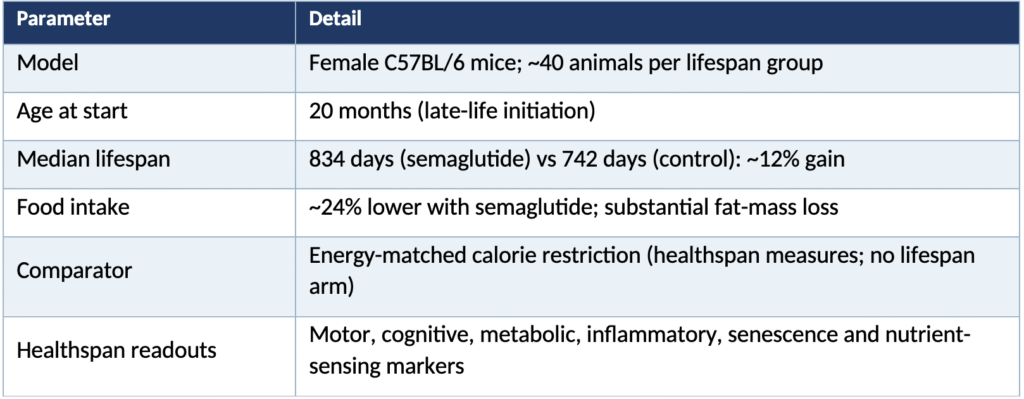
Source: reference 5; interpretation after references 6 and 7.
3. The Lifespan Result: Striking, but Interpret with Caution
A 12% increase in median lifespan from an intervention started late in life would be notable for any compound. Two caveats, however, must temper enthusiasm. First, control animals lived somewhat shorter than female C57BL/6 mice in several earlier lifespan studies. Attia and colleagues have pointed out that semaglutide may therefore have corrected factors that shortened survival in this particular cohort, rather than slowing a fundamental ageing process.6 Second, lifespan findings in mice have a history of shrinking or disappearing on independent replication. The rigorous multi-site standard set by the NIA Interventions Testing Program — three sites, both sexes, genetically heterogeneous mice — is the benchmark semaglutide must now meet.8
4. Beyond Lifespan: The Healthspan Signal
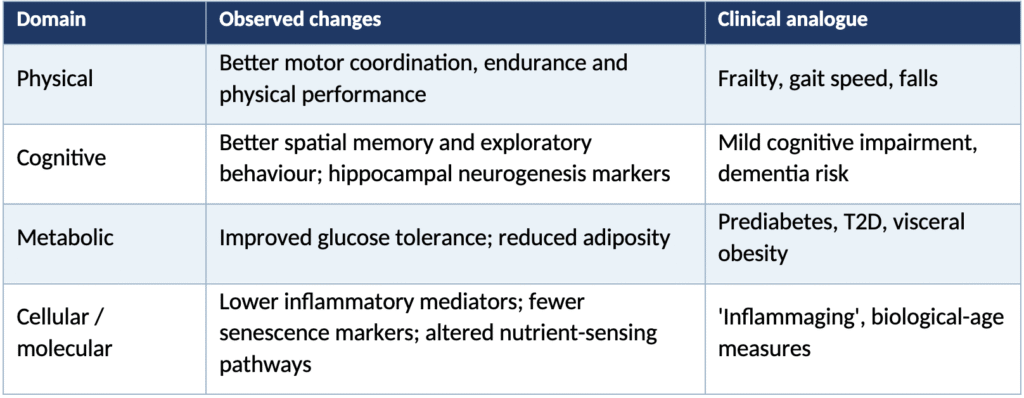
For clinicians, the functional data may matter more than the survival curve. A worthwhile longevity intervention should do more than postpone death; it should preserve functional reserve. Semaglutide-treated animals improved across several domains (Table 2).
Table 2. Healthspan domains improved by late-life semaglutide in mice5
5. Is Semaglutide Simply Pharmacological Calorie Restriction?
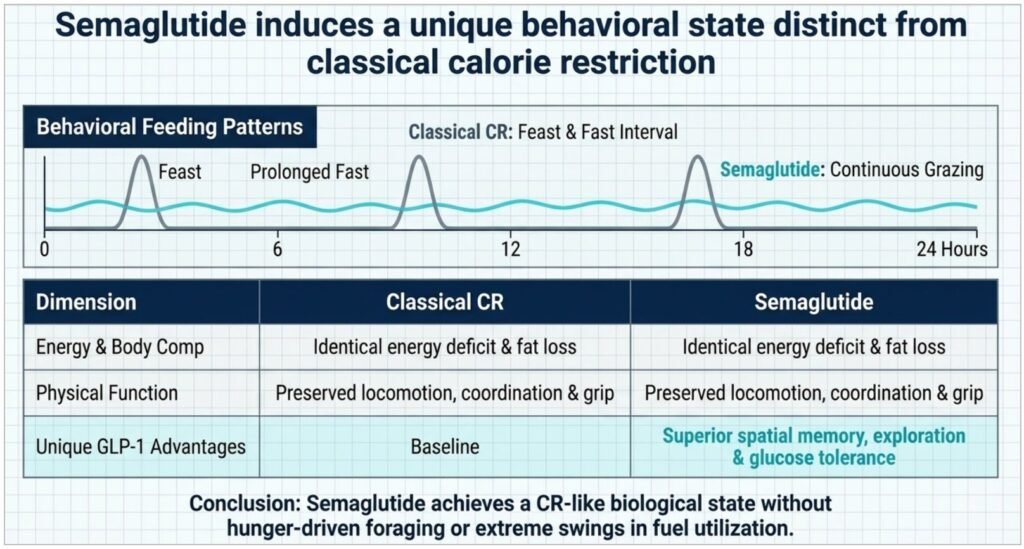
This is the central mechanistic question. Semaglutide-treated mice ate about 24% less food and lost substantial fat mass. Calorie restriction is among the most reproducible lifespan-extending interventions in laboratory animals, and moderate CR also improves health markers in primates.9 The obvious parsimonious explanation is illustrated in Figure 1.
Figure 1. The ‘pharmacological calorie restriction’ hypothesis
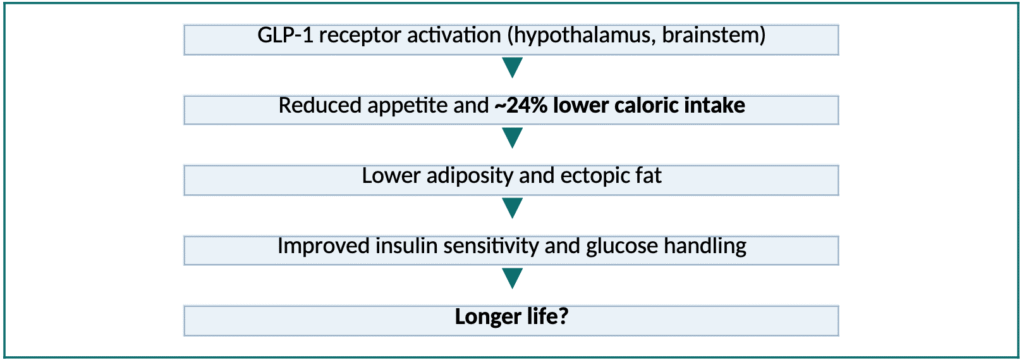
To test this, the investigators compared semaglutide with calorie restriction matched for energy deficit. Both produced similar reductions in body weight and fat mass, but the two interventions diverged in important ways (Table 3).
Table 3. Semaglutide versus energy-matched calorie restriction5
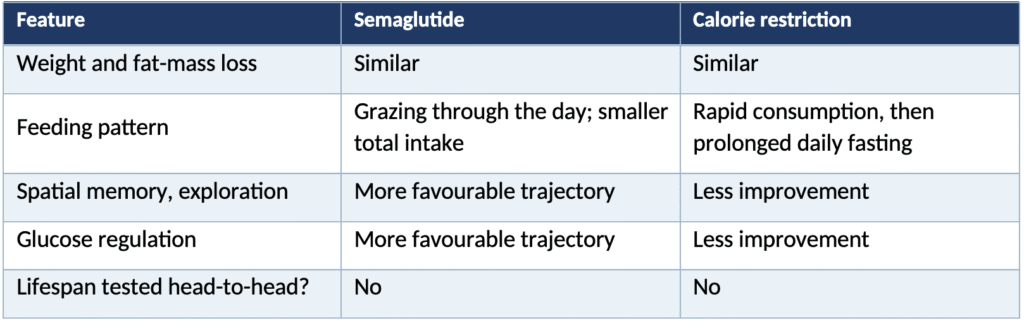
The conclusion is therefore: semaglutide ≠ simply calorie restriction. Some benefit probably comes from lower intake and adiposity; some may reflect direct GLP-1 receptor signalling in the brain, immune system, vasculature and other tissues, consistent with the receptor’s wide distribution.10 The present experiment, however, cannot quantify how much each mechanism contributes.
6. A Geroscience Perspective
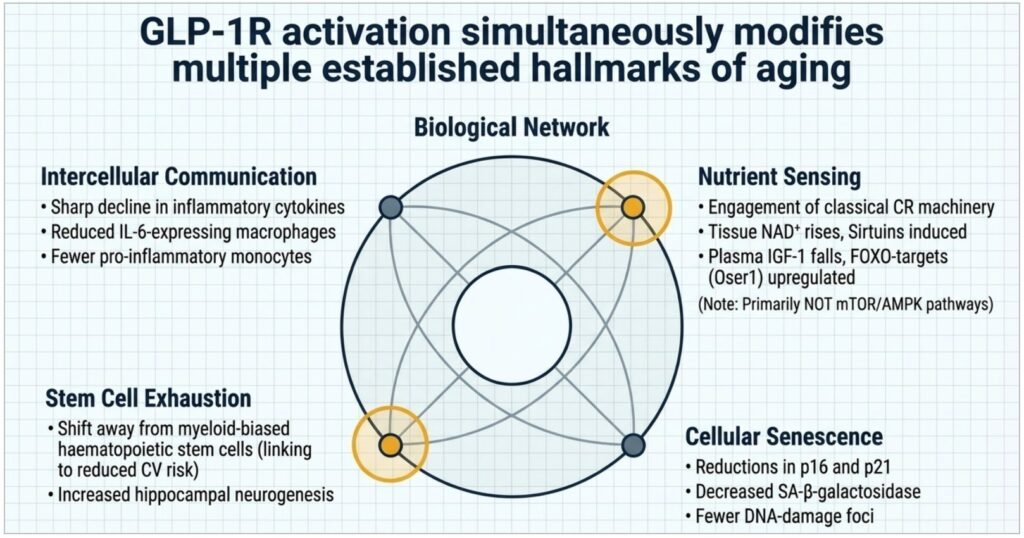
Conventional medicine asks, ‘Which disease are we treating?’ Geroscience asks, ‘Can we modify the biological processes that drive many age-related diseases at once?’11 Semaglutide plausibly touches several of the recognised hallmarks of ageing (Figure 2).12
Figure 2. Candidate links between GLP-1 receptor agonism and hallmarks of ageing
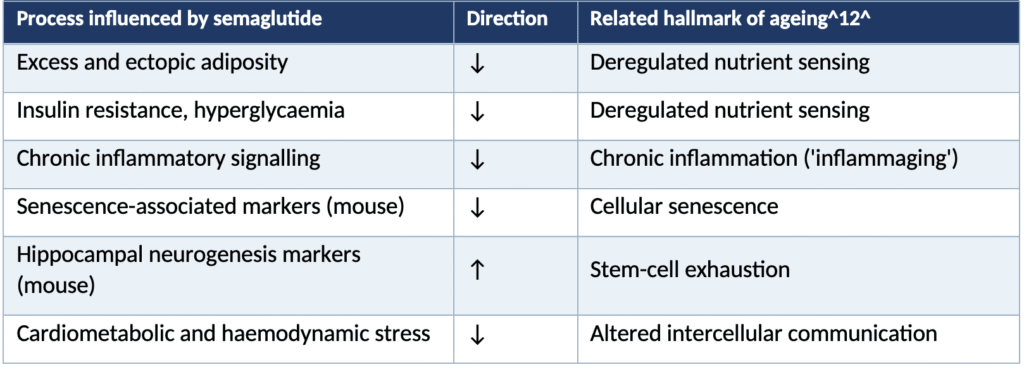
The hypothesis this generates is scientifically much richer than describing semaglutide as an appetite suppressant: GLP-1 receptor agonism may modulate several interconnected processes that together underlie age-related functional decline.
7. What Human Data Actually Show
Human and mouse evidence must be kept apart. No human study shows that semaglutide extends lifespan by slowing biological ageing. What human trials do show is a reduction in several major contributors to later-life morbidity in selected high-risk populations (Table 4).
Table 4. Multi-system outcome evidence for semaglutide in humans
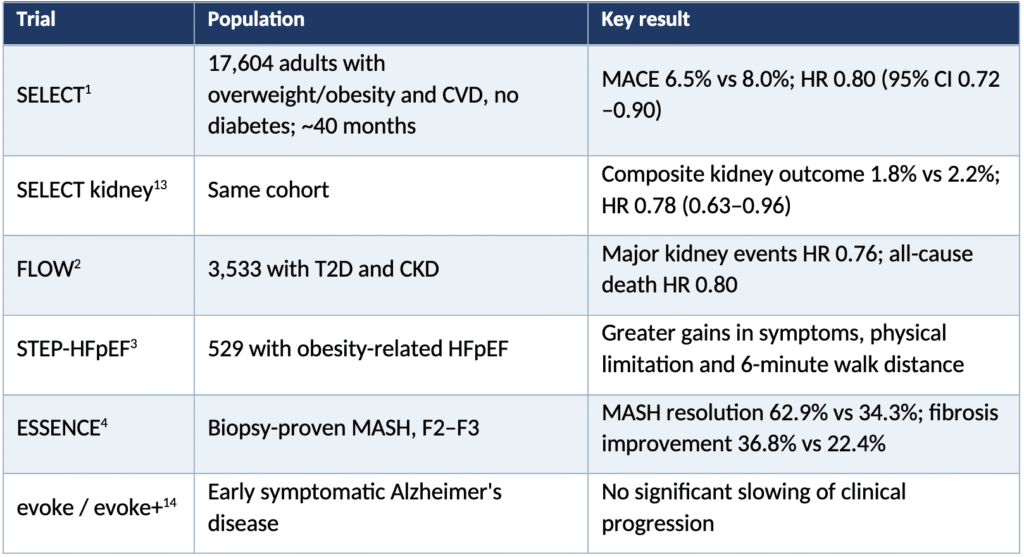
The negative Alzheimer’s programme is an important counterweight to the cognitive signal in mice: neuroprotection seen in rodents did not translate into slowed dementia progression in humans with established disease.14 Taken together, these data establish that one intervention can favourably modify several major determinants of later-life morbidity — highly relevant to healthspan medicine, without implying direct geroprotection.
8. Three Levels of Claim
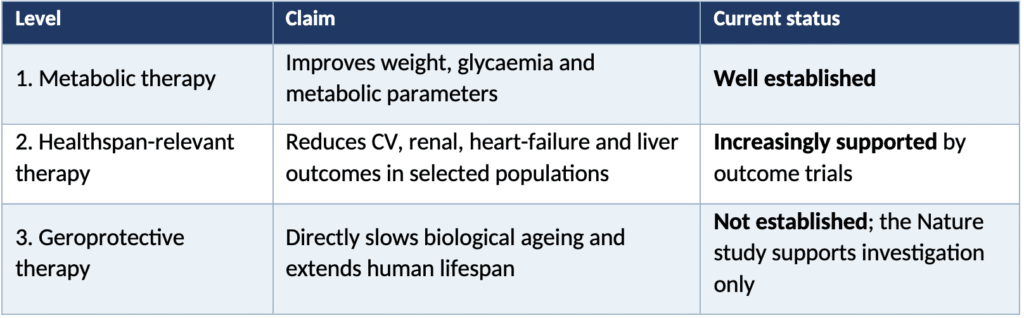
Much of the public confusion arises from merging three claims of increasing ambition. Figure 3 separates them.
Figure 3. The evidence ladder for semaglutide
9. Why the Study Should Not Yet Change Prescribing
The limitations are substantial:
- Female mice of a single inbred strain only
- Approximately 40 animals per lifespan group
- Control lifespan shorter than some historical cohorts
- Reduced intake and weight loss remain major potential mediators
- No head-to-head lifespan comparison with calorie restriction
- Mouse longevity does not equal human longevity
These findings do not justify prescribing semaglutide to healthy, lean individuals to prolong life. That would require long-term trials with outcomes such as frailty, cognition, disability-free survival, functional capacity and validated biological-ageing measures — the approach proposed for metformin in the TAME trial.15
10. The Muscle Paradox
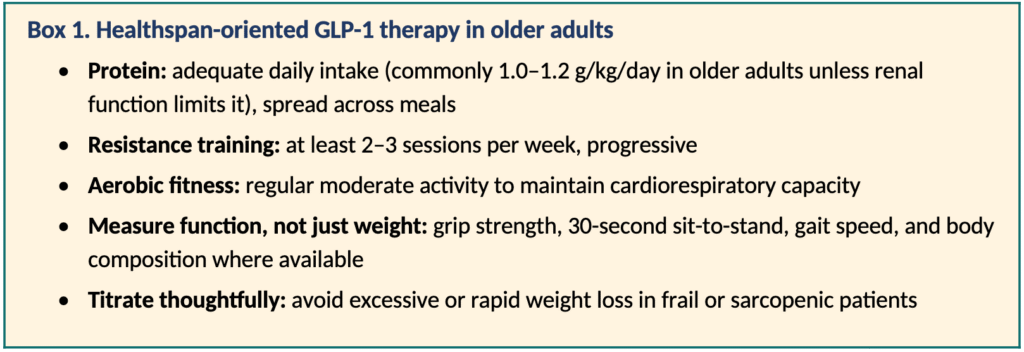
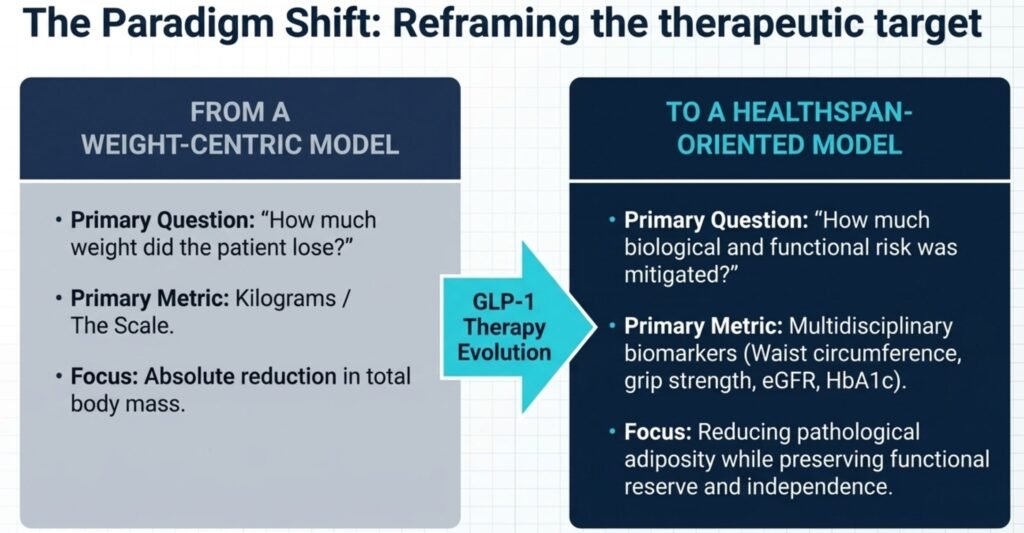
Reducing pathological adiposity may extend healthspan, but losing skeletal muscle may shorten it. In the STEP 1 DXA sub-study, lean mass accounted for roughly two-fifths of total mass lost,16 and concern about medically induced muscle loss is growing as GLP-1 therapies reach older adults.17 Sarcopenia is defined primarily by low strength and performance, not by mass alone.18 The therapeutic goal should therefore be to reduce pathological adiposity while preserving or improving functional reserve (Box 1).
11. Reframing the Therapeutic Target
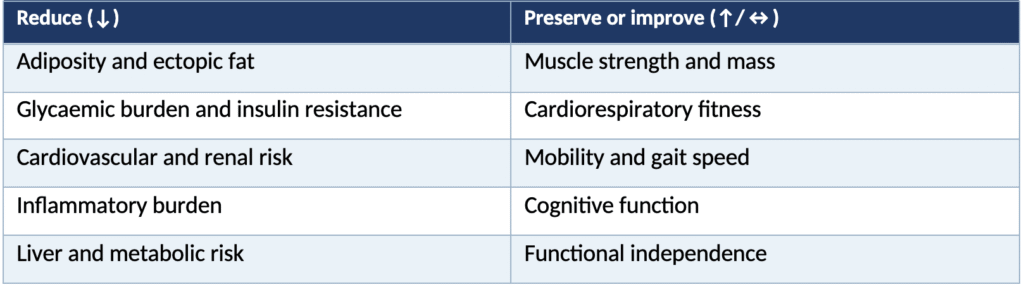
The emerging evidence moves the key question from ‘How much weight did the patient lose?’ to ‘How much biological and functional risk did the patient lose?’ (Figure 4).
Figure 4. From a weight-centric to a healthspan-oriented model of GLP-1 therapy
12. Conclusion
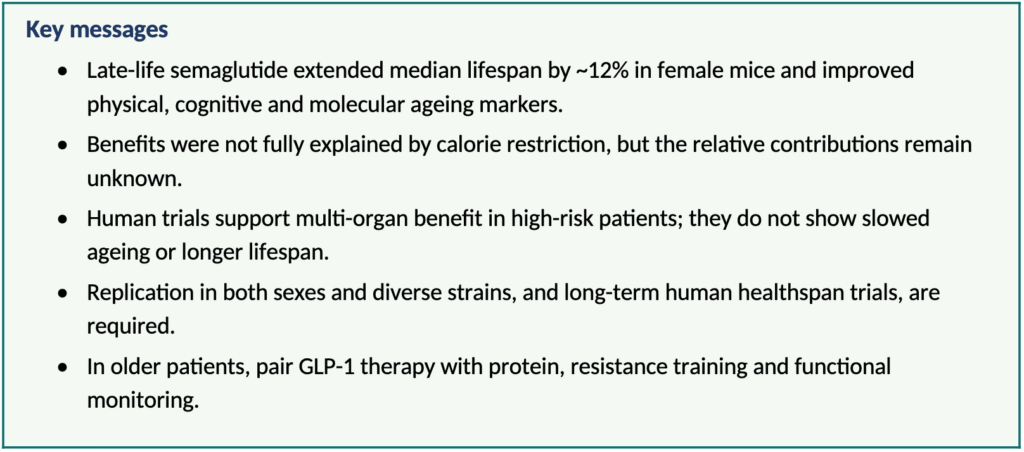
The 2026 Nature study does not establish semaglutide as an anti-ageing drug in humans. It does raise a scientifically important possibility: that GLP-1 receptor activation influences interconnected biological processes underlying age-related disease and functional decline. For now, semaglutide should be prescribed for its evidence-based indications. Yet the science suggests that some medicines may eventually be judged not only by how well they treat one disease, but by how well they preserve multi-organ function across ageing.
The more useful question is not ‘Does semaglutide make us live longer?’ but ‘Can appropriate GLP-1 therapy help selected patients live longer in better metabolic and functional health?’ The first remains unanswered in humans; the second is becoming a legitimate subject for healthspan medicine.
References:
- Lincoff AM, Brown-Frandsen K, Colhoun HM, et al. Semaglutide and cardiovascular outcomes in obesity without diabetes. N Engl J Med. 2023;389:2221–2232.
- Perkovic V, Tuttle KR, Rossing P, et al. Effects of semaglutide on chronic kidney disease in patients with type 2 diabetes (FLOW). N Engl J Med. 2024;391:109–121.
- Kosiborod MN, Abildstrøm SZ, Borlaug BA, et al. Semaglutide in patients with heart failure with preserved ejection fraction and obesity. N Engl J Med. 2023;389:1069–1084.
- Sanyal AJ, Newsome PN, Kliers I, et al. Phase 3 trial of semaglutide in metabolic dysfunction-associated steatohepatitis (ESSENCE). N Engl J Med. 2025;392:2089–2099.
- Feng Y, Barthez M, Wang Y, et al. Late-life semaglutide treatment slows ageing and extends lifespan in female mice. Nature. 2026;657:469–476. doi:10.1038/s41586-026-10940-7.
- Attia P, Fritsch L, Rae M. Can semaglutide slow aging? peterattiamd.com. 19 September 2026.
- National Institutes of Health. GLP-1 treatment late in life extends lifespan in animal model. NIH news release, September 2026.
- Nadon NL, Strong R, Miller RA, et al. Design of aging intervention studies: the NIA Interventions Testing Program. Age (Dordr). 2008;30:187–199.
- Mattison JA, Colman RJ, Beasley TM, et al. Caloric restriction improves health and survival of rhesus monkeys. Nat Commun. 2017;8:14063.
- Drucker DJ. Mechanisms of action and therapeutic application of glucagon-like peptide-1. Cell Metab. 2018;27:740–756.
- Kennedy BK, Berger SL, Brunet A, et al. Geroscience: linking aging to chronic disease. Cell. 2014;159:709–713.
- López-Otín C, Blasco MA, Partridge L, Serrano M, Kroemer G. Hallmarks of aging: an expanding universe. Cell. 2023;186:243–278.
- Colhoun HM, Lingvay I, Brown PM, et al. Long-term kidney outcomes of semaglutide in obesity and cardiovascular disease in the SELECT trial. Nat Med. 2024;30:2058–2066.
- Novo Nordisk. Topline results from the phase 3 evoke and evoke+ trials of oral semaglutide in early Alzheimer’s disease. Company announcement, November 2025.
- Barzilai N, Crandall JP, Kritchevsky SB, Espeland MA. Metformin as a tool to target aging. Cell Metab. 2016;23:1060–1065.
- Wilding JPH, Batterham RL, Calanna S, et al. Once-weekly semaglutide in adults with overweight or obesity (STEP 1). N Engl J Med. 2021;384:989–1002.
- Prado CM, Phillips SM, Gonzalez MC, Heymsfield SB. Muscle matters: the effects of medically induced weight loss on skeletal muscle. Lancet Diabetes Endocrinol. 2024;12:785–787.
- Cruz-Jentoft AJ, Bahat G, Bauer J, et al. Sarcopenia: revised European consensus on definition and diagnosis (EWGSOP2). Age Ageing. 2019;48:16–31.
Discover CME INDIA

- Explore CME INDIA Repository
- Examine CME INDIA Case Study
- Read History Today in Medicine
- Register for Future CMEs