
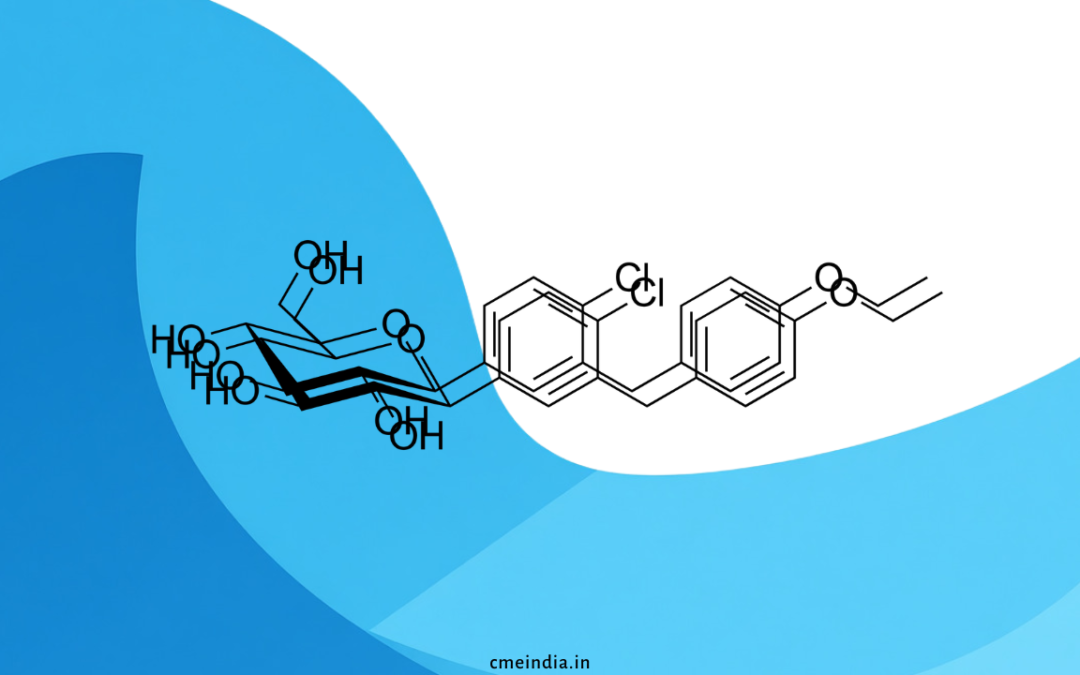
CME INDIA Case Presentation by Presenting author: Dr. Kalika Prasad Dash. Discussants: Dr. N. K. Singh (Diabetes & Heart Research Centre, Dhanbad; Editor, CME India); Dr. Amit Kumar (Dermatology, Ranchi); Dr. S. K. Gupta (Delhi).
CME INDIA Case Study
| ABSTRACT A 44-year-old man with type 2 diabetes inadvertently took dapagliflozin 10 mg twice daily (20 mg/day, twice the licensed dose) for two months and developed a painless, non-pruritic fissure of the prepuce persisting for one month. Examination showed features consistent with chronic candidal balanoposthitis complicated by a preputial fissure. The offending drug was stopped and topical plus oral antifungal therapy with hygiene measures was advised, with resolution on follow-up. The case is used to revisit an increasingly relevant question raised on the CME India forum: do SGLT2 inhibitors cause genitourinary infections even in non-diabetic users? The answer is yes — because glucosuria is pharmacologically induced and persists irrespective of blood glucose. We summarise the mechanism, the evidence from non-diabetic trial populations, the balance of topical antifungal versus steroid use, rising azole resistance in the Indian setting, and the practical prevention and re-challenge framework. |
Keywords: SGLT2 inhibitor; dapagliflozin; balanoposthitis; genital mycotic infection; glucosuria; non-diabetic; medication error; azole resistance; Fournier gangrene.
1. Introduction
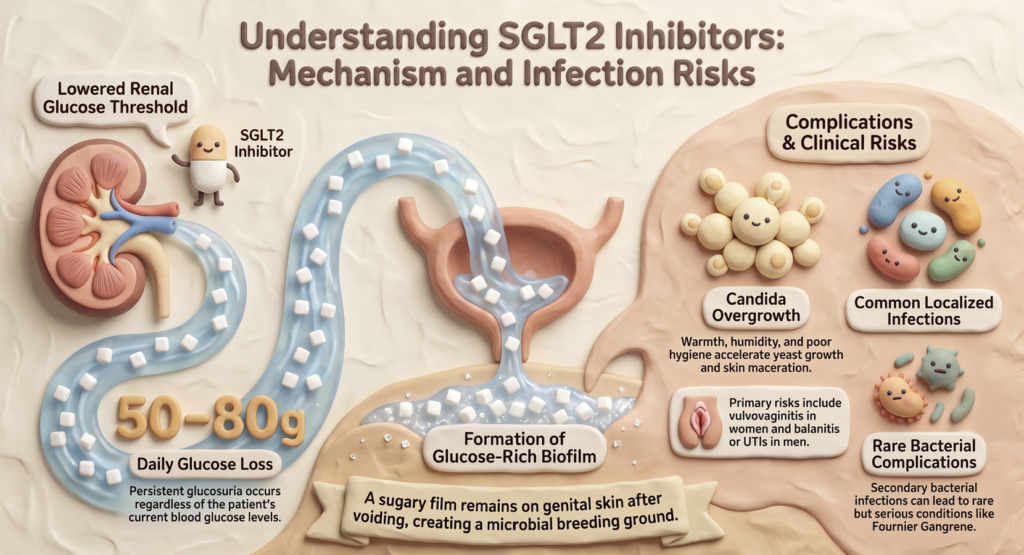
Sodium–glucose co-transporter-2 (SGLT2) inhibitors have moved well beyond glycaemic control and are now core therapy for heart failure and chronic kidney disease, in patients with and without diabetes [1,2]. Their defining pharmacological action — blocking glucose re-absorption in the proximal tubule — lowers the renal threshold for glucose and produces sustained glucosuria of roughly 50–80 g/day [3]. The same mechanism that protects the heart and kidney also creates a warm, sugar-rich environment on the external genitalia that favours Candida overgrowth. Genital mycotic infection is therefore the most consistent class adverse effect, with a three- to five-fold increase over placebo across randomised trials [4].
This report presents a case in which the effect was amplified by a dosing error, then uses the ensuing forum discussion to address a question that is now common in Indian practice as prescriptions widen: whether these infections occur in non-diabetic users too.
2. Case Presentation
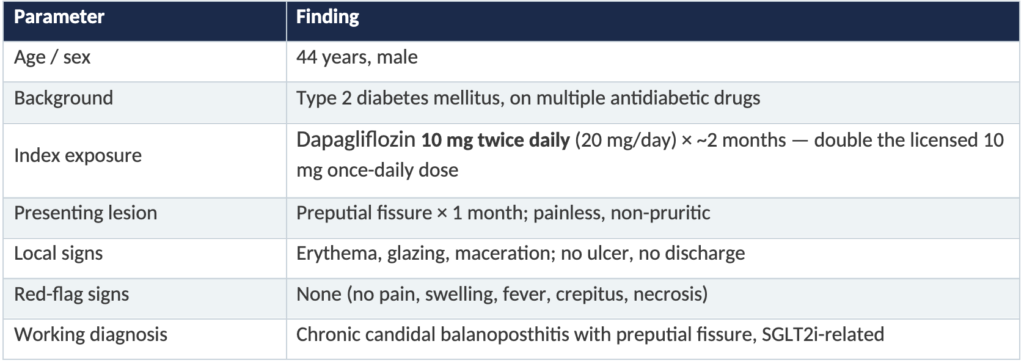
A 44-year-old man with type 2 diabetes mellitus reported that, owing to a prescription misunderstanding, he had been taking dapagliflozin 10 mg twice daily — a total of 20 mg/day, double the maximum licensed dose — for approximately two months, alongside his other antidiabetic medication. Over the preceding one month he had noticed a crack (fissure) in the prepuce. The lesion was painless and non-pruritic. There was no dysuria, no urethral discharge and no systemic symptoms.

2.1 Examination
Clinical photographs showed an erythematous, glazed prepuce with a linear preputial fissure and surface maceration — the classic appearance of chronic candidal balanoposthitis with fissuring. There was no ulceration, induration, regional lymphadenopathy, scrotal swelling, crepitus or necrosis (i.e. no features of Fournier gangrene). The patient is uncircumcised.
3. Differential Diagnosis
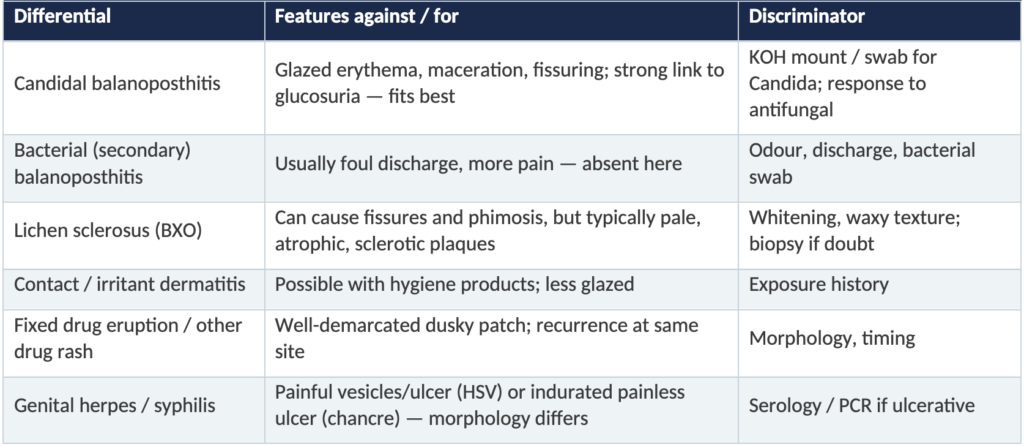
A painless preputial fissure has a limited differential; the temporal link to high-dose glucosuria and the surface changes make candidal disease the leading diagnosis, but the following are worth excluding clinically:
4. Moderated Panel Discussion and Management
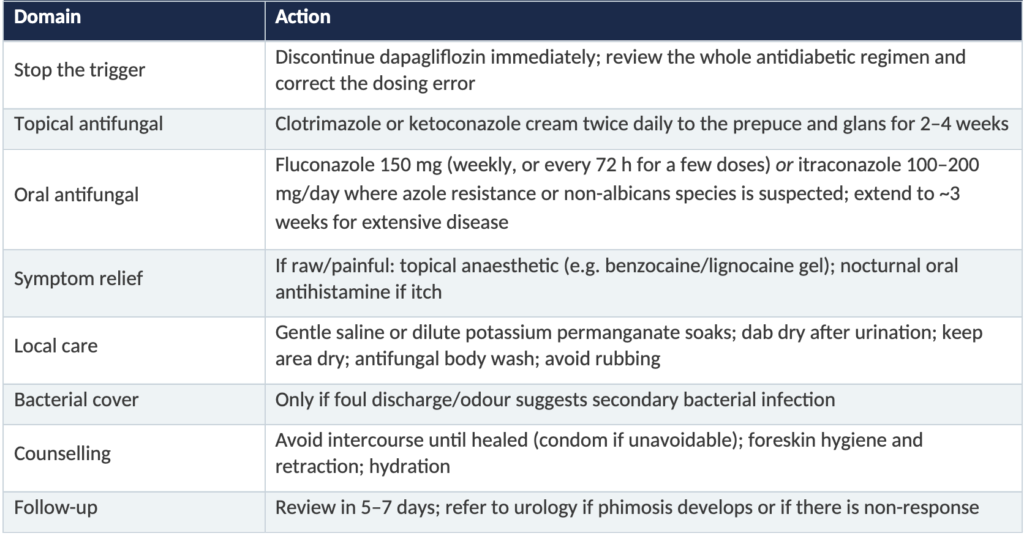
The case was discussed on the CME India forum. The consensus first step was unambiguous: stop the SGLT2 inhibitor. Removing the drug removes the glucosuric substrate that sustains the infection; here it also corrected a dosing error. Antifungal therapy, hygiene and review were then layered on. The contributors’ individual inputs are synthesised below.
4.1 Consolidated management plan
4.2 A genuine point of debate: topical steroids
The discussants differed on steroids. One suggested a short course of a clotrimazole–corticosteroid combination for the inflammatory phase; another argued firmly against steroids in balanoposthitis, on the grounds that they mask symptoms and can promote fungal proliferation. The evidence-leaning position is to prioritise antifungal therapy and avoid potent or prolonged topical steroids on an actively infected, macerated surface. A brief, mild steroid can occasionally settle disproportionate inflammation, but only under antifungal cover and never as monotherapy — and if a combination product has already been used, the oral antifungal should simply be continued for the full course. In this patient, with a painless non-inflamed fissure, a steroid was not needed.
5. Focused Review: Do SGLT2 Inhibitors Cause Genital Infection in Non-Diabetics?
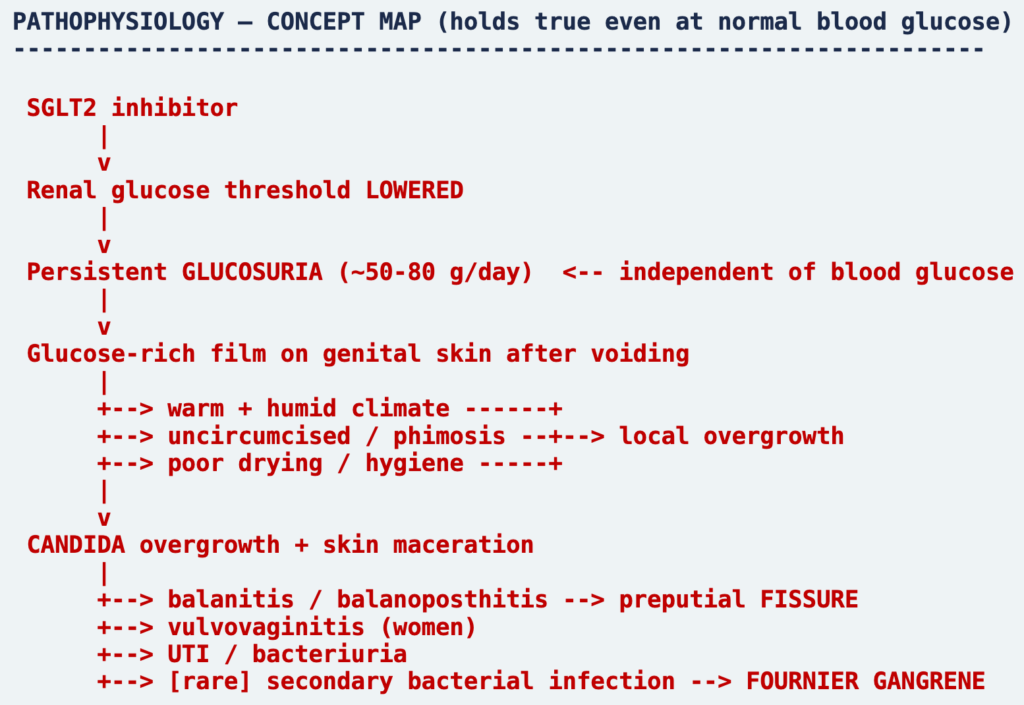
The forum’s central query — “in non-diabetic subjects, do SGLT2 inhibitors induce genitourinary infection or not?” — has a clear answer: yes. The infection risk is driven by glucosuria, and with SGLT2 inhibitors glucosuria is produced pharmacologically at the level of the tubule. It therefore persists even when blood glucose is entirely normal [3].
5.1 Mechanism in plain terms
The drug lowers the kidney’s glucose threshold, so glucose spills into the urine regardless of how well controlled (or normal) the blood sugar is. That sugar bathes the external genitalia after voiding. In a warm, humid climate, under an uncircumcised foreskin, and where the area is hard to keep dry, this sugar film feeds Candida, softens (macerates) the skin, and lets fissures and secondary infection take hold.
5.2 What the non-diabetic trial and real-world data show
Landmark outcome trials deliberately enrolled patients without diabetes. In DAPA-HF (heart failure) and DAPA-CKD (chronic kidney disease), roughly half the participants were non-diabetic, and the cardiorenal benefit was preserved regardless of diabetes status [1,2]. Reviews of SGLT2 inhibition in non-diabetic populations confirm that genital mycotic infections still occur, and remain the most frequent drug-attributable adverse event, although the great majority are mild [3]. Across the diabetic trial literature, genital infection rates run at roughly 2.5–6.5% versus about 1% on placebo, with pooled relative risks of about 3–5 and a dapagliflozin-specific relative risk near 3.2 [4]. A recent single-centre prospective series reported genital infection in about a third of SGLT2-inhibitor users, again predominantly with dapagliflozin [5].
The clinical corollary is a trap worth naming: in a non-diabetic patient, clinicians rarely suspect the drug, so presentations can be later and more florid than the underlying pathology warrants.
5.3 The serious end of the spectrum: Fournier gangrene
At the far end sits necrotising fasciitis of the perineum (Fournier gangrene). In 2018 the US FDA issued a class warning after 12 cases were identified in SGLT2-inhibitor users between March 2013 and May 2018 (seven men, five women); all required hospitalisation and surgery and one died [6]. It is rare, and randomised data have not shown a clear excess versus comparators [7], but it is a surgical emergency: genital pain or swelling with fever or malaise in an SGLT2-inhibitor user must be assessed urgently, the drug stopped, and broad-spectrum antibiotics started if it is suspected [6].
5.4 The Indian angle: rising azole resistance
The discussants’ preference for itraconazole in resistant cases is well founded. Indian and global surveillance shows a steady shift from Candida albicans to non-albicans species and rising fluconazole resistance. A North Indian tertiary-centre study (2023–2025) reported fluconazole resistance climbing from about 18% to 35% over the study period [8], and Indian vulvovaginal-candidiasis data show roughly 29% fluconazole-resistant strains with non-albicans species approaching 40% of isolates [9]. Where response is poor, extensive, or recurrent, a swab for species identification and susceptibility — and a move to itraconazole — is reasonable rather than escalating fluconazole blindly.
6. Risk Factors, Prevention and Re-challenge
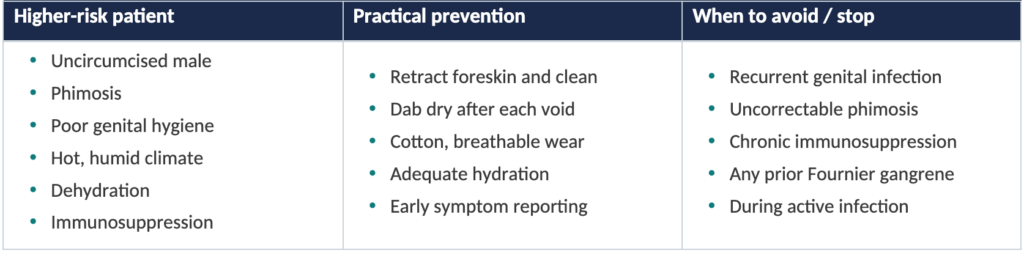
Re-challenge after full healing is possible — the cardiorenal benefit is often too valuable to abandon — but recurrence is common, so it should be paired with hygiene optimisation and a clear plan to act on early symptoms. In this patient, the more important correction was the dosing error itself; if an SGLT2 inhibitor remains indicated, the licensed dapagliflozin dose is 10 mg once daily.
7. Key Learning Points
- Glucosuria, not hyperglycaemia, drives genital infection with SGLT2 inhibitors — so the risk is real in non-diabetic users too, and the drug is easily missed as the cause.
- A painless preputial fissure in an SGLT2-inhibitor user is candidal balanoposthitis until proven otherwise; the temporal link and glazed, macerated appearance are the clues.
- First and most effective step: stop the SGLT2 inhibitor. Here it also corrected a double-dose error (10 mg BD = 20 mg/day; licensed dose is 10 mg once daily).
- Antifungals first; avoid potent or prolonged topical steroids on infected, macerated skin.
- Prefer itraconazole (and swab for species/susceptibility) in extensive, recurrent or non-responding disease, given rising fluconazole resistance in India.
- Know the emergency: genital pain/swelling with fever or malaise may be Fournier gangrene — urgent assessment, stop the drug, start broad-spectrum antibiotics, involve surgery.
- Re-challenge is possible after healing but recurrence is common; couple it with hygiene measures and early-symptom counselling.
8. Conclusion
This case pairs a simple, preventable medication error with a teaching point that is becoming central as SGLT2 inhibitors are prescribed to ever wider populations. Because glucosuria is pharmacologically fixed, genital mycotic infection is a class effect that does not require diabetes to occur. Recognising the drug as the culprit, stopping it, treating the fungus, correcting the dose, and counselling on hygiene resolves the problem in almost all cases — while remaining alert to the rare but catastrophic Fournier gangrene.
References:
- McMurray JJV, Solomon SD, Inzucchi SE, et al. Dapagliflozin in patients with heart failure and reduced ejection fraction. N Engl J Med. 2019;381(21):1995–2008. doi:10.1056/NEJMoa1911303.
- Heerspink HJL, Stefánsson BV, Correa-Rotter R, et al. Dapagliflozin in patients with chronic kidney disease. N Engl J Med. 2020;383(15):1436–1446. doi:10.1056/NEJMoa2024816.
- Abdelrahman AM, Awad AS, Abdel-Rahman EM. Sodium-glucose co-transporter 2 inhibitors: mechanism of action and efficacy in non-diabetic kidney disease from bench to bed-side. J Clin Med. 2024;13(4):956. doi:10.3390/jcm13040956.
- Liu J, Li L, Li S, et al. Effects of SGLT2 inhibitors on UTIs and genital infections in type 2 diabetes mellitus: a systematic review and meta-analysis. Sci Rep. 2017;7:2824. doi:10.1038/s41598-017-02733-w.
- Malik N, Deshpande A, Prasad MR. SGLT2 inhibitors and genital infections: a prospective observational study in a tertiary care hospital. Egypt J Intern Med. 2025;37:107. doi:10.1186/s43162-025-00500-2.
- US Food and Drug Administration. FDA warns about rare occurrences of a serious infection of the genital area with SGLT2 inhibitors for diabetes. Drug Safety Communication. August 29, 2018.
- Silverii GA, Dicembrini I, Monami M, Mannucci E. Fournier’s gangrene and sodium-glucose co-transporter-2 inhibitors: a meta-analysis of randomized controlled trials. Diabetes Obes Metab. 2020;22(2):272–275. doi:10.1111/dom.13900.
- Singh S, Islahi S, Das K, Gupta S. Investigating the increasing azole resistance in Candida infections among critically ill patients: experience from a tertiary-level setup in North India. Cureus. 2025;17(12):e98425. doi:10.7759/cureus.98425.
- Panda PS, Muralidhar S, Lachyan A, et al. Fluconazole resistance in Candida isolates from vaginal discharge in women attending an Apex Regional Sexually Transmitted Infections Center. Saudi J Health Sci. 2024;13(1):78–83. doi:10.4103/sjhs.sjhs_159_23.
- Cheng TH, Lin KC, Chuang ATM, et al. SGLT2 inhibitors and external genital infection in male patients with type 2 diabetes. JAMA Netw Open. 2025;8(9):e2534485. doi:10.1001/jamanetworkopen.2025.34485.
- Health Sciences Authority, Singapore. Risk of genitourinary infections with SGLT2 inhibitors. 11 May 2018.
Discover CME INDIA:

- Explore CME INDIA Repository
- Examine CME INDIA Case Study
- Read History Today in Medicine
- Register for Future CMEs