
CME INDIA Presentation by Dr. N. K. Singh, MD, FICP, FACP, FRSSDI, Director, Diabetes and Heart Research Centre Dhanbad. Editor-in Chief CME INDIA.
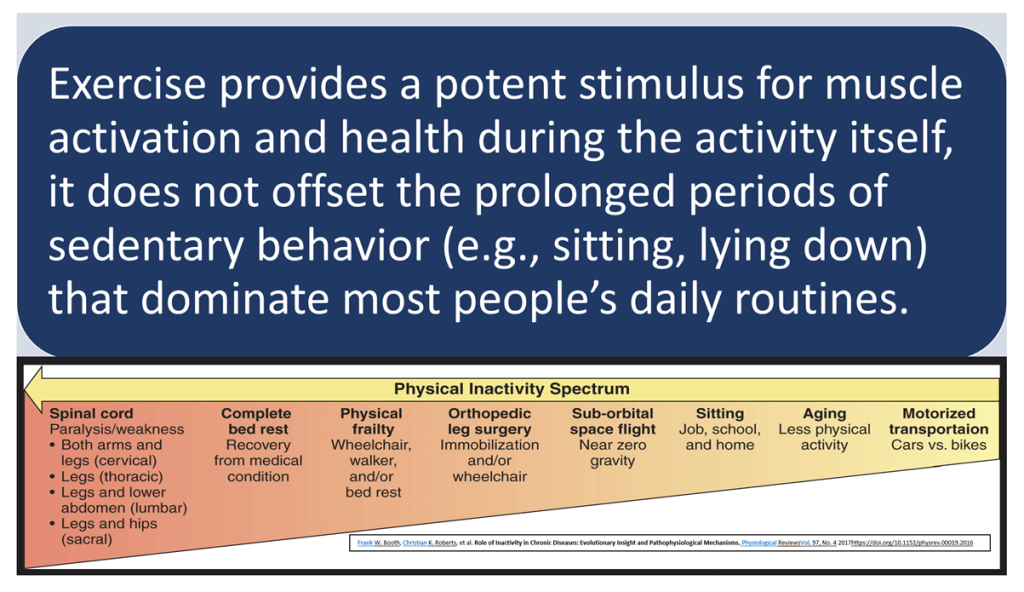
Why keep moving?
- Approximately 85% of individuals are not meeting physical activity guidelines, which presents an opportunity for improvement, as increased activity can lower the risk of various diseases and reduce all-cause mortality.
- Older adults generally engage in less physical activity compared to younger adults, with a significant decline in leisure-time activity.
- The periods of inactivity, which differ from habitual sedentary behavior, may seem minor but can negatively impact health when compounded over time. Such inactivity may accelerate sarcopenia (muscle loss) and contribute to the development of chroniccardiometabolic conditions commonly associated with aging.
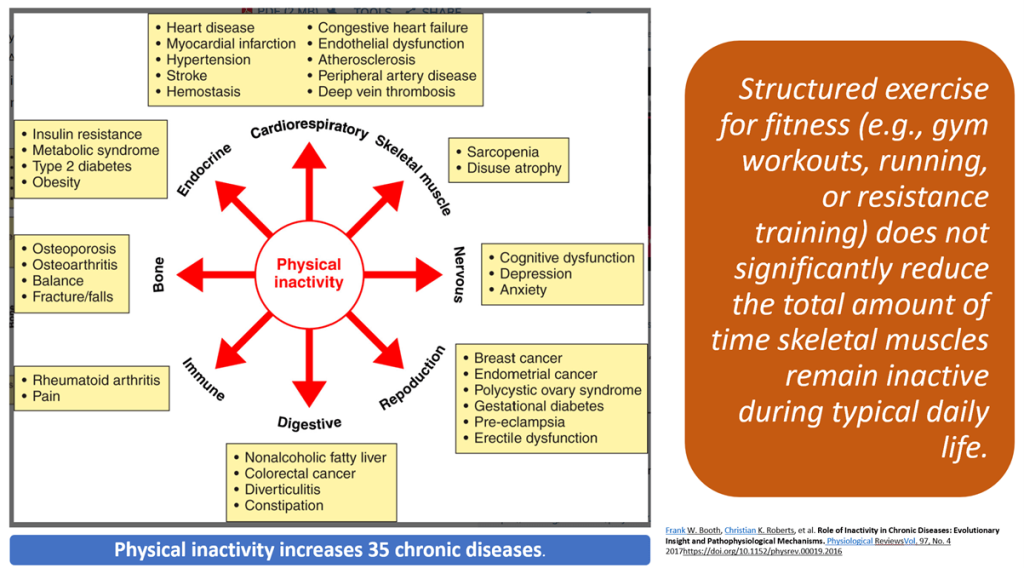
Slow the rate of muscle decline and reduce the negative effects of aging
- Cyclical bouts of significant inactivity, even in relatively healthy individuals, can have serious physiological consequences, especially as people age.
- Acute periods of inactivity can lead to reductions in skeletal muscle size and strength, which temporarily accelerate the natural declines associated with sarcopenia.
- Sarcopenia, or muscle loss, typically occurs at a rate of about 1% per year, with muscle strength and slow the rate of muscle decline and reduce the negative effects of aging. Power declining more rapidly at rates of approximately 3% and 8% per year, respectively. While sarcopenia is a normal part of aging, inactivity can exacerbate and accelerate this process.
- Importantly, with each period of disuse, muscle mass decreases, muscle cross-sectional area is reduced, and intramuscular fat content increases.
- Physical activity acts as a key regulator of factors linked to aging and muscle health, including inflammation, reactive oxygen species, glycemic control, and motor neuron loss. When combined with proper nutrition, particularly adequate protein intake, physical activity can help.
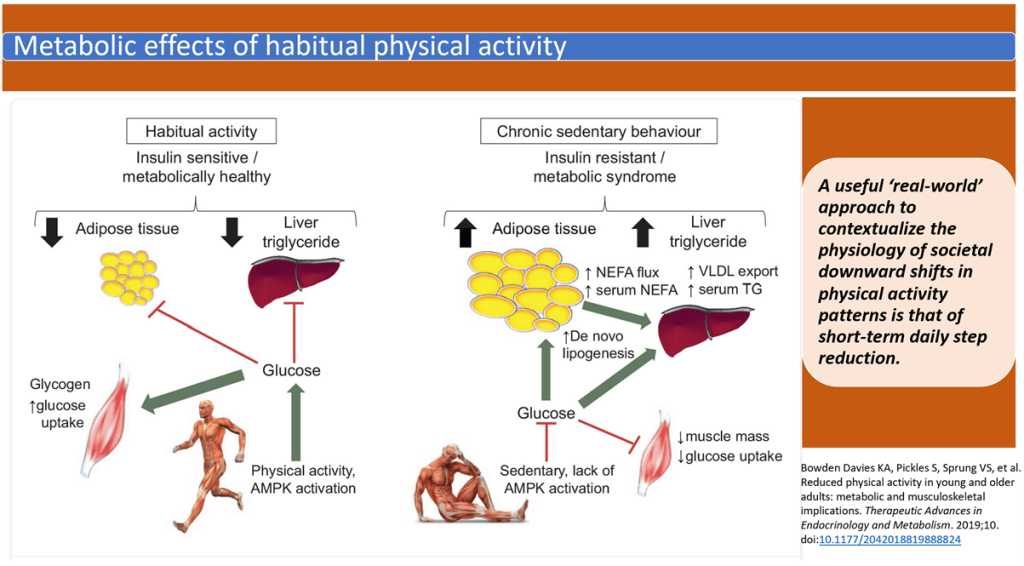
Consequences of Step Reduction (SR)
Effects of SR in Young Adults
- Olsen et al. showed that reducing steps from ~10,000 to ~1,300 per day for three weeks led to decreased insulin sensitivity, impaired lipid metabolism, and increased intra-abdominal fat.
- Knudsen et al. demonstrated a 49% increase in visceral adiposity and a 44% decrease in insulin sensitivity when SR was combined with overfeeding.
- Krogh-Madsen et al. found that SR caused a 7 mL/kg/min reduction in VO2 max and a 0.5 kg loss in leg lean mass.
- Stephens et al. reported that just one day of extreme inactivity (~260 steps) impaired insulin action by 39%.
- Collectively, these findings highlight how even brief reductions in daily activity can quickly lead to metabolic dysfunction in young adults.
Effects of SR in Older Adults
- Older adults are more vulnerable to inactivity and show a greater magnitude of adverse effects than younger adults.
- Suetta et al. found that after 2 weeks of leg casting, older adults failed to fully recover muscle mass, unlike younger adults.
- SR in older adults impairs glycemic control and increases inflammatory markers (TNF-α, IL-6, CRP), with only partial recovery after returning to normal activity.
- McGlory et al. and Breen et al. reported impaired insulin sensitivity and increased fasting insulin after two weeks of SR.
Muscle Protein Turnover and Loss
- SR leads to reduced muscle protein synthesis (MPS) in both young and older adults.
- Krogh-Madsen et al. found a 2.8% loss in leg lean mass in young adults after two weeks of SR.
- Older adults experience a 13–26% reduction in MPS, which does not recover even after resuming normal activity.
Muscle Function and Physical Capacity
- SR reduces aerobic capacity (VO2 max) by 3-7% in young adults.
- Older adults experience decreases in muscle strength (MVC reduced by ~6-9%), which may not fully recover.
- Declining strength increases the risk of disability and mobility impairment with aging.
Mitigation Strategies: Resistance Training (RT)
- RT is a potent countermeasure against SR-induced muscle loss.
- Studies on bed rest show that RT preserves muscle mass and function even during extended inactivity.
- Devries et al. demonstrated that low-load RT (30% max strength) preserved MPS and muscle cross-sectional area in older adults during SR.
- Arentson-Lantz et al. found that 2,000 daily steps (~22 min walking) was insufficient to counteract muscle loss during bed rest.
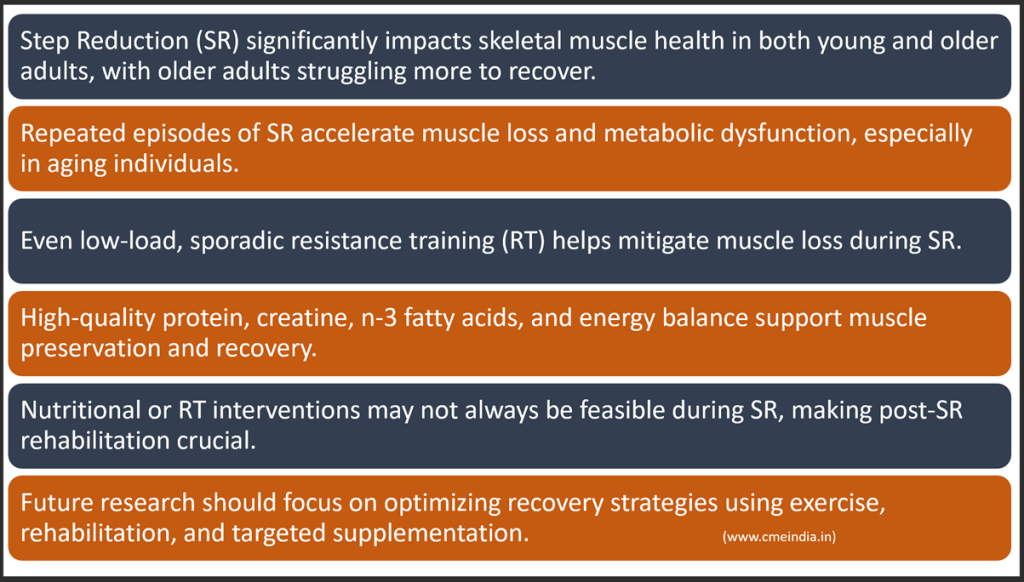
Step Reduction has rapid and detrimental metabolic and musculoskeletal consequences, with older adults experiencing greater difficulty in recovery. Resistance training appears to be an effective intervention to mitigate SR-induced muscle atrophy and metabolic impairments.
Changes in Muscle Function and Physical Capacity With Step Reduction (SR)
1. Muscle Strength and Aging:
- Skeletal muscle strength, rather than mass, is an independent predictor of mortality.
- SR (<1500 steps/day) leads to declines in maximal aerobic capacity (3–7%) and lower limb strength, with older adults showing up to 9% loss in knee extensor strength.
- Recovery of strength after SR is inconsistent, highlighting the risk of progressive strength loss with aging.
2. Mitigating Muscle Loss with Exercise:
- Resistance training (RT) helps maintain muscle mass, strength, and metabolic function during disuse.
- Studies show RT during bed rest prevents muscle loss, with even low-load RT (~30% of max strength, high reps) proving beneficial.
- However, SR conditions may prevent individuals from performing RT, making alternative strategies necessary.
3. Role of Nutrition in Muscle Preservation:
- Anabolic resistance (reduced muscle protein synthesis, MPS) increases with disuse and aging.
- Amino acid and protein supplementation (especially leucine-rich sources) may help, though results in bed rest studies are inconsistent.
- Energy balance is crucial—hypocaloric diets accelerate muscle loss, while excessive caloric intake may promote inflammation.
- Creatine and omega-3 supplementation show potential benefits, but findings are mixed.
- High-quality protein (e.g., whey) may enhance recovery post-SR when combined with increased activity.
Overall, SR negatively affects muscle strength and function, with RT and optimal nutrition serving as key countermeasures, particularly for aging populations.
CME INDIA Leaning Points
| Movement is Medicine – Just two weeks of reduced activity can lead to |
| When someone cut back on daily steps—even for a short time—here’s what happens: |
| Insulin Sensitivity Decreases – Drops by 44%, raising the risk of diabetes. Muscle Mass Shrinks – Young adults lose about 2.8% of leg lean mass. Strength Declines – A loss of 6-9% in just 14 days. |
| VO2 Max Declines – Aerobic fitness drops by 7%. Inflammation Rises – Increased CRP, TNF-α, and IL-6 levels. Fat Storage Increases – Visceral fat starts to accumulate. |
| Even just one day of extreme inactivity (~260 steps) can reduce insulin sensitivity by 39%! |
| Step reduction doesn’t mean complete bed rest, but it still triggers muscle loss, insulin resistance, and arterial stiffness. |
| For older adults, the effects can be even worse: Greater muscle loss, Slower recovery, Higher inflammation and metabolic issues |
References:
- Oikawa SY, Holloway TM, Phillips SM. The Impact of Step Reduction on Muscle Health in Aging: Protein and Exercise as Countermeasures. Front Nutr. 2019 May 24;6:75. doi: 10.3389/fnut.2019.00075. PMID: 31179284; PMCID: PMC6543894.
- Olsen RH, Krogh-Madsen R, Thomsen C, Booth FW, Pedersen BK. Metabolic responses to reduced daily steps in healthy nonexercising men. J Am Med Assoc. (2008) 299:1261–3. 10.1001/jama.299.11.1259
- Arentson-Lantz E, Galvan E, Wacher A, Fry CS, Paddon-Jones D. 2000 Steps/day does not fully protect skeletal muscle health in older adults during bed rest. J Aging Phys Act. (2018) 27:1–25. 10.1123/japa.2018-0093
- Moore DR, Churchward-Venne TA, Witard O, Breen L, Burd NA, Tipton KD, et al. Protein ingestion to stimulate myofibrillar protein synthesis requires greater relative protein intakes in healthy older versus younger men. J Gerontol A Biol Sci Med Sci. (2015) 70:57–62. 10.1093/gerona/glu103
- Finni, Taija & Haakana, Piia & Pesola, Arto & Pullinen, Teemu. (2012). Exercise for fitness does not decrease the muscular inactivity time during normal daily life. Scandinavian journal of medicine & science in sports. 24. 10.1111/j.1600-0838.2012.01456.x.
- Booth FW, Roberts CK, Laye MJ. Lack of exercise is a major cause of chronic diseases. Compr Physiol 2: 1143–1211, 2012. doi:10.1002/cphy.c110025
- Frank W. Booth, Christian K. Roberts, et al. Role of Inactivity in Chronic Diseases: Evolutionary Insight and Pathophysiological Mechanisms. Physiological ReviewsVol. 97, No. 4 2017https://doi.org/10.1152/physrev.00019.2016
Discover CME INDIA

- Explore CME INDIA Repository
- Examine CME INDIA Case Study
- Read History Today in Medicine
- Register for Future CMEs