
CME INDIA Presentation by Dr. Sudhir Bhandari, MD, DNB, MNAMS, D.Sc. (Hon. Causa), FRCP (London), FRCP (Edinburgh), FAMS, FACE, FACP, FICP, FRSSDI — Consultant Physician, Internal Medicine, Diabetes & Endocrinology; Professor Emeritus, SMS Medical College & Attached Group of Hospitals, Jaipur; Pro Chancellor & Sr. Professor, JNU Institute for Medical Sciences, Jaipur; Former Vice Chancellor, RUHS.
Moving Beyond Glucose-Centric Care to Cardio-Renal-Metabolic Protection.
Abstract
Type 2 diabetes (T2D) with chronic kidney disease (CKD) is not a glycaemic disorder with a renal complication; it is a high-risk cardio-renal-metabolic state in which kidney failure, heart failure and cardiovascular death converge. Four drug classes — renin-angiotensin system (RAS) blockers, sodium-glucose cotransporter-2 (SGLT2) inhibitors, the non-steroidal mineralocorticoid receptor antagonist finerenone, and glucagon-like peptide-1 receptor agonists (GLP-1 RAs) — now have outcome evidence, and each acts through a biologically distinct mechanism. The CONFIDENCE trial has provided the first randomised evidence that two of these pathways, started together, reduce albuminuria more than either alone, and ADA 2026 has responded by endorsing simultaneous initiation in selected patients. This review distils the DETCON 2026 presentation into a clinical synthesis: what is proven, what is inferred, and what remains an open research question about the timing and layering of organ protection.
1. The Collision We Can No Longer Afford to Watch
Roughly 850 million people worldwide live with chronic kidney disease, and about 40% of that burden is driven by diabetes. More than five million patients now depend on dialysis globally, and India carries one of the fastest-growing diabetic kidney disease (DKD) burdens on the planet. These are not abstract epidemiological statements for the Indian physician: in an average diabetes clinic in Dhanbad, Jaipur or Kochi, one in three patients seated outside the consulting room already has measurable kidney damage, and most of them do not know it.
The arithmetic of risk is unforgiving. In NHANES-derived data, the prevalence of CKD stages 3–4 was 19.1% among people with diabetes compared with 5.3% among those without — more than a threefold excess. Across the CKD Prognosis Consortium, at every single stratum of baseline eGFR from 15 to 60 mL/min/1.73 m², the adjusted hazard of progression to end-stage kidney disease was consistently higher in people with diabetes than in those without. Diabetes does not merely cause CKD; it accelerates the journey to ESKD.
Mortality follows the same trajectory. The standardised ten-year cumulative incidence of death is approximately fourfold higher in patients who carry both diabetes and CKD compared with those who carry neither. Life expectancy falls by about six years with early CKD alone and by ten years with diabetes alone, but by sixteen years when the two coexist. The combination is not additive. It is multiplicative, and it is lethal.
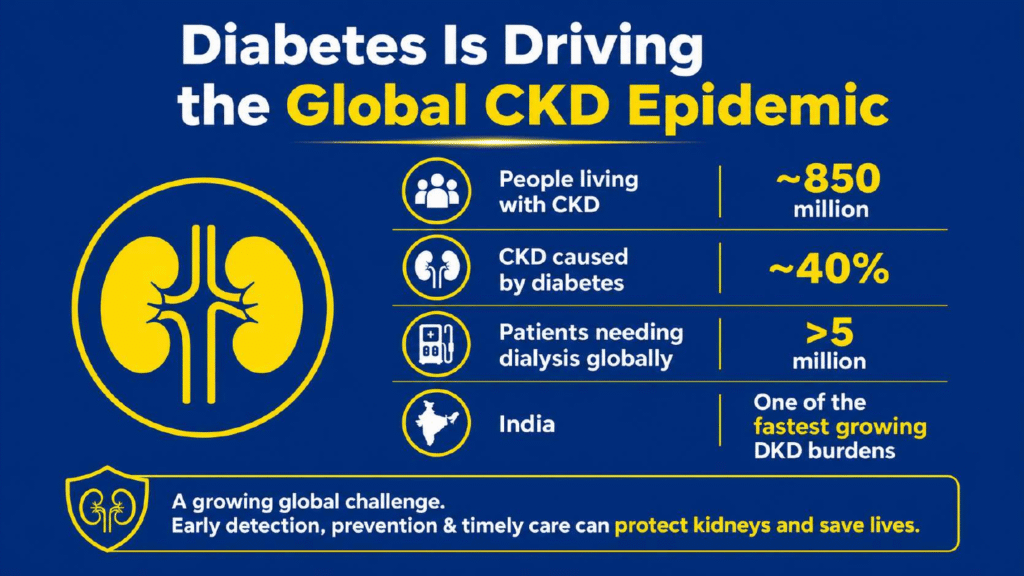
Slide: Diabetes is driving the global CKD epidemic — the numbers that frame the problem.
2. One Patient, Three Diseases
Diabetes, heart failure and CKD are not three parallel diagnoses that happen to share a patient. They are three expressions of a single cardio-renal-metabolic (CRM) syndrome. Global diabetes prevalence is projected to rise from 463 million in 2017 to 700 million by 2045. Heart failure already affects 63 million people, and global CKD prevalence stands at 13.4%. In a large global survey, 58% of patients with type 2 diabetes were observed to develop CKD, and type 2 diabetes carries up to a fivefold increase in the risk of heart failure. Heart failure and CKD then feed each other in a vicious circle, and obesity worsens every arm of the triangle.
The clinical instruction that follows is simple and should be non-negotiable: when you manage any one of these three conditions, you are obliged to screen for and protect against the other two.
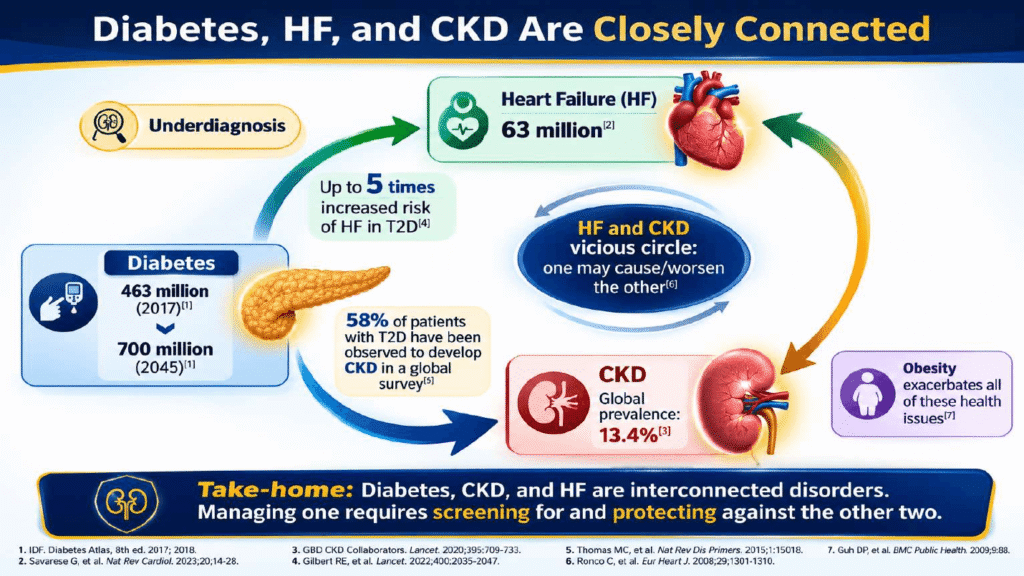
Slide: Diabetes, heart failure and CKD are interconnected — managing one demands screening for the other two.
3. Why Glucose Control Alone Was Never Going to Be Enough
For three decades we taught that diabetic nephropathy was a consequence of hyperglycaemia and that tight glycaemic control would therefore prevent it. That model is mechanistically incomplete. Kidney injury in type 2 diabetes is driven by three convergent forces acting on the same nephron.
- Hemodynamic injury: systemic hypertension and, more importantly, raised intraglomerular pressure transmitted through a dilated afferent arteriole. RAAS activation, TGF-β and endothelins mediate this stress.
- Metabolic injury: advanced glycation end-products, NADPH-oxidase-derived reactive oxygen species and TGF-β signalling generated by chronic hyperglycaemia.
- Inflammatory and fibrotic injury: TGF-α, serum amyloid A, VEGF-A, collagen deposition and CTGF, culminating in irreversible scar.
These three streams converge on a common histological pathway — glomerular hypertrophy, mesangial expansion, glomerulosclerosis and tubulointerstitial damage — and end in kidney fibrosis and progressive CKD. A drug that addresses only one stream cannot be expected to abolish the disease. This single insight explains why every landmark trial of the last twenty-five years reduced risk without eliminating it, and why the modern answer is layered rather than sequential therapy.
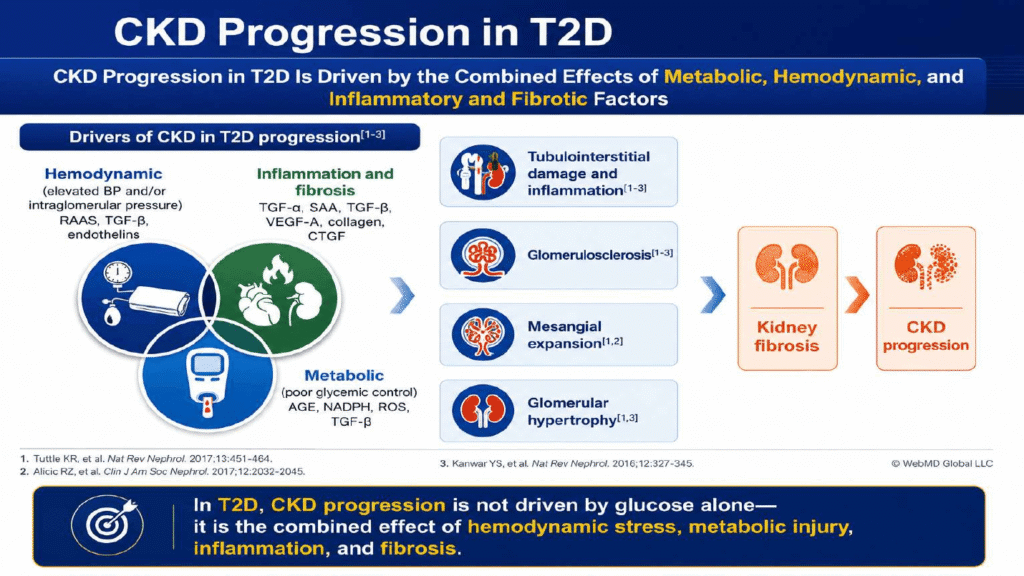
Slide: CKD progression in T2D is driven by hemodynamic, metabolic, inflammatory and fibrotic factors acting together.
4. Detection: Albuminuria Speaks First, Creatinine Speaks Last
The natural history of DKD is well mapped. Hyperfiltration appears within the first five years, microalbuminuria follows, overt proteinuria emerges around year fifteen, and only then does the GFR curve turn decisively downward toward ESKD. By the time serum creatinine rises, a substantial proportion of nephron mass is already lost. Urine albumin-to-creatinine ratio (UACR) is the earliest accessible marker of kidney damage; eGFR decline is a late but powerfully prognostic one.
Despite this, in Medicare and Optum Clinformatics cohorts only 12.6% and 4.2% respectively of patients at risk for CKD had a UACR measured in a single year — fewer than 15% overall. The presentation’s phrasing deserves to be quoted in every departmental teaching round: you cannot diagnose what you do not test. The corollary is equally blunt — what gets measured gets treated.
Screening therefore has to be reduced to a habit, not a decision: annual UACR and annual eGFR in every patient with type 2 diabetes, from the day of diagnosis. A minority of patients with DKD are normoalbuminuric, so a falling eGFR with a normal UACR should prompt consideration of non-diabetic causes rather than reassurance.
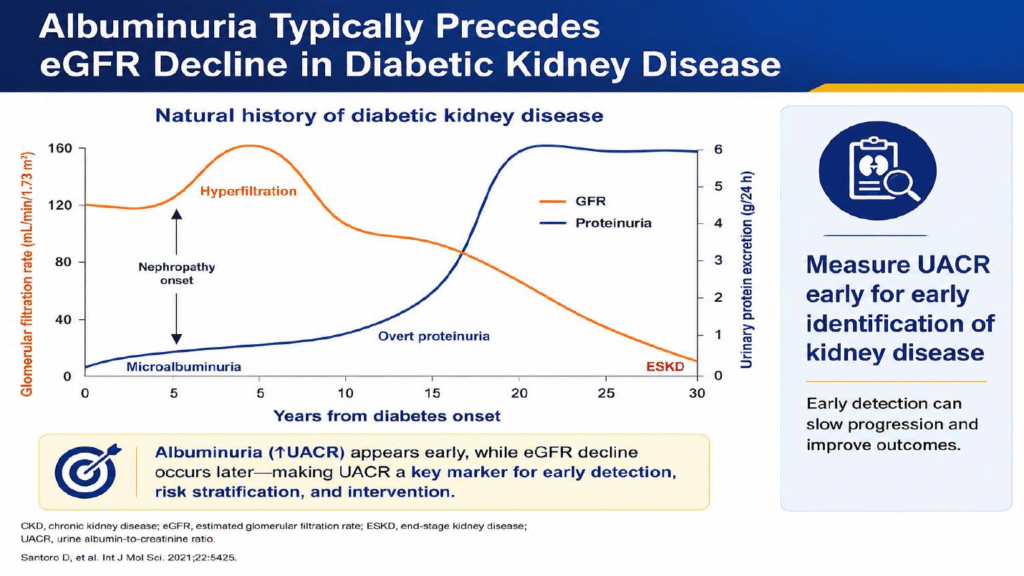
Slide: Albuminuria typically precedes eGFR decline — measure UACR early.
5. Layer 1 — Hemodynamic Protection with RAS Blockade
ACE inhibitors and ARBs dilate the efferent arteriole, lower intraglomerular pressure, reduce proteinuria and slow CKD progression. RENAAL established the principle in type 2 diabetes with nephropathy: losartan produced a 16% reduction in the composite renal outcome, a 25% reduction in doubling of serum creatinine and a 28% reduction in progression to ESRD, with a significant fall in proteinuria. IDNT confirmed it and sharpened it — irbesartan reduced the primary composite by 20% versus placebo and by 23% versus amlodipine, demonstrating that renal protection was not simply a blood-pressure effect. Not all antihypertensives are equal.
ONTARGET then delivered the cautionary lesson. Telmisartan matched ramipril on renal endpoints, and combination therapy reduced albuminuria more than either agent alone — but that surrogate gain did not translate into better hard outcomes. Dual RAS blockade increased dialysis initiation, doubling of serum creatinine, acute kidney injury, hyperkalaemia and hypotension.
The mechanism is instructive. Over-suppression of efferent arteriolar tone causes an excessive fall in glomerular capillary pressure and a collapse of filtration reserve, particularly in patients who are elderly, volume-depleted, or already have CKD or heart failure. More proteinuria reduction does not always mean better kidney outcomes. The governing principle is optimal RAAS blockade, not maximal RAAS blockade: use an ACE inhibitor or an ARB, titrated to the maximally tolerated dose, but never both.
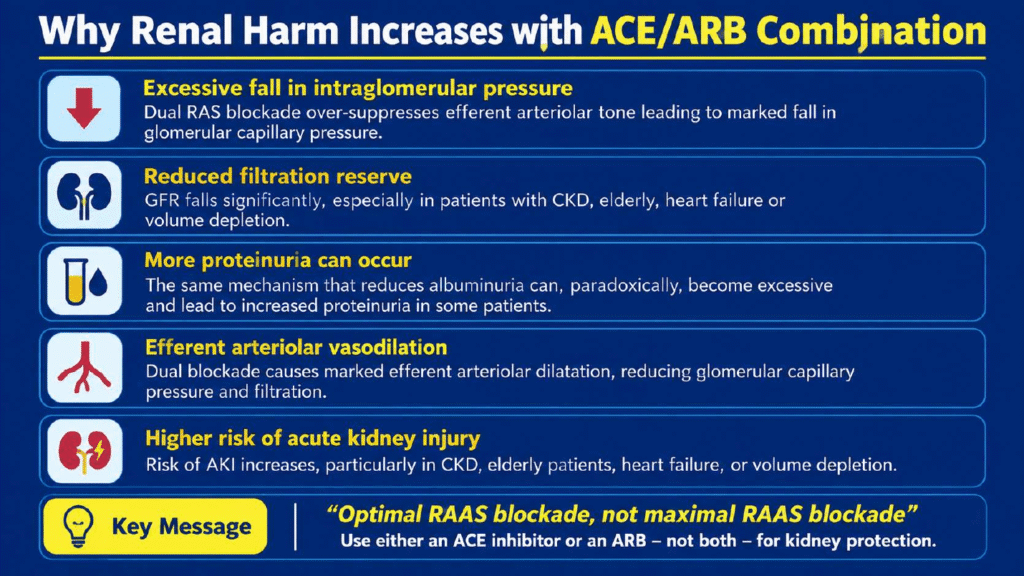
Slide: Why renal harm increases with ACEi/ARB combination — the mechanistic basis of the ONTARGET signal.
Every patient with CKD deserves RAS blockade unless contraindicated. But RAS blockade was the first breakthrough, not the final solution. Even on maximally tolerated ACEi/ARB therapy, CKD progression continues, albuminuria persists, heart failure risk remains and cardiovascular mortality stays elevated.
6. Layer 2 — Tubuloglomerular Protection with SGLT2 Inhibitors
SGLT2 inhibitors approach the same glomerulus from the opposite end. By blocking proximal sodium-glucose reabsorption, they increase distal sodium delivery to the macula densa, restore tubuloglomerular feedback and constrict the afferent arteriole. The result is reduced hyperfiltration, lower albuminuria and improved intraglomerular haemodynamics — an effect that is largely independent of glucose lowering.
CREDENCE randomised patients with type 2 diabetes and CKD (eGFR 30–90 mL/min/1.73 m² with albuminuria), all on background ACEi or ARB, and showed a 30% reduction in the primary renal composite, with fewer ESRD events, less doubling of creatinine, fewer renal deaths, significant albuminuria reduction and fewer cardiovascular events. DAPA-CKD extended the finding to CKD with or without diabetes across eGFR 25–75, with a 39% reduction in the primary composite, reduced ESRD and renal decline, and lower all-cause mortality — with benefit preserved in non-diabetic CKD. EMPA-KIDNEY broadened the population further. Across EMPA-REG, CREDENCE, DAPA-CKD and EMPA-KIDNEY the signal is remarkably consistent: less CKD progression, less dialysis, fewer heart failure hospitalisations and fewer cardiovascular deaths.
The pairing with RAS blockade is genuinely synergistic rather than merely additive: the ACEi/ARB relaxes the efferent arteriole while the SGLT2 inhibitor constricts the afferent arteriole. Intraglomerular pressure falls from both ends of the capillary. Clinicians should expect and accept the initial haemodynamic dip in eGFR after starting an SGLT2 inhibitor — typically a fall of up to 10–20% that plateaus within four weeks and predicts long-term preservation of function. Stopping the drug at that point is one of the commonest and costliest errors in Indian practice.
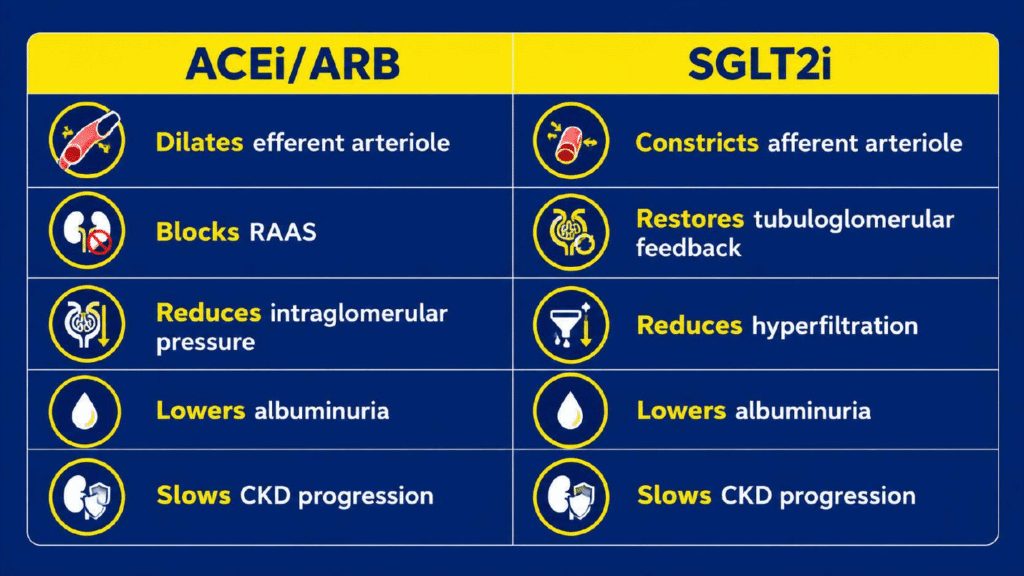
Slide: Complementary mechanisms — ACEi/ARB versus SGLT2 inhibitor at the two ends of the glomerular capillary.
7. Layer 3 — Anti-Inflammatory and Anti-Fibrotic Protection with Finerenone
Even after RAS blockade and SGLT2 inhibition, substantial residual cardio-renal-metabolic risk persists. Residual albuminuria remains a strong marker of ongoing kidney and vascular injury, and persistent inflammation, fibrosis and metabolic dysfunction are simply not addressed by haemodynamic drugs. In both CREDENCE and DAPA-CKD, a significant proportion of patients still experienced kidney failure or cardiovascular events.
Mineralocorticoid receptor overactivation promotes sodium retention, inflammation, fibrosis and structural kidney damage — a common final pathway across many CKD aetiologies, not only diabetic nephropathy. Finerenone, a non-steroidal mineralocorticoid receptor antagonist, blocks that pathway with a tissue distribution and safety profile distinct from the steroidal MRAs, and without their endocrine adverse effects.
FIDELIO-DKD, in patients with more advanced albuminuric DKD, produced an 18% reduction in the primary renal composite with less CKD progression and ESRD, significant albuminuria reduction and a favourable cardiovascular secondary endpoint. FIGARO-DKD, in earlier-stage CKD across a broader eGFR range, delivered a 13% reduction in the primary cardiovascular composite with fewer heart failure hospitalisations. Notably, 99.8% of FIGARO participants were on an ACEi or ARB but only 8% were on an SGLT2 inhibitor — the finerenone benefit was therefore demonstrated largely on top of RAS blockade alone.
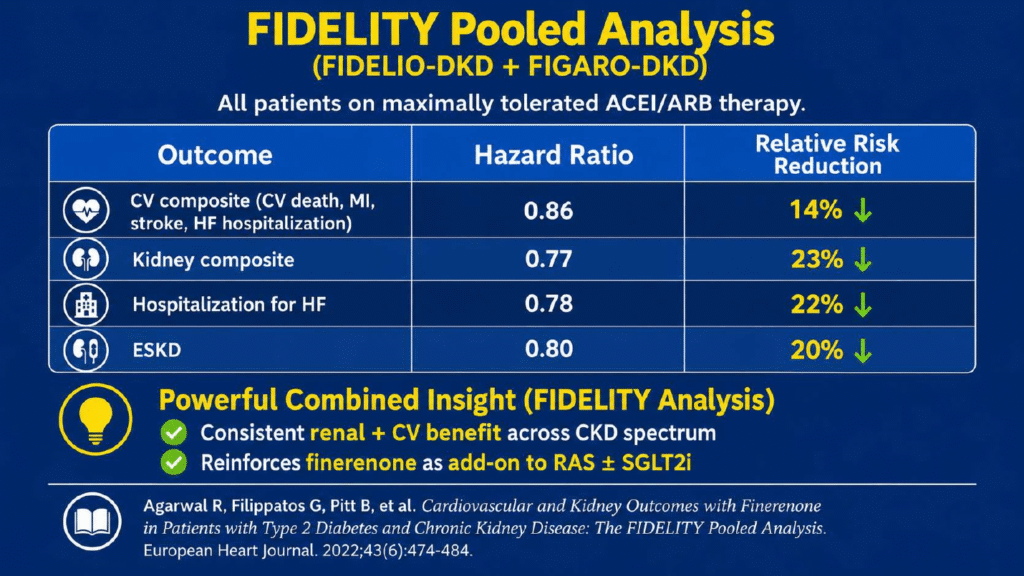
Slide: FIDELITY pooled analysis — consistent renal and cardiovascular benefit across the CKD spectrum.
The FIDELITY pooled analysis of both trials, in patients on maximally tolerated ACEi/ARB therapy, showed a 14% relative reduction in the cardiovascular composite (HR 0.86), a 23% reduction in the kidney composite (HR 0.77), a 22% reduction in heart failure hospitalisation (HR 0.78) and a 20% reduction in ESKD (HR 0.80). Finerenone is best understood as the anti-fibrotic pill of the CKM era — the first non-steroidal MRA proven to reduce both kidney disease progression and cardiovascular events in diabetic CKD, and to reduce worsening heart failure events across HFrEF and HFpEF.
8. CONFIDENCE — Should We Start Them Together?
Three drug classes each independently reduce kidney and cardiovascular risk through three different mechanisms. The obvious clinical question was whether they should be introduced sequentially over months, as most of us actually practise, or together from the outset. CONFIDENCE, a phase 2 randomised trial, tested exactly that hypothesis.
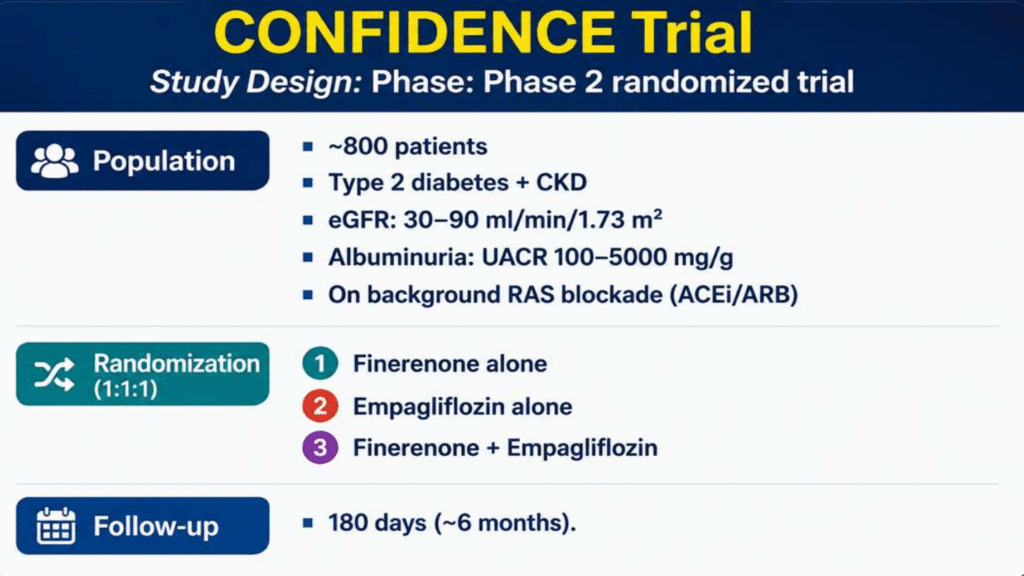
Slide: CONFIDENCE trial design — finerenone versus empagliflozin versus both, on background RAS blockade.
Approximately 800 patients with type 2 diabetes and CKD (eGFR 30–90 mL/min/1.73 m², UACR 100–5000 mg/g), all on background ACEi or ARB, were randomised 1:1:1 to finerenone alone, empagliflozin alone, or the combination, and followed for 180 days. The primary endpoint was change in UACR at six months — a validated surrogate for CKD progression.
Combination therapy was clearly superior. It produced a 29% greater reduction in albuminuria than finerenone alone and a 32% greater reduction than empagliflozin alone (p < 0.001 for both), and the separation was already visible as early as four weeks. In absolute terms the combination achieved approximately 50–55% UACR reduction, more than 20 percentage points beyond the roughly 30% reductions reported in CREDENCE, DAPA-CKD, FIDELIO and FIGARO. Safety was reassuring: no significant increase in acute kidney injury, no major increase in hyperkalaemia, and an additional blood-pressure reduction.
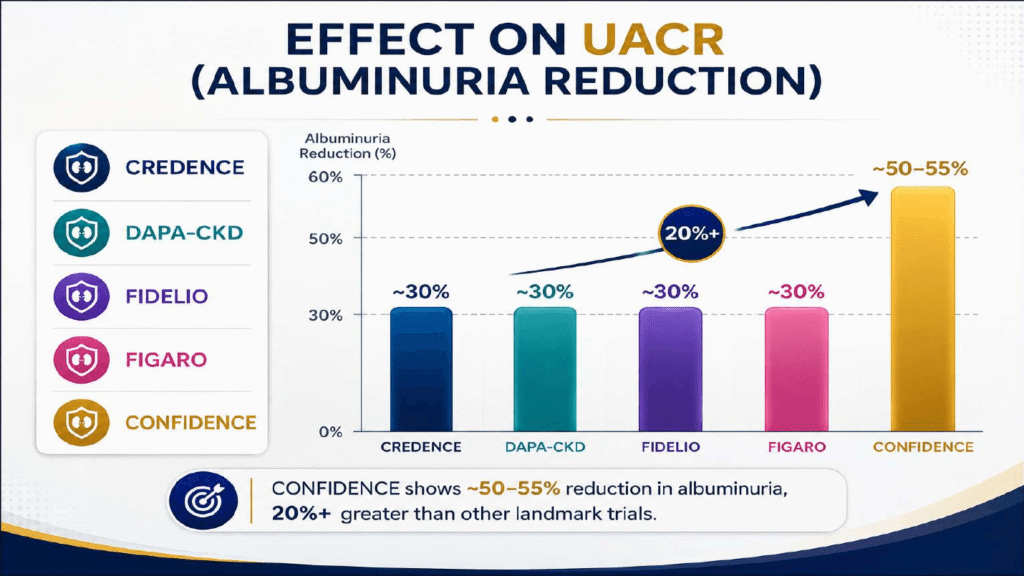
Slide: Effect on UACR — CONFIDENCE versus the earlier landmark trials.
One caveat must be stated honestly whenever these data are presented. CONFIDENCE was a phase 2, six-month, surrogate-endpoint study. It was not powered to establish a reduction in kidney failure or mortality, and the hard-outcome evidence for early combination therapy should not be overstated. What CONFIDENCE does justify is a change in sequencing philosophy: instead of adding one agent every few months while the nephron scars, start complementary agents early and together in appropriately selected patients.
9. Layer 4 — Metabolic Protection with GLP-1 Receptor Agonists
Obesity is estimated to account for 20–25% of CKD cases worldwide, and 44% of people with CKD also have obesity. It worsens diabetes and hypertension, the two leading causes of CKD, and drives obesity-related glomerulopathy directly. Obesity is therefore not an associated feature of kidney disease but an independent therapeutic target.
The FLOW trial provided the outcome evidence. In patients with type 2 diabetes and CKD, semaglutide reduced the primary major kidney events composite by 24% (HR 0.76, 95% CI 0.66–0.88, p = 0.0003), MACE by 18%, cardiovascular death by 29% (HR 0.71) and all-cause death by 20%. The annual eGFR slope was 1.16 mL/min/1.73 m² per year slower than placebo.
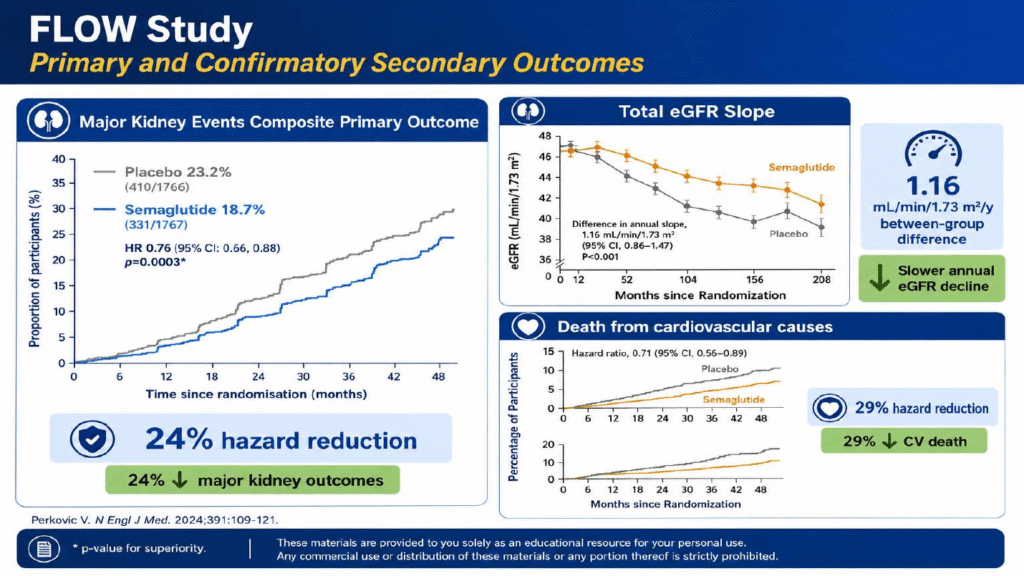
Slide: FLOW study — primary and confirmatory secondary outcomes with semaglutide.
Critically for combination practice, the UACR benefit was preserved regardless of baseline SGLT2 inhibitor use: a 34% between-group difference in patients not on an SGLT2 inhibitor and a 24% difference in those already taking one, with a non-significant interaction (p = 0.279). The GLP-1 receptor agonist adds a metabolic and anti-inflammatory layer that the other three pillars do not supply.
Add a GLP-1 RA to foundation therapy when there is obesity or high BMI, inadequate glycaemic control, established ASCVD, or persistent albuminuria despite triple therapy.
10. How Much Protection Is Actually Achievable?
Because the four classes act on four distinct mechanisms, their albuminuria effects are broadly additive. Pooled individual-level data from CANVAS and CREDENCE, FIDELIO-DKD and FIGARO-DKD, and eight GLP-1 RA trials were used to simulate event-free and overall survival against conventional RAAS-inhibitor care. For CKD progression, SGLT2i alone gave an HR of 0.63, ns-MRA 0.77 and GLP-1 RA 0.86; the triple combination gave 0.42. For all-cause mortality, the triple combination gave an HR of 0.67. Combining mechanisms roughly doubles the protection available from any single agent.
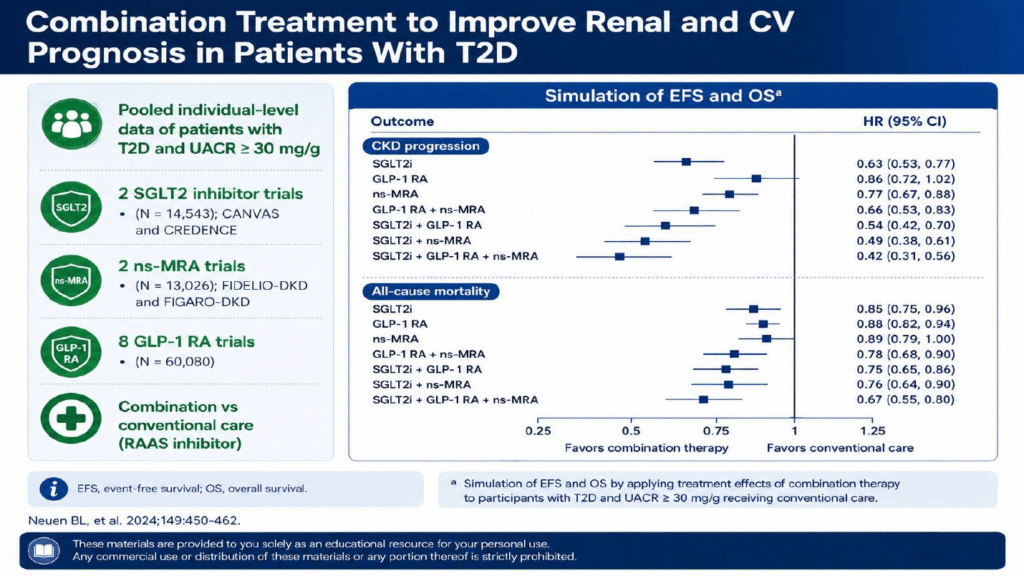
Slide: Simulated event-free and overall survival with combination versus conventional care (Neuen et al.).
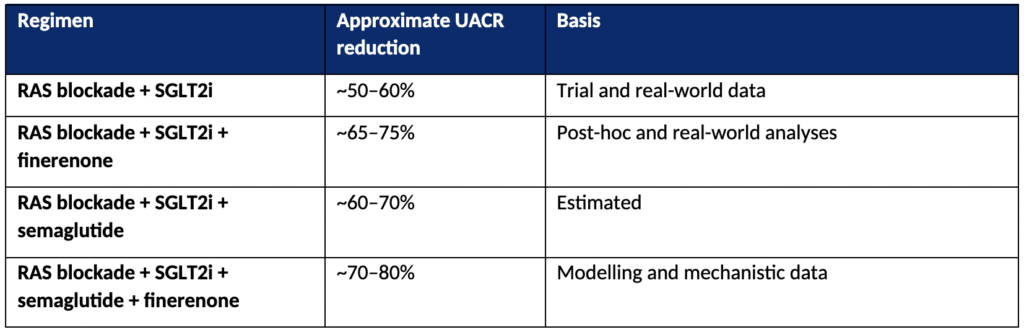
Table 1. Approximate cumulative effect on albuminuria. Some patients — particularly those with severe baseline albuminuria and good adherence — may achieve more than 80% reduction, approaching remission of albuminuria.
11. The Four Pillars of Cardio-Renal-Metabolic Protection
CKD in type 2 diabetes is not simply a kidney disease. It is simultaneously a haemodynamic disease, an inflammatory disease, a metabolic disease and a cardiovascular disease. Multiple pathways therefore require simultaneous blockade.
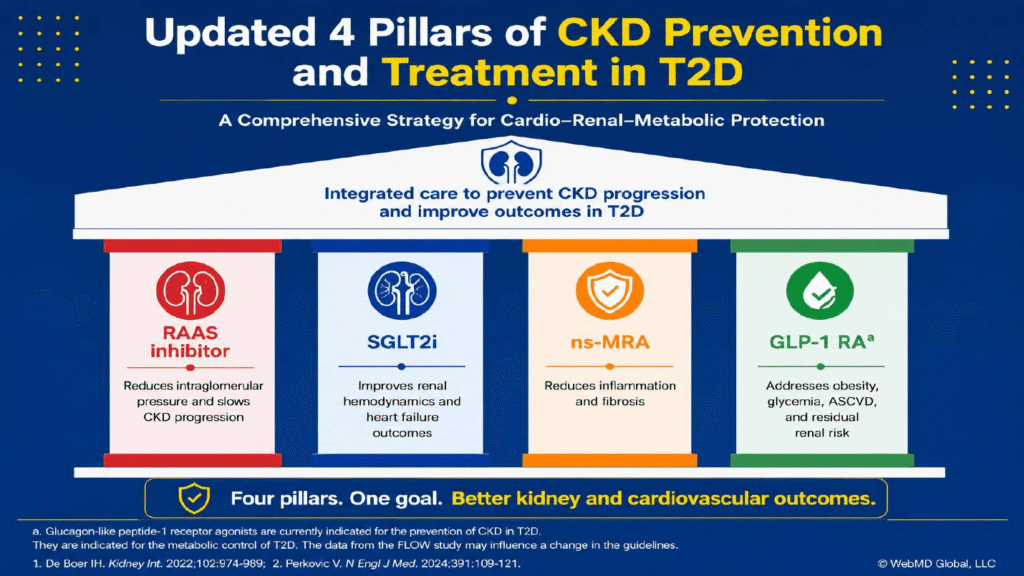
Slide: The updated four pillars of CKD prevention and treatment in T2D.
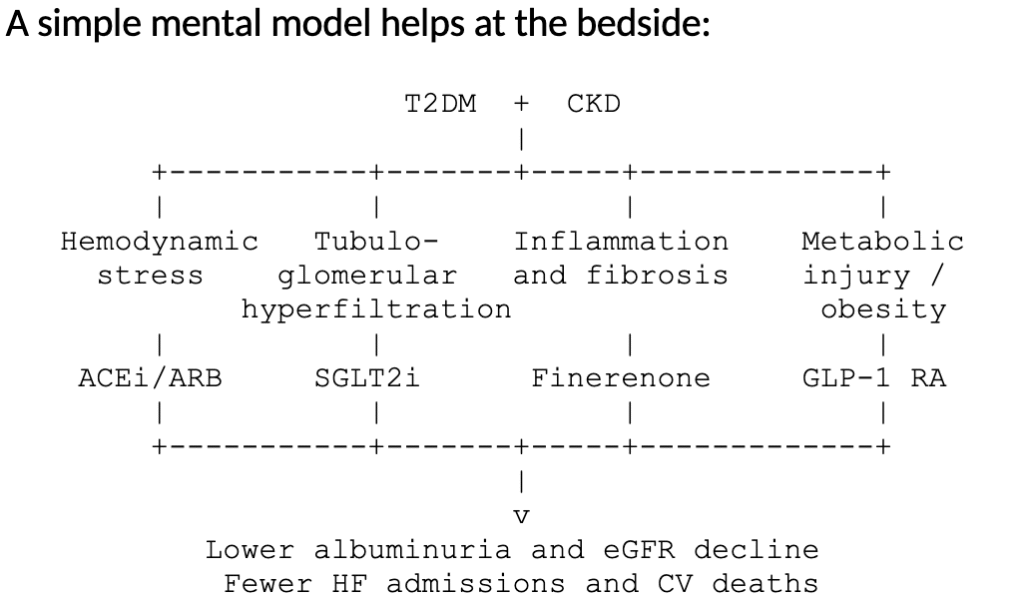
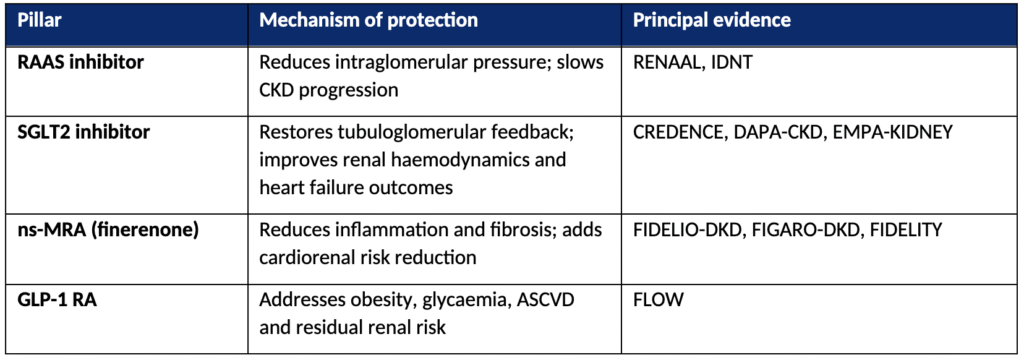
Table 2. Four pillars, one goal — better kidney and cardiovascular outcomes.
12. Translating This Into Indian Practice
Quadruple therapy should be presented as a concept of complementary risk-factor and organ-protective therapy, not as a mandatory four-drug prescription for every patient. KDIGO explicitly supports individualised sequencing based on CKD stage, degree of albuminuria, cardiovascular disease, glycaemic requirement, serum potassium and tolerability. That framing keeps the message provocative and the science defensible.
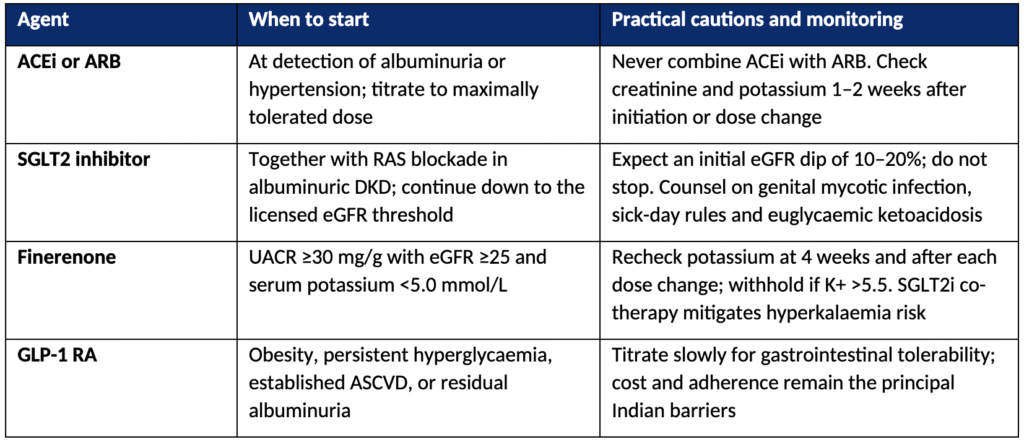
Table 3. A practical initiation and monitoring framework.
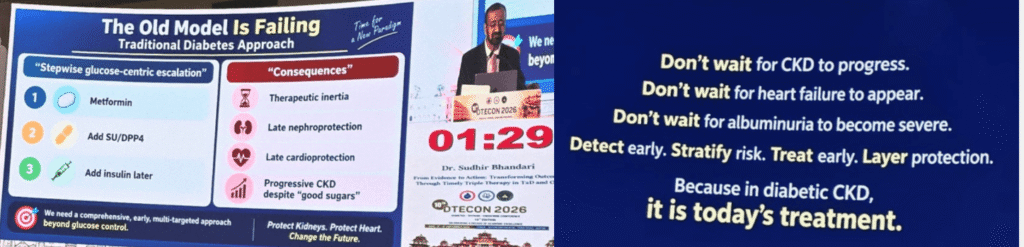
Three implementation realities deserve explicit attention in India. First, cost and pill burden: generic dapagliflozin and empagliflozin have made the second pillar broadly affordable, but finerenone and GLP-1 receptor agonists remain expensive, and honest prioritisation with the patient is better than silent non-prescription. Second, therapeutic inertia: the old stepwise glucose-centric ladder of metformin, then a sulfonylurea or DPP-4 inhibitor, then insulin, delivers late nephroprotection, late cardioprotection and progressive CKD despite apparently good sugars. Third, monitoring discipline: potassium and creatinine checks are what make layered therapy safe, and a clinic that cannot organise them should not escalate blindly.
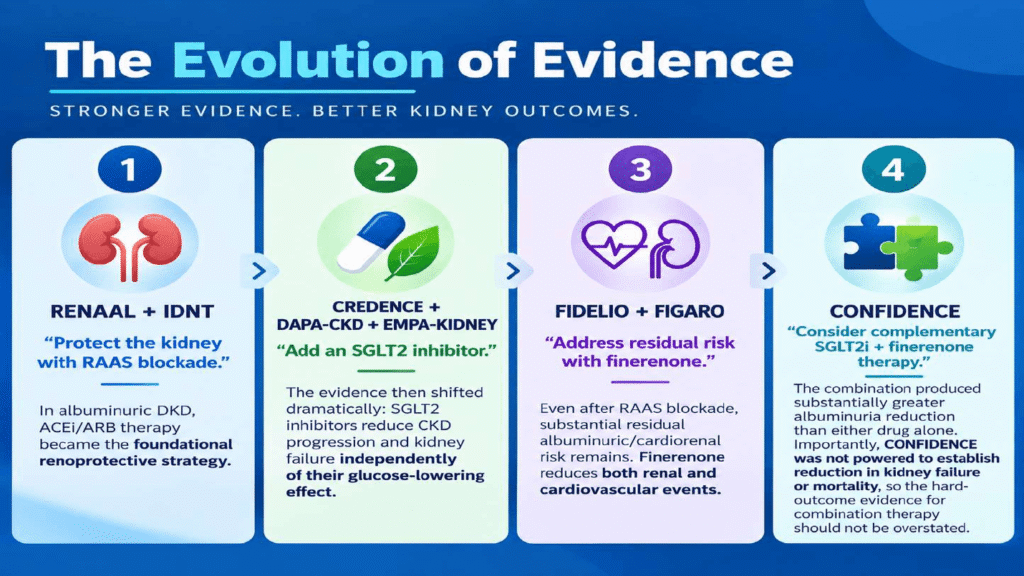
Slide: The evolution of evidence — from RAAS blockade to complementary combination therapy.
13. Take-Home Messages
- Screen every patient with type 2 diabetes annually with both UACR and eGFR. Do not wait for creatinine to rise.
- RAS blockade remains the foundation, but use an ACE inhibitor or an ARB — never both. Optimal, not maximal, RAAS blockade.
- Add an SGLT2 inhibitor early; the initial eGFR dip is expected, haemodynamic and reassuring.
- Add finerenone for residual albuminuria, inflammation and fibrosis, with structured potassium monitoring.
- Add a GLP-1 receptor agonist for obesity, ASCVD, glycaemic need or persistent albuminuria.
- Early combination rather than slow sequential addition achieves 50–80% albuminuria reduction, but hard-outcome evidence for combinations rests on FIDELITY, FLOW and modelling — not on CONFIDENCE, which was not powered for kidney failure or death.
Do not wait for CKD to progress. Do not wait for heart failure to appear. Do not wait for albuminuria to become severe. Detect early, stratify risk, treat early and layer protection — because in diabetic CKD, tomorrow’s prevention is today’s treatment.
Key references: Brenner BM et al. N Engl J Med 2001;345:861–869. Lewis EJ et al. N Engl J Med 2001;345:851–860. Bakris GL et al. N Engl J Med 2020;383:2219–2229. Pitt B et al. N Engl J Med 2021;385:2252–2263. Agarwal R et al. Eur Heart J 2022;43(6):474–484. Perkovic V et al. N Engl J Med 2024;391:109–121. Mann JFE et al. Nat Med 2024. Neuen BL et al. Circulation 2024;149:450–462. de Boer IH et al. Kidney Int 2022;102:974–989. Santoro D et al. Int J Mol Sci 2021;22:5425. Matsushita K et al. Lancet Diabetes Endocrinol 2015;3:514–525.
Discover CME INDIA

- Explore CME INDIA Repository
- Examine CME INDIA Case Study
- Read History Today in Medicine
- Register for Future CMEs
Amazing…
Very nice article please