
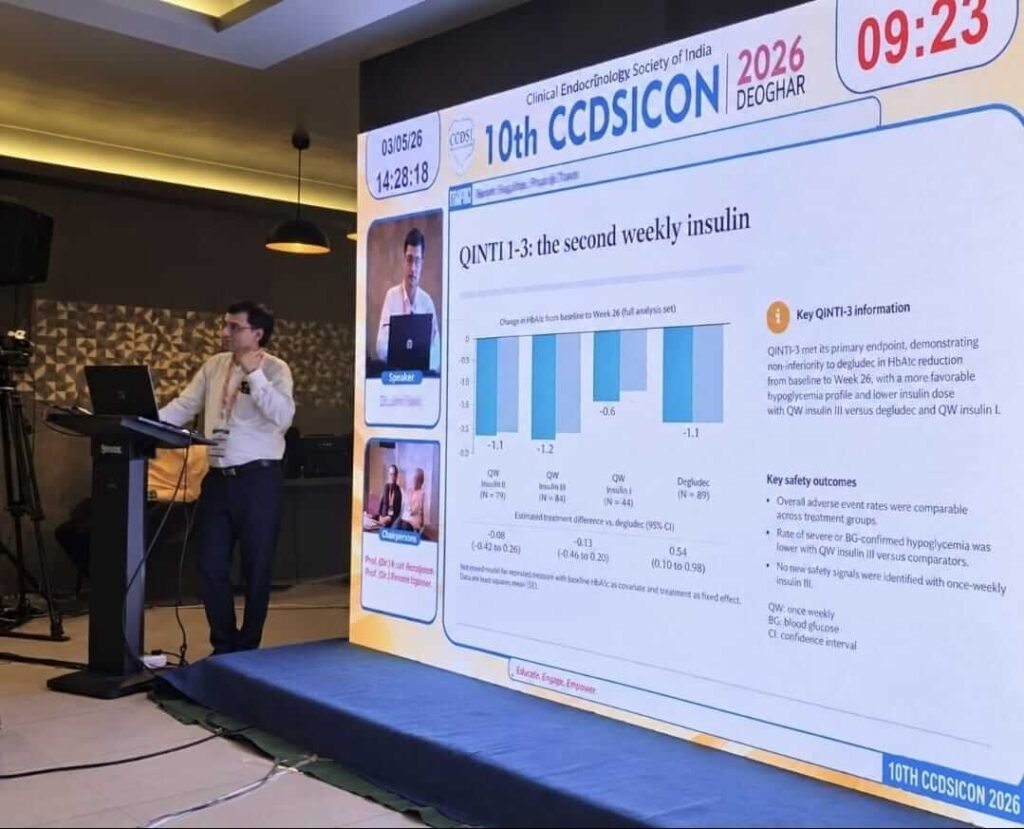
CME INDIA Presentation by Dr. Bijay Patni, Head of Diabetes Wellness Care and In-charge of Khushiyaan Cares in Kolkata, West Bengal.
Based on a talk delivered at CCDSI 2026, Deoghar.
Abstract
Once-weekly basal insulin moved from prospect to practice in 2026. Insulin icodec (Awiqli) received US FDA approval for type 2 diabetes on 26 March 2026 and was launched in India in July 2026; insulin efsitora alfa (Onswik) followed with FDA approval on 24 September 2026, after earlier approvals in the EU, Mexico and Japan. This review, based on the talk Newer Insulins: Pros and Cons delivered by Dr Bijay Patni at CCDSI 2026, Deoghar, appraises the evidence from the ONWARDS 1–6, QWINT 1–5 and COMBINE 1–4 programmes, together with ultra-rapid and inhaled prandial insulins and glucose-responsive insulin in development.
The central finding is that weekly basal insulin is non-inferior to daily analogues, with a small pooled HbA1c advantage of 0.17 percentage points and a 4.3 percentage-point gain in time in range in insulin-naive type 2 diabetes. Its principal value is behavioural: fewer injections, better persistence and less therapeutic inertia. Its principal liability is irreversibility, with hypoglycaemia clustering on days 2–4 after each dose and a consistent excess of hypoglycaemia in type 1 diabetes across both molecules. The weekly fixed-ratio combination IcoSema offers the most favourable weight and hypoglycaemia profile. We close with five practical rules for safe prescribing in Indian practice.
Keywords: insulin icodec; insulin efsitora alfa; once-weekly insulin; IcoSema; hypoglycaemia; type 2 diabetes; India
1. Introduction: the problem is behavioural, not pharmacological
Insulin therapy has had two transformative eras. The analogue era of the late 1990s and 2000s brought glargine, detemir, aspart and lispro. The ultra-long-acting era of 2013–2015 brought degludec and glargine U300. Between 2015 and 2025 no new basal insulin class reached the clinic. That changed in 2026, with two once-weekly basal insulins approved within seven months of each other [3, 4].
The Indian denominator explains why this matters. The ICMR-INDIAB study estimates 101 million adults with diabetes and a further 136 million with prediabetes [1]. In routine Indian practice, insulin is typically started 7–9 years after oral agents have failed. Fear of daily injections is the dominant barrier, and the legacy effect turns every year of delay into avoidable microvascular disease.
Once-weekly basal insulin reduces annual basal injections from 365 to 52. This is best understood as an adherence and inertia intervention, not a potency one. The right question is not whether weekly insulin lowers HbA1c more than daily insulin, but whether it gets more patients onto insulin earlier and keeps them there. Equally, weekly dosing does not buy fewer glucose checks or fewer clinic visits during conversion, freedom from prandial insulin in most insulin-experienced patients, an outcome benefit, or a solution for type 1 diabetes (Figure 1).
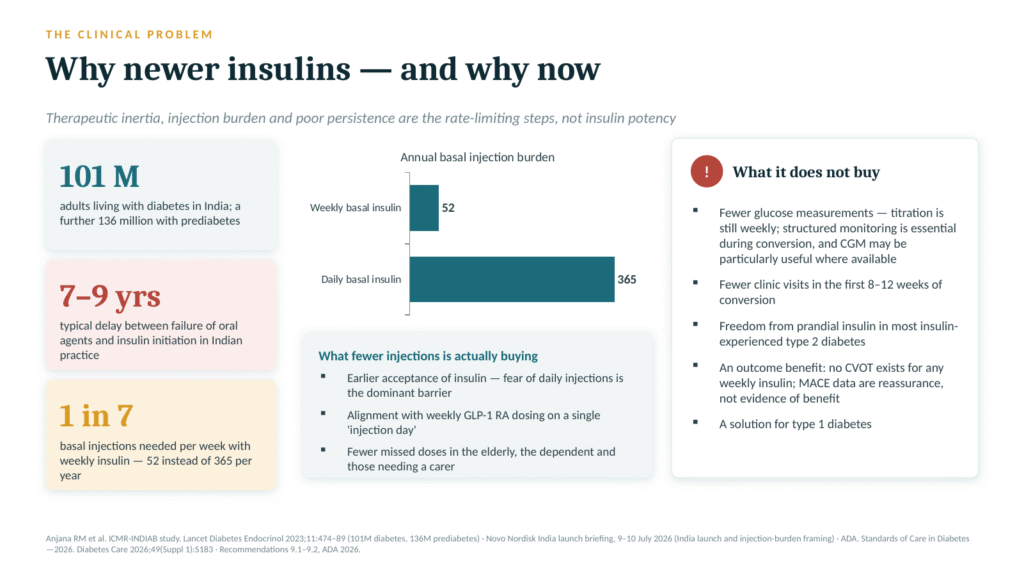
Figure 1. Why newer insulins, and why now. Annual basal injection burden falls from 365 to 52; delays to insulin initiation of 7–9 years are the rate-limiting step in Indian practice [1, 2].
2. The 2026 landscape and the pharmacology of a seven-day insulin
Newer insulins now fall into five innovation streams: once-weekly basal insulin; the weekly fixed-ratio combination of icodec with semaglutide (IcoSema); ultra-rapid and inhaled prandial insulins; concentrated insulins and biosimilars; and glucose-responsive and oral insulins. The last is still preclinical. Streams 3 and 4 refine familiar pharmacology. Streams 1 and 2 are disruptive, because a seven-day depot means a wrong dose, an intercurrent illness, an unplanned fast or a hospital admission persists for days rather than hours.
Two engineering routes reach a weekly profile (Figure 2). Insulin icodec carries a C20 fatty di-acid side chain that binds albumin strongly but reversibly, plus three amino-acid substitutions that slow receptor-mediated clearance, the dominant elimination route for insulin [5]. Its half-life is about 196 hours (about 8 days); steady state takes 3–4 weeks. It is formulated at U-700, seven times standard concentration [3]. Insulin efsitora alfa is a single-chain insulin variant fused to a human IgG2 Fc domain. Neonatal Fc receptor recycling creates a circulating depot with a half-life of about 17 days and an almost peakless profile [6].
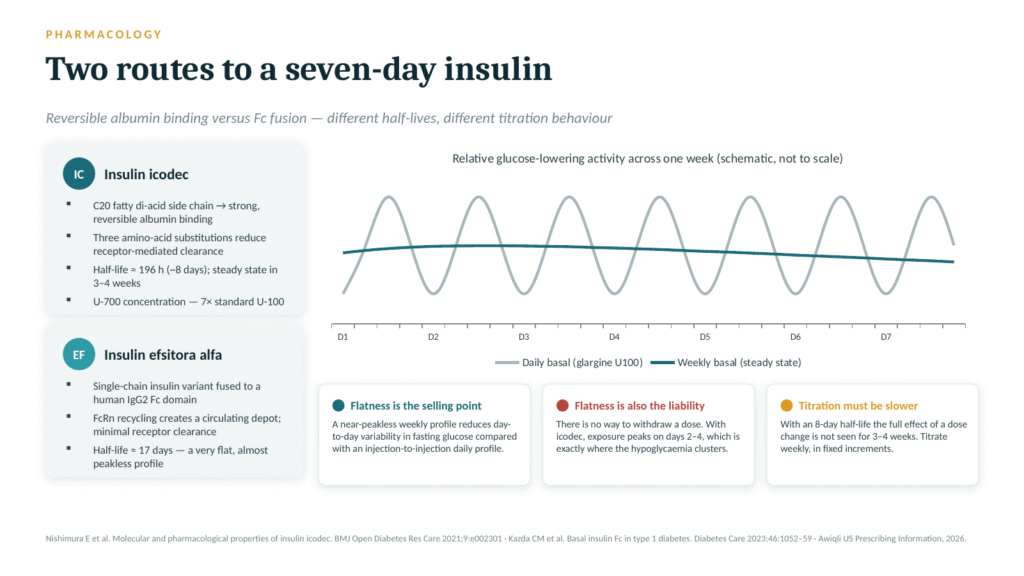
Figure 2. Two routes to a seven-day insulin. The activity curve is a teaching schematic, not published pharmacokinetic data [5, 6].
Three clinical consequences follow. Flatness reduces day-to-day fasting glucose variability, the likely mechanism behind the time-in-range gains in ONWARDS 1. Flatness also means irreversibility: icodec exposure peaks on days 2–4 after injection, which is exactly where hypoglycaemia clusters. And titration must be slower, because the full effect of any dose change is not seen for 3–4 weeks. Over-titrating weekly insulin as if it were daily insulin is the predictable cause of early real-world hypoglycaemia.
3. Efficacy: non-inferior everywhere, superior only where insulin-naive
3.1 Insulin icodec: the ONWARDS programme
ONWARDS 1 enrolled 984 insulin-naive adults for 78 weeks. HbA1c fell by 1.55 percentage points with icodec versus 1.35 with glargine U100, an estimated treatment difference of −0.19 points that met both non-inferiority and superiority [7]. By week 78 the gap had narrowed to −0.11 and was no longer significant. ONWARDS 3, the only double-blind trial, compared icodec with degludec in 588 insulin-naive adults and reproduced the direction of effect (−1.57 vs −1.36) [8]. In ONWARDS 4, among patients on basal–bolus therapy, reductions were identical (−1.16 vs −1.18) [9]. Once prandial insulin does the work, the choice of basal agent contributes little.
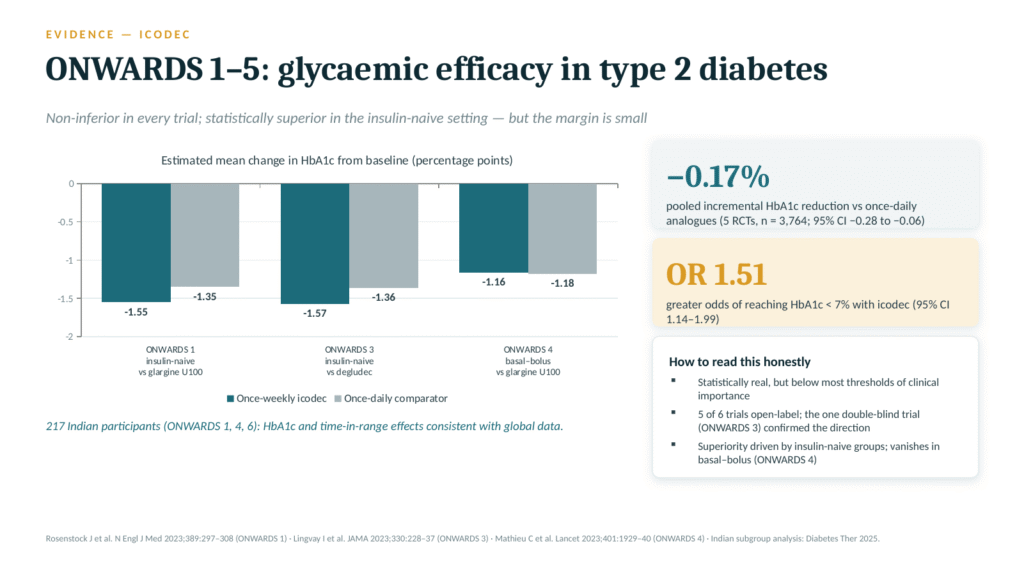
Figure 3. Glycaemic efficacy of icodec in type 2 diabetes. Pooled across five RCTs (n = 3,764), the incremental HbA1c reduction was −0.17 percentage points (95% CI −0.28 to −0.06), with an odds ratio of 1.51 for reaching HbA1c below 7% [7–9].
A pooled advantage of 0.17 percentage points is statistically real but below most thresholds of individual clinical importance. The continuous glucose monitoring (CGM) data are more persuasive. In the ONWARDS 1 CGM sub-study, time in range (70–180 mg/dL) at weeks 48–52 was 71.9% with icodec versus 66.9% with glargine, a gain of 4.3 percentage points or about one hour per day [7]. Time below 54 mg/dL stayed within the consensus target of under 1% in both arms (0.3% vs 0.2%) [13]. These data come from insulin-naive patients under protocol-driven titration and should not be extrapolated to type 1 diabetes or basal–bolus regimens. A subgroup of 217 Indian participants across ONWARDS 1, 4 and 6 showed effects consistent with the global data [27]. One under-discussed cost: on switching from daily insulin in ONWARDS 2, icodec produced 1.7 kg more weight gain than degludec [10].
3.2 Insulin efsitora alfa: the QWINT programme
Across QWINT 1–4, efsitora met non-inferiority against glargine or degludec in every trial and claimed superiority in none: −1.31 vs −1.27 (QWINT-1), −1.34 vs −1.26 (QWINT-2), −0.86 vs −0.75 (QWINT-3) and −1.07 vs −1.07 in basal–bolus therapy (QWINT-4) [14–17]. The genuinely new idea is QWINT-1’s fixed-dose escalation: four fixed dose steps, raised at four-week intervals if needed, with no unit-by-unit titration [15]. In a country where much insulin initiation happens outside specialist care, this simplification may matter more than the weekly dosing itself.
3.3 Icodec versus efsitora: an updated comparison
No head-to-head randomised trial exists. A 2026 matching-adjusted indirect comparison (QWINT-3 vs ONWARDS 2; QWINT-4 vs ONWARDS 4) found similar efficacy and safety in insulin-experienced type 2 diabetes [19]. Treat the two as interchangeable in effect, but not in handling.
| Feature | Insulin icodec (Awiqli) | Insulin efsitora alfa (Onswik) |
| Engineering | C20 fatty di-acid, reversible albumin binding, 3 amino-acid substitutions | Single-chain insulin fused to human IgG2 Fc; FcRn recycling |
| Half-life | About 196 h (about 8 days) | About 17 days |
| Concentration | U-700; never withdraw with a syringe | High-concentration pens |
| Type 2 efficacy | Superior in insulin-naive trials; pooled −0.17 pp | Non-inferior in all four trials |
| Type 1 diabetes | More hypoglycaemia (ONWARDS 6, RR 1.9); no US indication | More hypoglycaemia (QWINT-5); no indication |
| Titration | Weekly, fasting-glucose driven; one-time +50% loading dose on switching | Fixed-dose escalation option (QWINT-1) |
| Regulatory status (Oct 2026) | FDA 26 Mar 2026 (type 2); EU, Japan, China, Canada, India | FDA 24 Sep 2026 (type 2); EU Aug 2026; Mexico; Japan |
| Available in India | Yes, launched July 2026 | Not yet |
Table 1. Icodec versus efsitora, updated to October 2026 [3, 4, 19]. Efsitora approval data: Lilly, 24 Sep 2026; Medscape.
4. Safety: the hypoglycaemia trade-off
In type 2 diabetes, hypoglycaemia risk with weekly insulin is low and acceptable. Across ONWARDS 1, 2, 3 and 5, combined clinically significant or severe hypoglycaemia stayed below 1 event per patient-year of exposure (PYE) in both arms. In ONWARDS 1 the rates were 0.30 vs 0.16 events/PYE, a rate ratio of 1.64 (95% CI 0.98–2.75): nearly double in relative terms, but only 0.14 events/PYE in absolute terms [7].
In type 1 diabetes the balance reverses (Figure 4). In ONWARDS 6, icodec and degludec achieved the same HbA1c, but hypoglycaemia ran at 19.9 vs 10.4 events/PYE (RR 1.9; p<0.0001) [11]. The FDA advisory committee voted 7–4 against a type 1 indication in May 2024, and the March 2026 US approval is restricted to type 2 diabetes. QWINT-5 showed the same pattern with efsitora [18]. Two independently engineered molecules giving the same result should be read as a class property of weekly basal kinetics, not a molecule-specific finding. Where a local label is broader than the US label, the ONWARDS 6 and QWINT-5 data should still govern practice.
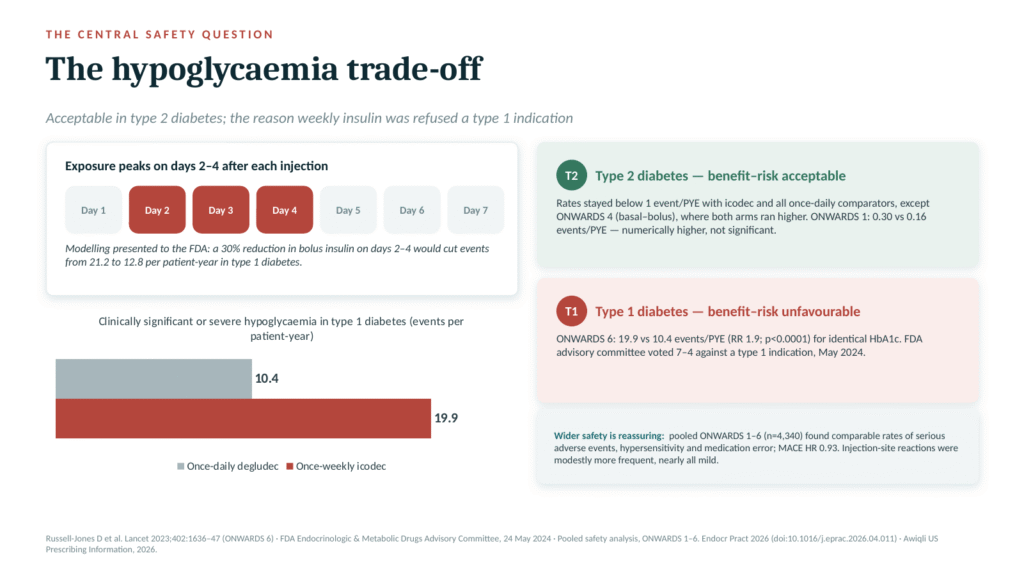
Figure 4. The central safety question. Pooled ONWARDS 1–6 (n = 4,340) showed comparable serious adverse events, hypersensitivity and medication errors, and a MACE hazard ratio of 0.93 (95% CI 0.56–1.56) [11, 12].
Beyond hypoglycaemia there is no safety signal. Injection-site reactions were modestly more frequent with icodec (5.9 vs 3.7 per 100 PYE), almost all mild [12]. The MACE result is reassurance of no harm in a short-exposure programme; it is not evidence of cardiovascular benefit, and no cardiovascular outcome trial exists for any weekly insulin.
5. Beyond weekly basal: IcoSema, prandial insulins and the horizon
5.1 IcoSema: solving insulin-associated weight gain
IcoSema combines icodec and semaglutide in a fixed weekly ratio (1 dose step = 1 unit icodec + 0.0029 mg semaglutide). It targets the complaint that most often drives insulin discontinuation: weight gain (Figure 5). In COMBINE 3, against full basal–bolus therapy, it was non-inferior on HbA1c (−1.47 vs −1.40 points) with a 6.7 kg weight advantage and hypoglycaemia of 0.26 vs 2.18 events/PYE, using 1 injection a week instead of up to 28 [22]. COMBINE 1 added 0.66 points of HbA1c reduction over icodec alone [20], and COMBINE 4 showed superiority over glargine on both HbA1c and weight in insulin-naive patients [23].
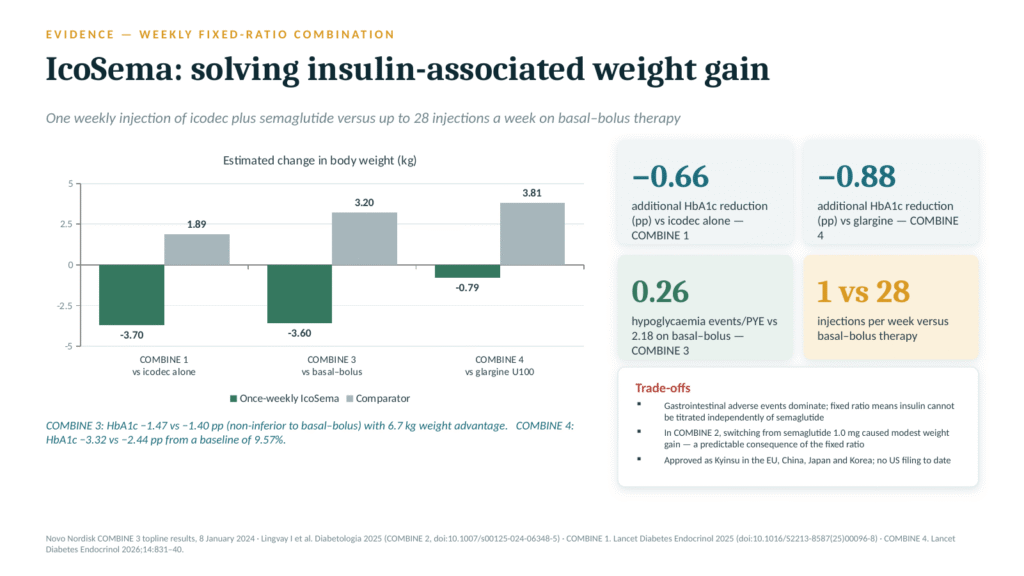
Figure 5. The weekly fixed-ratio combination. A 4.6–6.7 kg weight advantage over daily insulin comparators [20–23].
The trade-offs are gastrointestinal adverse events, and a fixed ratio that ties insulin titration to semaglutide dose. Patients switching from semaglutide 1.0 mg gained modest weight in COMBINE 2, because typical IcoSema doses deliver less semaglutide [21]. IcoSema is approved as Kyinsu in the EU, China, Japan and South Korea, with no US filing to date. Its ideal candidate is the obese type 2 patient on basal or basal–bolus insulin with inadequate control and insulin-associated weight gain.
5.2 Ultra-rapid and inhaled prandial insulins
Faster aspart (with niacinamide) and lispro-aabc (with treprostinil and citrate) act in about 10 minutes, against about 15 minutes for rapid analogues. HbA1c gains are only about 0.1 points; the benefit lies in post-prandial excursions, post-meal dosing and pump or automated insulin delivery. Technosphere inhaled insulin reaches the circulation in under a minute. The FDA extended it to children aged 6 and above on 29 May 2026, and it now appears in the ADA 2026 algorithm [2, 24]. It requires spirometry before starting, at 6 months and yearly, and is contraindicated in asthma and COPD, which excludes many Indian candidates given the burden of chronic respiratory disease.
5.3 Glucose-responsive and oral insulin
NNC2215 uses a glucose-binding macrocycle and a glucoside as a reversible molecular switch; its receptor affinity rises 3.2-fold as glucose goes from 3 to 20 mM [25]. In diabetic pigs it held glucose near 4.5 mM after a glucose infusion stopped, while degludec drove it below 3 mM. These are preclinical data with no human efficacy results. Oral insulin has repeatedly failed on bioavailability and variability. Practice for the next decade should be planned around weekly basal insulin, CGM and automated delivery, not around smart insulin.
6. The balance sheet and safe prescribing
| Advantages | Disadvantages |
| Injection burden: 365 basal injections a year fall to 52; up to 28 weekly injections fall to 1 with IcoSema | Irreversibility: a dosing error, illness, fast or admission persists for days, not hours |
| Adherence and inertia: a plausible lever against the 7–9 year delay to insulin | A defined hypoglycaemia window: icodec exposure peaks on days 2–4 |
| Glycaemic quality: pooled −0.17 pp HbA1c; OR 1.51 for HbA1c <7%; +4.3 pp time in range | Wrong for type 1 diabetes: RR 1.9 for hypoglycaemia without HbA1c gain, replicated in QWINT-5 |
| Weight and hypoglycaemia: IcoSema 4.6–6.7 kg weight advantage; 0.26 vs 2.18 events/PYE vs basal–bolus | Concentration hazard: icodec is U-700; syringe withdrawal is a seven-fold overdose |
| Simpler titration: fixed-dose escalation (QWINT-1) | Evidence gaps: no CVOT, no head-to-head RCT, no data in pregnancy, dialysis or hospital |
Table 2. Newer insulins: pros and cons, synthesised from ONWARDS 1–6, QWINT 1–5 and COMBINE 1–4.
Weekly basal insulin is a clear net gain in the insulin-naive or basal-only type 2 patient with stable renal function and reliable monitoring. It is neutral at best in the well-controlled basal–bolus patient, and not appropriate for routine use in type 1 diabetes. Five decisions determine whether the convenience is worth having (Figure 6) [3, 26]:
- Select the phenotype. Type 2 diabetes, insulin-naive or on basal insulin alone. Avoid in type 1 diabetes, recurrent or unaware hypoglycaemia, high glucose variability (coefficient of variation above 36%), unstable illness and pregnancy.
- Convert deliberately. Multiply the total daily basal dose by 7, and add a one-time loading dose of about 50% for the first week only. Repeating the loading dose in week 2 is the error most likely to occur.
- Titrate weekly, assess monthly. Adjust in fixed increments against fasting glucose and allow 3–4 weeks to judge each change.
- Teach the day 2–4 window. Reinforce meals, activity planning and CGM alerts on those days; individualise any bolus adjustment from glucose data.
- Plan for disruption in advance. Agree rules for missed doses (US label: give within 4 days, otherwise skip; other labels differ), sick days, Ramadan and religious fasts, surgery and admission. Flag the weekly depot on every drug chart, so that a daily basal insulin is not added on top.
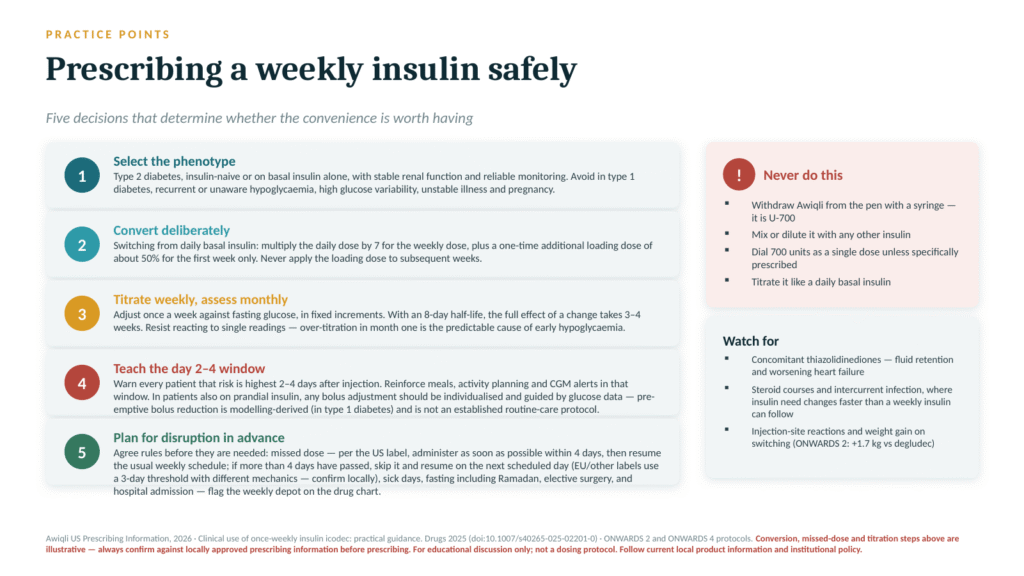
Figure 6. Practice points. Never withdraw U-700 icodec with a syringe, never mix or dilute it, and never titrate it like a daily basal insulin. Conversion and missed-dose steps are illustrative; confirm against locally approved prescribing information [3, 26].
Two further cautions apply. Concomitant thiazolidinediones carry a labelled risk of fluid retention and heart failure. During steroid courses and acute infection, insulin needs change faster than a weekly agent can follow, so supplemental short-acting insulin is preferable to altering the weekly dose. Patients who fast intermittently and unpredictably are poor candidates for a weekly depot.
7. Conclusion
Weekly basal insulin is now practice, not prospect: icodec is available in India, and efsitora joined it in the US market in September 2026. The honest efficacy statement is non-inferiority with a small advantage in insulin-naive type 2 diabetes; the real case rests on adherence, therapeutic inertia and injection burden. The price is irreversibility, and every safe-prescribing rule follows from it. These agents should not be used routinely in type 1 diabetes. The most useful product of the class may prove to be the fixed-ratio combination, which replaces up to 28 weekly injections with 1 while reducing weight and hypoglycaemia.
In India, Awiqli launched at ₹2,611 for a 700-unit pen (about ₹3.73 per unit), reported as 30–40% lower per unit than several daily basal insulins; pricing should be verified locally. Four developments to watch are real-world persistence and hypoglycaemia data, the Indian launch of efsitora and its fixed-dose escalation, wider availability of IcoSema, and first-in-human data for glucose-responsive insulin.
References:
- Anjana RM, Unnikrishnan R, Deepa M, et al. Metabolic non-communicable disease health report of India: the ICMR-INDIAB national cross-sectional study (ICMR-INDIAB-17). Lancet Diabetes Endocrinol. 2023;11:474–89.
- American Diabetes Association Professional Practice Committee. 9. Pharmacologic approaches to glycemic treatment: Standards of Care in Diabetes—2026. Diabetes Care. 2026;49(Suppl 1):S183–S222.
- Awiqli (insulin icodec-abae) injection. US Prescribing Information. Novo Nordisk; 2026. FDA approval 26 March 2026.
- Eli Lilly and Company. FDA approves Lilly’s Onswik (insulin efsitora alfa-gobe), a once-weekly basal insulin injection treatment for adults living with type 2 diabetes. Press release, 24 September 2026. investor.lilly.com
- Nishimura E, Pridal L, Glendorf T, et al. Molecular and pharmacological characterization of insulin icodec: a new basal insulin analog designed for once-weekly dosing. BMJ Open Diabetes Res Care. 2021;9:e002301.
- Kazda CM, Bue-Valleskey JM, Chien J, et al. Novel once-weekly basal insulin Fc achieved similar glycemic control with a safety profile comparable to insulin degludec in patients with type 1 diabetes. Diabetes Care. 2023;46:1052–59.
- Rosenstock J, Bain SC, Gowda A, et al. Weekly icodec versus daily glargine U100 in type 2 diabetes without previous insulin (ONWARDS 1). N Engl J Med. 2023;389:297–308.
- Lingvay I, Asong M, Desouza C, et al. Once-weekly insulin icodec vs once-daily insulin degludec in adults with insulin-naive type 2 diabetes (ONWARDS 3). JAMA. 2023;330:228–37.
- Mathieu C, Ásbjörnsdóttir B, Bajaj HS, et al. Switching to once-weekly insulin icodec versus once-daily insulin glargine U100 in individuals with basal-bolus insulin-treated type 2 diabetes (ONWARDS 4). Lancet. 2023;401:1929–40.
- Philis-Tsimikas A, Asong M, Franek E, et al. Switching to once-weekly insulin icodec versus once-daily insulin degludec in individuals with basal insulin-treated type 2 diabetes (ONWARDS 2). Lancet Diabetes Endocrinol. 2023;11:414–25.
- Russell-Jones D, Babazono T, Cailleteau R, et al. Once-weekly insulin icodec versus once-daily insulin degludec as part of a basal-bolus regimen in individuals with type 1 diabetes (ONWARDS 6). Lancet. 2023;402:1636–47.
- Pooled safety analysis of insulin icodec across ONWARDS 1–6. Endocr Pract. 2026. doi:10.1016/j.eprac.2026.04.011.
- Battelino T, Danne T, Bergenstal RM, et al. Clinical targets for continuous glucose monitoring data interpretation: recommendations from the international consensus on time in range. Diabetes Care. 2019;42:1593–1603.
- Rosenstock J, Bajaj HS, Lingvay I, et al. Weekly insulin efsitora alfa versus daily insulin degludec in type 2 diabetes (QWINT-2). N Engl J Med. 2024. doi:10.1056/NEJMoa2403953.
- Bajaj HS, et al. Once-weekly insulin efsitora alfa with fixed-dose escalation versus daily glargine in insulin-naive type 2 diabetes (QWINT-1). N Engl J Med. 2025. doi:10.1056/NEJMoa2502796.
- QWINT-3 investigators. Once-weekly efsitora alfa versus once-daily degludec in basal insulin-treated type 2 diabetes. Lancet. 2025;405. doi:10.1016/S0140-6736(25)01044-X.
- QWINT-4 investigators. Once-weekly efsitora alfa versus once-daily glargine in type 2 diabetes treated with basal and bolus insulin. Lancet. 2025;405:2290–2301.
- Bergenstal RM, Weinstock RS, Mathieu C, et al. Once-weekly insulin efsitora alfa versus once-daily insulin degludec in adults with type 1 diabetes (QWINT-5). Lancet. 2024;404:1132–42.
- Bajaj HS, et al. Matching-adjusted indirect comparisons of QWINT-3 vs ONWARDS 2 and QWINT-4 vs ONWARDS 4. Diabetes Obes Metab. 2026. doi:10.1111/dom.71272.
- COMBINE 1 investigators. Once-weekly IcoSema versus once-weekly insulin icodec in type 2 diabetes. Lancet Diabetes Endocrinol. 2025. doi:10.1016/S2213-8587(25)00096-8.
- Lingvay I, et al. Once-weekly IcoSema versus once-weekly semaglutide in type 2 diabetes (COMBINE 2). Diabetologia. 2025. doi:10.1007/s00125-024-06348-5.
- Novo Nordisk. COMBINE 3 topline results: IcoSema versus basal-bolus insulin. Company announcement, 8 January 2024.
- COMBINE 4 investigators. Once-weekly IcoSema versus once-daily insulin glargine U100 in insulin-naive type 2 diabetes. Lancet Diabetes Endocrinol. 2026;14:831–40.
- Afrezza (insulin human) inhalation powder. US Prescribing Information. MannKind Corporation; 2026. FDA paediatric approval 29 May 2026.
- Hoeg-Jensen T, Kruse T, Brand CL, et al. Glucose-sensitive insulin with attenuation of hypoglycaemia. Nature. 2024. doi:10.1038/s41586-024-08042-3.
- Clinical use of once-weekly insulin icodec: practical guidance. Drugs. 2025. doi:10.1007/s40265-025-02201-0.
- Insulin icodec in Indian participants: subgroup analysis of ONWARDS 1, 4 and 6. Diabetes Ther. 2025.
Discover CME INDIA

- Explore CME INDIA Repository
- Examine CME INDIA Case Study
- Read History Today in Medicine
- Register for Future CMEs