
CME INDIA Presentation by Dr. N. K. Singh, Director, Diabetes & Heart Research Centre, Dhanbad | Vice President, RSSDI National (2026–2029), Founder & Editor-in-Chief, CME INDIA (www.cmeindia.in).
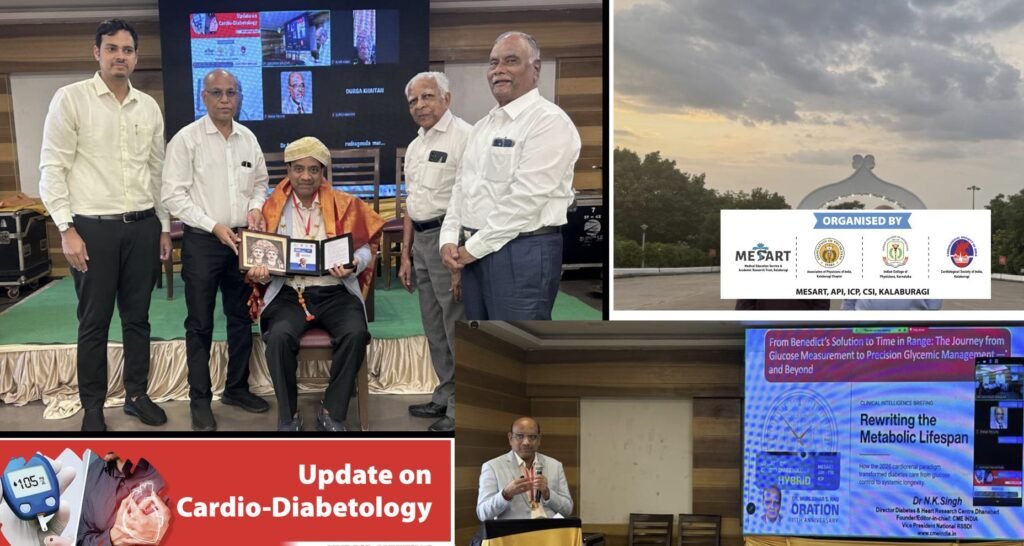
Based on the Dr. Murlidhar S. Rao Oration (11th Anniversary), “Update on Cardio Diabetology Hybrid,” Kalaburagi (Gulbarga), 29th August 2026.
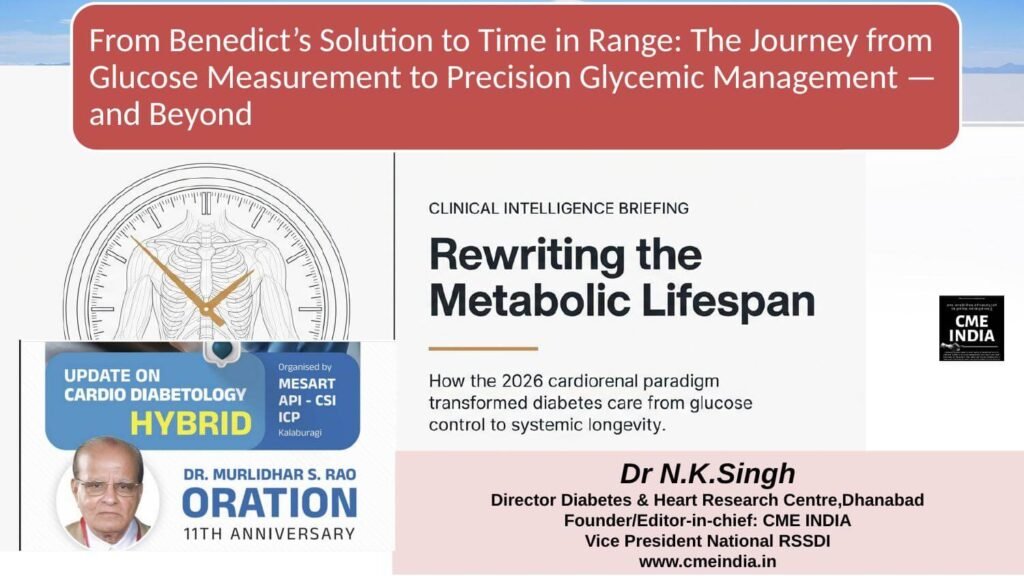
Title slide of the oration: “Rewriting the Metabolic Lifespan.”
Abstract
Diabetes care has moved through three broad eras in little over a century: chemical detection of glycosuria, self-monitoring of capillary glucose, and continuous glucose monitoring with time-in-range (TIR) as a modern surrogate. Yet the more consequential shift now underway is conceptual rather than technical — a move from a glucocentric model of diabetes toward a cardio-reno-metabolic and geroscience framework in which hyperglycaemia is understood as one visible marker of a systemic, accelerated-ageing process. This article synthesises an oration delivered by the author that traced this arc: the historical journey from Benedict’s solution to TIR; a decade of cardiovascular and renal outcome trials that repositioned sodium-glucose cotransporter-2 inhibitors (SGLT2i) and glucagon-like peptide-1 receptor agonists (GLP-1RA) as organ-protective therapies; the emergence of triple-hormone agonism; the rationale for combining renin-angiotensin system blockade, SGLT2i and non-steroidal mineralocorticoid receptor antagonists (nsMRA) as a cardiorenal shield; the biology of cellular senescence, mitochondrial dysfunction and telomere attrition in diabetes; the case for resistance training and muscle quality as a non-negotiable medical therapy; the promise and limits of precision and monogenic diabetes diagnosis; and the practical, low-resource realities of diabetes care in rural India. The article closes with the author’s proposal of an RSSDI “Smart Food” concept and a call to integrate modern pharmacology with circadian, nutritional and contemplative practice — the philosophy underlying the forthcoming WISDOM 2026 conference.
1. Introduction: A Century of Measuring Sugar
Every era of diabetes care has been defined by what could be measured and how quickly that measurement could be turned into action. In 1908, Stanley Benedict introduced a qualitative copper-reduction test for urinary glucose that, for nearly half a century, remained the only tool a physician or patient had to gauge glycaemic control. Home urine testing kits, which became widely available from around 1925, extended this capability into the patient’s own hands and represented one of the earliest examples of self-management in chronic disease, even though the method was only semi-quantitative and reflected glycaemia with a considerable time lag.
The therapeutic side of the story ran in parallel. Sulfonylureas such as chlorpropamide and glibenclamide (marketed in India as Daonil) became mainstays of oral therapy but were notorious for provoking persistent and sometimes severe hypoglycaemia. Phenformin, a biguanide discovered in 1957 and marketed as DBI, was withdrawn from most markets in the late 1970s after it was linked to lactic acidosis with a case fatality approaching 50%. These episodes are worth recalling not as historical trivia but as a reminder that glucose-lowering efficacy divorced from safety and systemic benefit has repeatedly proved to be an incomplete goal for diabetes therapeutics.
The self-monitoring blood glucose (SMBG) era that followed, and more recently continuous glucose monitoring (CGM), replaced a single fasting or postprandial number with a continuous data stream. Time in range (TIR) — the proportion of a 24-hour period spent within a target glucose band — has emerged as a clinically meaningful complement to glycated haemoglobin (HbA1c), better capturing glycaemic variability and hypoglycaemic exposure. The oration frames this arc explicitly: glycaemic management is a marathon, not a sprint, and the “gold standard” has evolved from a single laboratory value toward a dynamic, patient-generated signal.
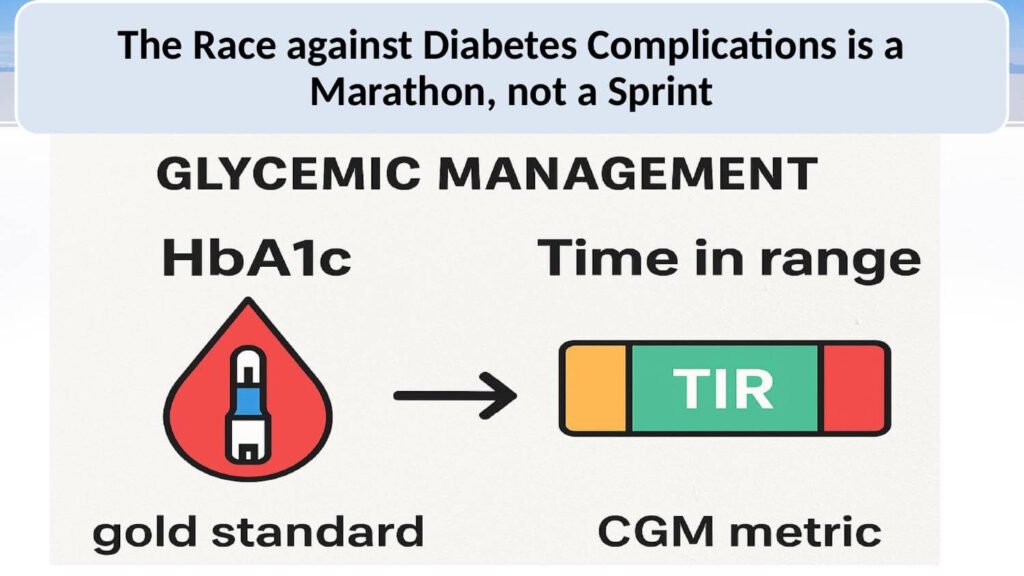
The evolution of glycaemic management from HbA1c as sole gold standard to Time in Range as a complementary CGM-derived metric.
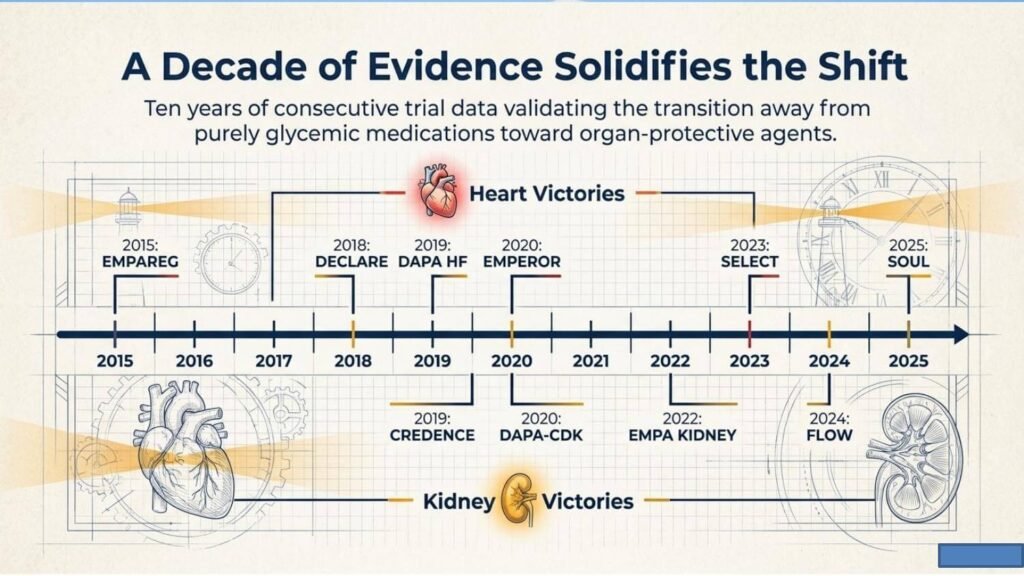
A decade of cardiovascular and renal outcome trials (2015–2025) that repositioned glucose-lowering drugs as organ-protective agents.
2. The Paradigm Shift: From Glucocentric Care to Systemic Protection
Landmark cardiovascular and renal outcome trials conducted over the past decade — including EMPA-REG OUTCOME, DECLARE-TIMI 58, DAPA-HF, EMPEROR-Reduced, CREDENCE, DAPA-CKD and EMPA-KIDNEY for SGLT2 inhibitors, and comparable outcome trials for GLP-1 receptor agonists — collectively demonstrated that these agents reduce major adverse cardiovascular events, heart-failure hospitalisation and progression of chronic kidney disease independent of, and often disproportionate to, their glucose-lowering effect. The consistency of this “decade of evidence” across heart-failure and kidney-outcome trials is what justifies describing the last ten years as a shift away from purely glycaemic medications toward organ-protective agents.
The clinical implication is a change in what the treating physician is optimising for. Under the older, “legacy” lens, HbA1c functioned as both the target and the proxy for success, with a magnifying glass fixed on blood glucose. Under the emerging 2026 lens, hyperglycaemia is understood as only one symptom of a broader cardiometabolic disease process — one that also encompasses weight, cardiovascular risk, chronic kidney disease and metabolic dysfunction-associated steatotic liver disease/steatohepatitis (MASLD/MASH). Reducing bulk glycaemia without addressing this broader risk constellation leaves substantial residual risk on the table.
This reframing also demands that clinical silos be broken down. Cardiologists moving beyond hypertension logistics, nephrologists prepared to initiate SGLT2i and GLP-1RA rather than waiting for advanced kidney disease, and diabetologists evolving from glucose-first prioritisation toward proactive cardiorenal and MASLD/MASH surveillance must, in the oration’s words, no longer interfere with each other’s use of what are, in truth, foundational organ-preservation therapies belonging to every discipline that touches a patient with diabetes.
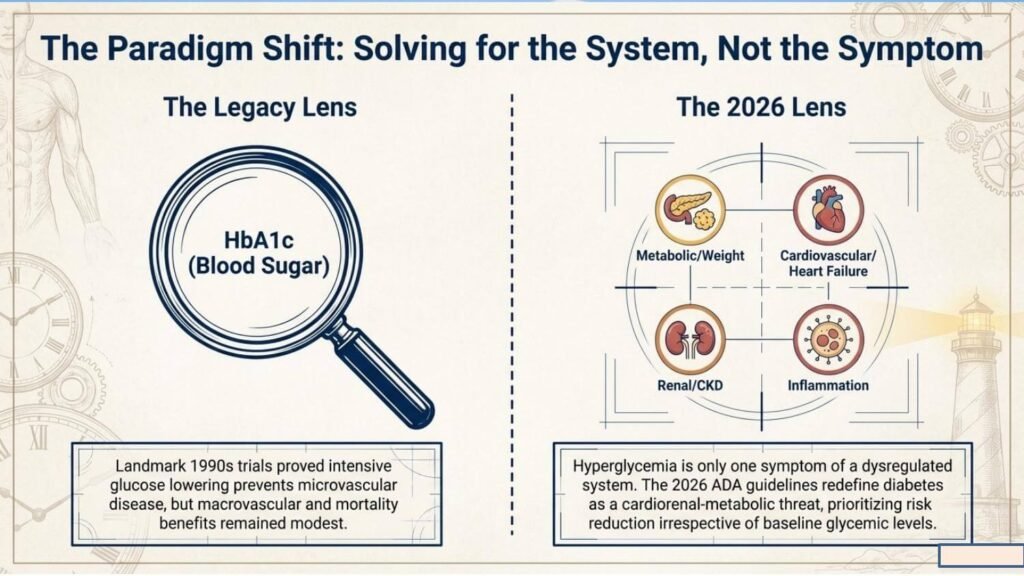
The paradigm shift from a glucocentric “legacy lens” to a systemic, multi-organ “2026 lens” of diabetes care.
2.1 Lifestyle as an Amplifier, Not a Replacement
Pharmacology alone does not close the gap. Data cited in the oration show that combining GLP-1RA with a Mediterranean/low-carbohydrate diet and higher protein intake (above 0.8 g/kg, particularly in older adults) is associated with a 43% lower risk of major adverse cardiovascular events compared with pharmacotherapy alone. Remission of type 2 diabetes is achievable but its durability depends on long-term weight maintenance, preservation of beta-cell reserve, and sustained lifestyle adherence — drugs amplify lifestyle change; they do not substitute for it.
2.2 The Cardiorenal-Metabolic Shield
A composite “shield” strategy was proposed, targeting blood pressure below 130/80 mmHg (below 120/70 mmHg in high-risk patients), addressing hypertriglyceridaemia, combining statins with proprotein convertase subtilisin/kexin type 9 (PCSK9) inhibitors where indicated, screening systematically for MASLD/MASH, and using targeted semaglutide or tirzepatide for patients who meet criteria. Real-world data referenced in the oration suggest that this composite approach can achieve a 20–40% absolute reduction in composite cardiorenal endpoints within three to five years.
3. Diabetes as an Engine of Accelerated Biological Ageing
Perhaps the most conceptually ambitious argument advanced in the oration is that poorly controlled diabetes should not be understood merely as a metabolic disease but as an engine of accelerated biological ageing and frailty. This framing draws on the biology of cellular senescence — genomic instability, telomere attrition, epigenetic alterations, loss of proteostasis, mitochondrial dysfunction, dysbiosis and stem-cell exhaustion — the recognised hallmarks of ageing that are each demonstrably accelerated by chronic hyperglycaemia.
The mechanistic cascade begins, in this model, at the pancreatic islet, where insulin resistance, ectopic fat deposition and progressive beta-cell dysfunction constitute the “first domino.” From there, hyperglycaemia-driven polyol pathway flux, protein kinase C activation and advanced glycation end-products damage blood vessels; glucolipotoxicity, endoplasmic reticulum stress and severe gut dysbiosis affect the liver and gut; and oxidative stress with mitochondrial dysfunction erode cellular health, ultimately depleting nicotinamide adenine dinucleotide (NAD+) reserves. Senescent endothelial cells and beta-cells secrete senescence-associated secretory phenotype (SASP) factors — interleukin-6, tumour necrosis factor-alpha and interleukin-1beta among them — perpetuating a state of chronic low-grade inflammation (“inflammaging”) that in turn drives further mitochondrial dysfunction and epigenetic drift, manifesting as accelerated DNA methylation age.
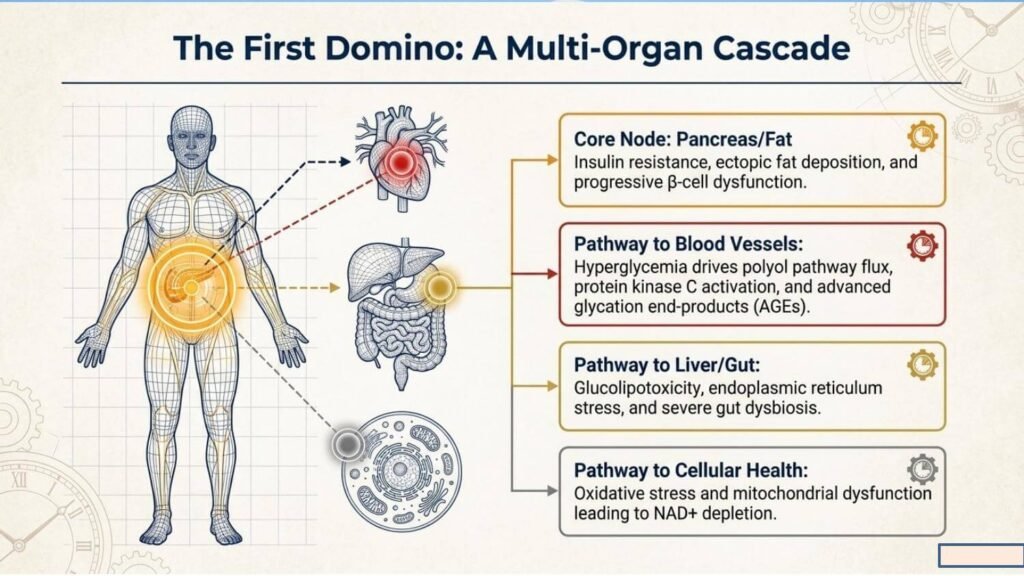
The first domino: a multi-organ cascade beginning with pancreatic beta-cell dysfunction and propagating to vessels, liver/gut and cellular health.
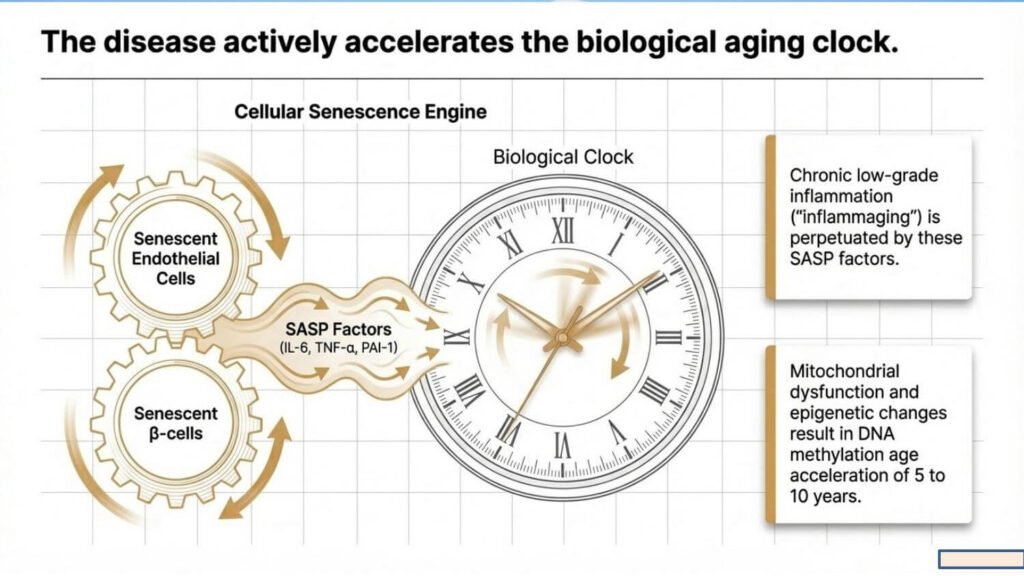
Diabetes as a cellular senescence engine, actively accelerating the biological aging clock through SASP-driven inflammaging.
This is not merely a metaphor. Longitudinal work published in Diabetes has directly linked the metabolic state to mitochondrial DNA dynamics across chronic disease, health and ageing, and a 2021 report in The Lancet Diabetes & Endocrinology found that moderate exercise renews telomere protection, that higher adherence to a Mediterranean diet is associated with longer telomere length, and that mindfulness practices such as meditation slow telomere shortening. If diabetes accelerates a measurable biological clock, then interventions that are conventionally filed under “lifestyle advice” are, mechanistically, disease-modifying therapies operating on the same hallmarks of ageing that pharmacology targets from a different angle.
4. The 2026 Therapeutic Toolkit
Building on this systemic model, the oration outlined a therapeutic toolkit organised not by glucose-lowering potency alone but by the breadth of systemic preservation each drug class offers. SGLT2 inhibitors act through urinary glucose excretion and natriuresis, producing modest HbA1c reduction, low weight impact, but substantial intraglomerular pressure reduction and heart-failure hospitalisation defence — their guideline status has advanced to a Grade A recommendation for type 2 diabetes with established atherosclerotic cardiovascular disease, chronic kidney disease (estimated glomerular filtration rate 20–45), or heart failure, with benefits that persist even at low estimated glomerular filtration rate. Beyond glucose, they exert powerful anti-inflammatory actions and demonstrate pleiotropic, potentially nephroprotective, senomimetic properties, an effect emulated in emerging Danish registry data showing superiority over glucagon-like peptide-1 receptor agonists alone in incident chronic kidney disease and acute kidney injury prevention over a five-year span.
Dual GIP/GLP-1 receptor agonists such as tirzepatide combine high-efficacy receptor agonism with weight impact in the range of 10–22% and major adverse cardiovascular event reduction and high-risk MASLD resolution. Incretin-based therapies more broadly deliver what the oration terms “unprecedented metabolic and cardiovascular rescue”: the FLOW trial, evaluating semaglutide in chronic kidney disease, reported a 24% relative reduction in a composite kidney outcome, while the SELECT trial follow-up in people with obesity and cardiovascular disease but without diabetes reported a 20% relative reduction in major adverse cardiovascular events. The 2026 American Diabetes Association guideline update explicitly recommends dual GIP/GLP-1 receptor agonists such as tirzepatide for patients with symptomatic heart failure with preserved ejection fraction and high-risk MASLD/MASH, reflecting a clinical reality in which these agents can deliver 10–22% body-weight loss while targeting the adipokine dysregulation that drives the disease.
Triple agonists represent the newest tier. GIP/GLP-1/glucagon receptor agonism (retatrutide) achieved, in the oration’s summary of TRIUMPH Phase 2 data, weight reduction described as “unprecedented” among incretin-based agents, with a trajectory chart showing progressive weight loss out to roughly forty weeks and no clear plateau within the observed window. The addition of glucagon receptor agonism to GIP and GLP-1 activity is proposed to deliver continuous improvements in lipids and blood pressure while uniquely preserving lean muscle mass — an important distinction from earlier incretin agents, where a meaningful fraction of weight loss can come from lean tissue.
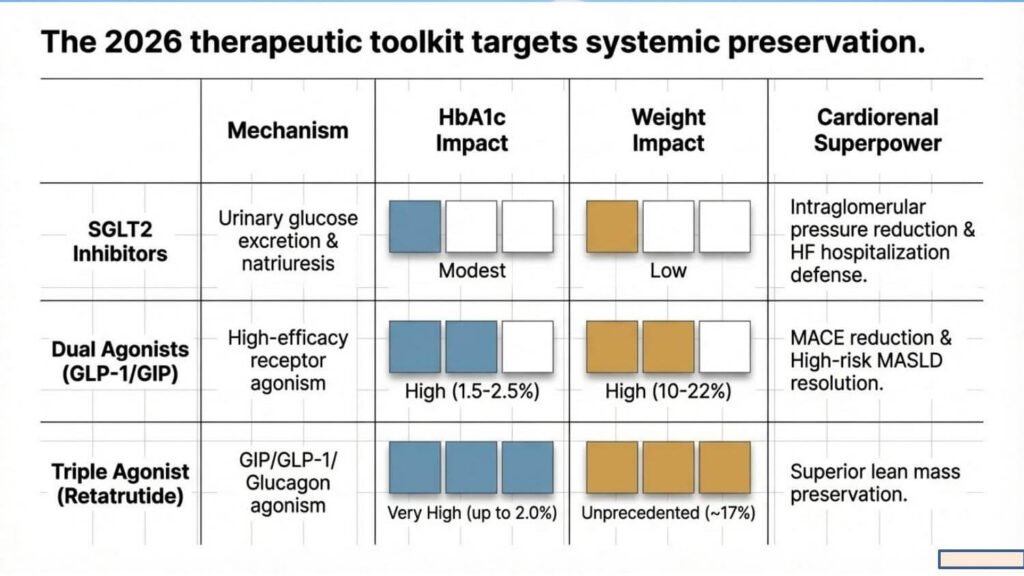
The 2026 therapeutic toolkit, compared across mechanism, HbA1c effect, weight impact and cardiorenal “superpower.”
4.1 The Triple Shield for Kidney Protection
For patients with diabetic kidney disease, the oration proposed that “every diabetic patient deserves a triple shield”: early detection of albuminuria, prompt initiation of renin-angiotensin system inhibition (RASi) together with an SGLT2 inhibitor, and the addition of a non-steroidal mineralocorticoid receptor antagonist (nsMRA) such as finerenone without delay. This sequencing is supported by kidney-outcome data from the FIDELIO-DKD and FIGARO-DKD trials and the more recent CONFIDENCE trial, and is codified in the 2024 Kidney Disease: Improving Global Outcomes (KDIGO) guideline update, which calls for integrated primary care, cardiology and nephrology partnership rather than sequential, single-specialty prescribing. Modelled trajectories presented in the oration suggest that RASi plus SGLT2i alone leaves residual risk of progression to end-stage kidney disease that a triple-shield strategy substantially narrows, extending the projected time to a fixed decline in estimated glomerular filtration rate from roughly twelve years to beyond twenty-five to thirty years in illustrative cohort modelling.
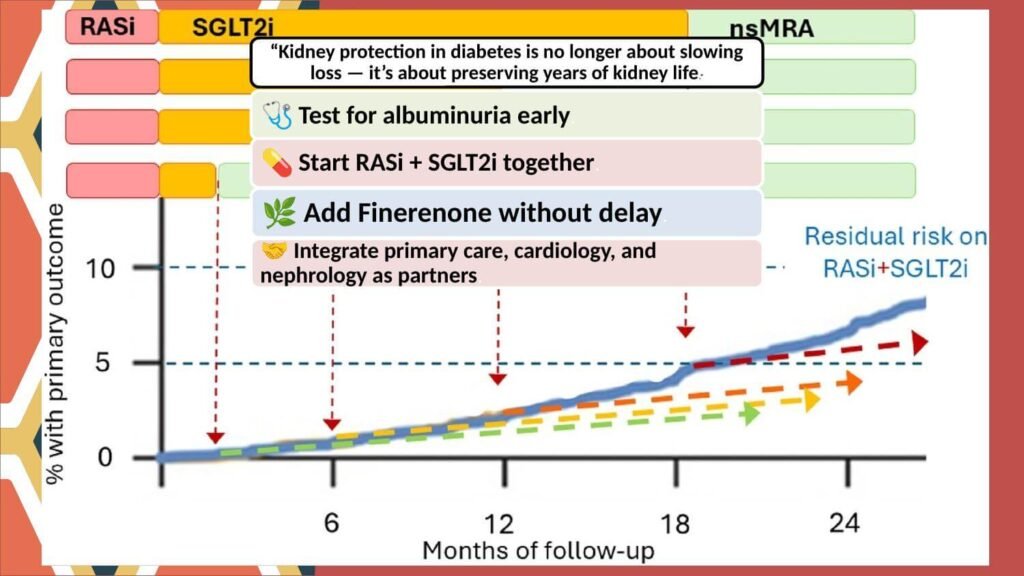
Kidney protection in diabetes as an early, layered strategy: RASi + SGLT2i, followed by prompt nsMRA addition, integrated with primary care, cardiology and nephrology.
5. The Illusion of Control: Why Population Averages Fail Individuals
Despite four decades of epidemiological and physiological characterisation of type 2 diabetes, the oration is candid about the limits of current understanding: clinicians have fallen short in cataloguing risk factors comprehensively, identifying the triggering events of disease onset, elucidating the full range of pathophysiological pathways, outlining a reliable prognostic course, selecting therapies with confidence for an individual rather than a population average, and predicting complications before they occur. Real-world audit data cited in the oration are sobering — roughly two-thirds of patients remain undiagnosed, two-thirds of dysglycaemia is pre-diabetic and largely unaddressed, two-thirds of patients are young (under forty), most patients are not accurately profiled for HbA1c, most suffer comorbid hypertension, dyslipidaemia or peripheral neuropathy, and only a small minority adhere consistently to therapy. This is summarised starkly as “the illusion of control”: today’s standard of sequential, glucose-first care results in massive systemic failure, and the legacy approach is failing at scale.
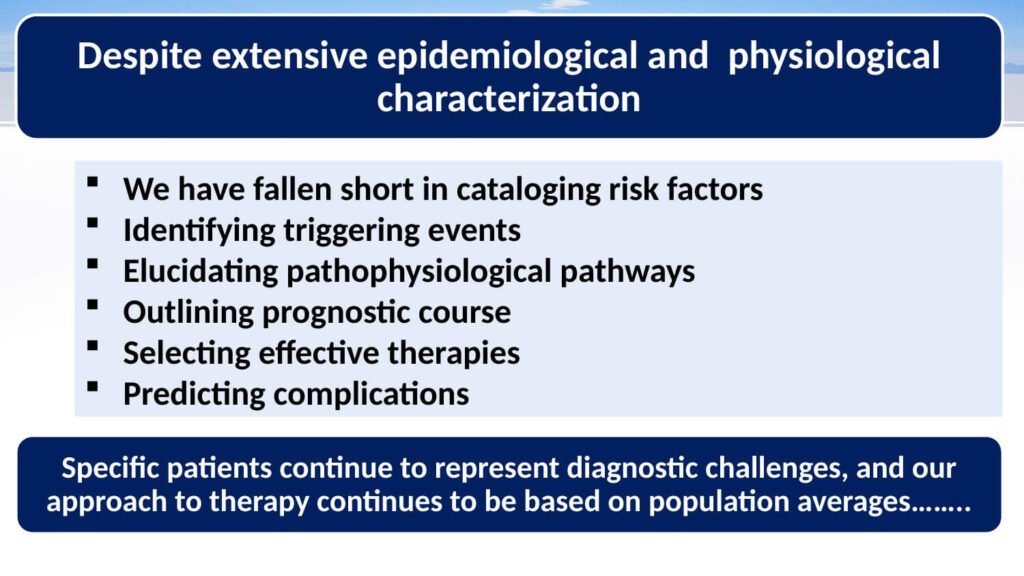
Where diabetes care has fallen short: cataloguing risk, identifying triggers, elucidating pathophysiology, and predicting complications and prognosis for the individual patient.
Precision diabetes medicine is offered as a partial answer — exploiting the growing volume of clinical and molecular data available to clinicians to optimise patient diagnosis, prognostication, disease prevention and treatment selection, enabled by improved understanding of genetic and environmental contributors, emerging highly efficacious therapies, digital technologies for glucose control, and a better appreciation of patient-centred outcomes and quality of life. The FIND-Eye study, for example, reported a broad-sense heritability for diabetic retinopathy of approximately 27%, and heritability for glycaemic response to metformin has recently been reported at around 34% — figures that quantify just how much of a patient’s clinical trajectory is “intrinsic” to them and not necessarily visible in their measured phenotype.
Monogenic diabetes remains the starkest illustration of this diagnostic gap: an estimated 93% of patients with monogenic diabetes are not recognised, and are instead misdiagnosed as having type 1 or type 2 diabetes and treated accordingly — often with insulin that a correct genetic diagnosis would show to be unnecessary. The oration recounts the case of the Moynihan family of Toronto, Canada, in which a four-year-old girl and her father were both diagnosed with presumed type 1 diabetes, her grandfather was diagnosed with presumed type 2 diabetes at twenty-one, and it was only genetic testing — prompted by an alert clinician who considered a hereditary pattern across three generations — that revealed a shared monogenic cause allowing transition from insulin to oral therapy. As the oration frames it, precision medicine’s promise is the ability to tell an individual patient, specifically, “you have type 2F diabetes; your diabetes is caused by a defect in x and the correct treatment is y,” replacing today’s population-average approach to therapy selection.
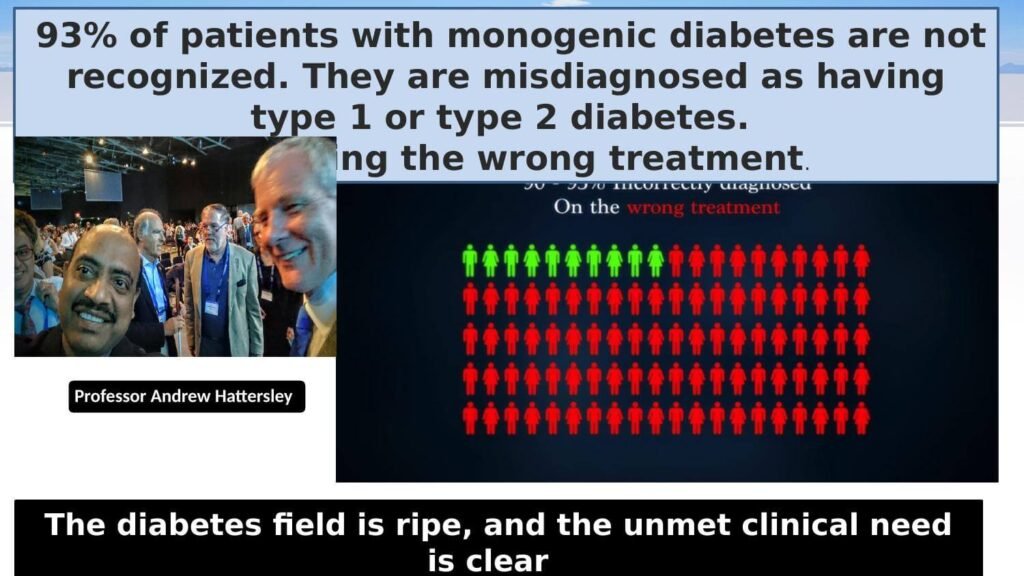
The scale of the monogenic diabetes diagnostic gap: an estimated 93% of cases are unrecognised and misclassified as type 1 or type 2 diabetes.
6. Data Overload and the Need for Longevity Science
The proliferation of continuous glucose monitors, insulin pumps and wearable devices has created a volume of physiological data that, the oration argues, is now far beyond the capacity of the unaided human mind to process and act upon in real time — a problem of “diabetic distress” for both patient and clinician that will increasingly require artificial intelligence and data-science tools to translate raw signal into actionable guidance, rather than more raw numbers alone.
Set against this technological trajectory is a caution against uncritical faith in technology: “technology is exponential, but humans are not.” The future of diabetes care, in this reading, is not about survival alone but about thriving into advanced age, and clinicians are urged to proactively adopt a longevity-medicine paradigm rather than treating disease reactively. This is where the oration’s “2026 vision of longevity for diabetics” enumerates a broad intervention science spanning optimal sleep, circadian rhythm alignment, sunlight exposure, connection with nature and community, personalised diet built around olive oil and vegetables, use of genetic data, structured exercise, regular body maintenance, meditation and breathwork, heat and cold exposure (sauna and cold-water immersion), strategic supplementation, fasting and caloric restriction, and even emerging modalities such as photobiomodulation — explicitly flagged as promising but still under-explored.
7. Muscle, Mitochondria and Longevity Medicine
A substantial part of the oration is devoted to skeletal muscle, reframed not as a mechanical tissue for movement alone but as the foundation of systemic metabolic signalling — a highly active endocrine organ. The “complete roots of vitality” are described as a triad of muscle strength (resistance), cardiorespiratory fitness (peak oxygen uptake) and body composition (lean mass), unified by muscle power, or velocity — the capacity to generate force quickly, which the oration argues is the “vital missing branch” of a complete longevity prescription: to extend healthspan, clinicians must train patients not just for capacity but for speed.
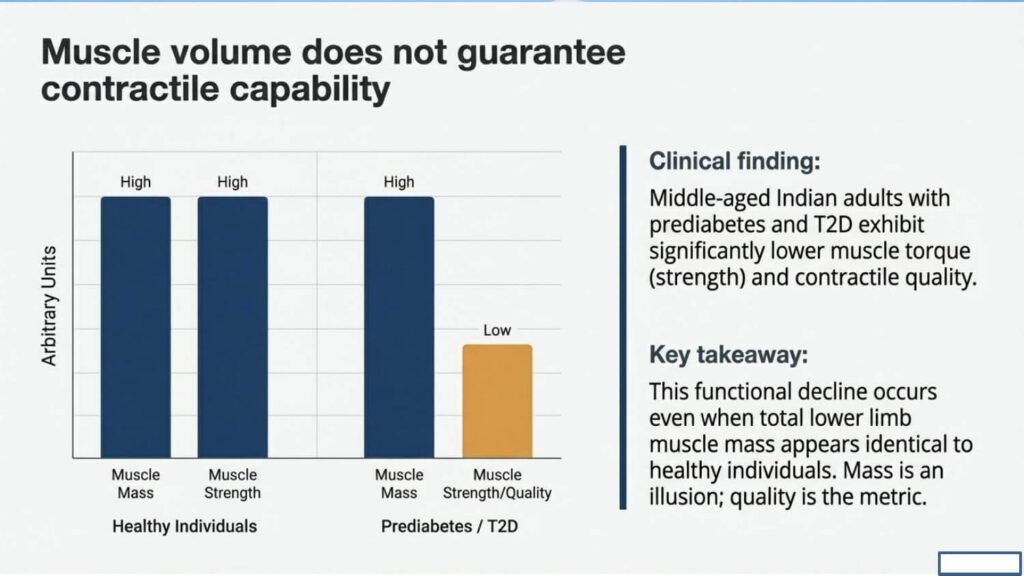
This distinction between muscle mass and muscle quality is clinically important. Data presented in the oration show that middle-aged Indian adults with pre-diabetes and type 2 diabetes exhibit significantly lower muscle torque (strength) and contractile quality than healthy controls, despite comparable total limb muscle mass — a finding that this functional decline occurs even when total lean mass appears preserved, so mass alone is an illusory marker and muscle quality is the better metric. Exercise-induced mitophagy — the clearance of damaged mitochondria and generation of renewed, efficient mitochondria (“making mitochondria green”) through acute exercise, fasting and caloric demand — was presented as a central mechanism linking physical training to cellular metabolic health, alongside skeletal muscle’s role as the largest reservoir for glucose disposal and its function as a secretory organ releasing myokines that influence distant tissues.
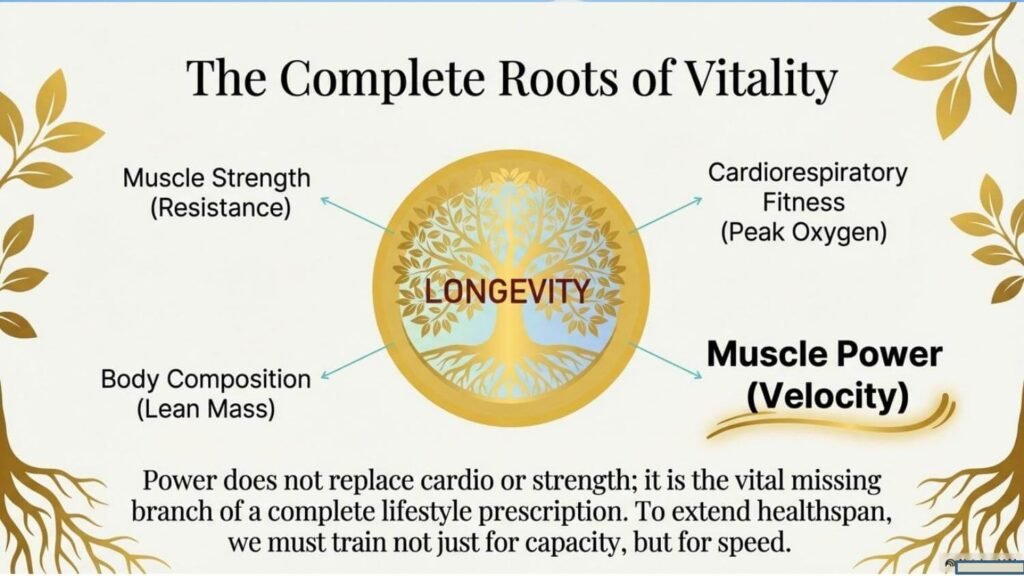
The complete roots of vitality: muscle strength, cardiorespiratory fitness and body composition, unified by muscle power as the missing branch of longevity prescription.
Resistance training framed as non-negotiable medical therapy, prescribed with the same rigour as pharmacotherapy, including a defined minimum twelve-week protocol.
On this basis, the oration argues that resistance training should be regarded as non-negotiable medical therapy rather than optional lifestyle advice, formally prescribed within a multipronged protocol requiring a minimum twelve-week structured programme, alongside aerobic and balance training to preserve stability and reduce fall risk. Improving handgrip strength and quality of life is presented as a high-efficacy, evidence-based target achievable through resistance training, aerobic conditioning and balance work in combination.
8. Nutrition, the Microbiome and the RSSDI Smart Food Concept
The nutritional component of the oration foregrounds polyphenols as a “diabetes superfood” category: isoflavonoids (notably genistein and daidzein) from soybean, tannins including epigallocatechin gallate from tea, phenolic acids from coffee, resveratrol from grapes, flavonoids from apples, anthocyanin metabolites from berries, phenolic compounds from wholegrain products, and traditional additions such as cinnamon, bitter melon and fenugreek. Building on this evidence base, the author proposes a new “RSSDI Smart Food” concept for 2026 — an evidence-based hierarchy of everyday foods intended to give Indian patients and clinicians a structured, tiered framework for dietary choice rather than a single undifferentiated “diabetic diet” message.
The gut microbiome receives similar emphasis, noting the fast-moving, still-early science around probiotics, fermented foods such as yogurt and kombucha, and their influence on the “good bacteria” implicated in metabolic health — an area the oration is careful to describe as still in its early stages, with much left to be established rather than settled. Respect for circadian rhythm — meal timing, light exposure and sleep-wake regularity — is presented as a further, largely cost-free intervention with epigenetic consequences, alongside traditional lifestyle interventions (yoga and Surya Namaskar, mindfulness and breathwork, millet- and sorghum-based grains, and circadian alignment) reframed collectively as “sophisticated epigenetic therapies” that act on the same telomere and cellular-integrity pathways as pharmacology.
Endocrine disruptors are flagged as an underappreciated environmental contributor: widespread exposure to dioxins, pesticides and bisphenol A is associated with insulin resistance and altered beta-cell function, acting through oestrogenic activity in insulin-sensitive tissues and beta-cells that generates a pregnancy-like metabolic state characterised by insulin resistance and hyperinsulinaemia — a call for greater clinical and public-health attention to this exposure pathway.
9. Ground Realities: Rural India and the Communication Gap
The oration repeatedly returns to the lived reality of diabetes care outside urban tertiary centres. Photographs of a traditional rural oven (matka) in Jharkhand are used to pose a genuinely practical question — whether such vernacular storage devices could serve as a low-cost, low-tech insulin storage solution in settings without reliable refrigeration — alongside images of community exercise, traditional dance framed provocatively as “anti-diabetic gestures,” and outreach camp activity documenting on-ground community engagement by the author’s team.
This grounding motivates the oration’s argument that diabetes communications must change their methods: population-level messaging built around single biochemical markers such as glucose has limited traction in communities where trust, language, ritual and lived experience carry more persuasive weight than a laboratory number. The historical figures cited throughout — Elliott P. Joslin’s admonition that “the diabetic who knows the most, lives the longest,” and his observation that it is more informative to discuss how far a patient has walked than how little they have eaten — are invoked not as nostalgia but as a reminder that patient education, character-building and the therapeutic relationship have always been, and remain, central to outcomes that no drug alone can deliver.
10. Honest Disclosures and the Case for Humility
In a notably candid section, the oration lists what remains unknown: the field does not fully know what causes type 1 diabetes, does not fully know what causes type 2 diabetes, cannot yet classify hyperglycaemia’s heterogeneity with confidence, lacks sustained weight-loss strategies that work reliably at scale, has inadequate support infrastructure for diabetes-related research relative to the scope of the challenge, and delivers clinical care that remains inadequate or mismatched for a meaningful proportion of patients. This honesty is presented deliberately, echoing the parable of the tortoise and the hare — enthusiasm and hastiness are less reliable than patience and persistence, particularly in pursuing the hardest clinical outcomes such as prevention of end-stage kidney disease and protection of the liver.
11. Conclusion: Rewriting the Metabolic Lifespan
The arc of this oration — from a nineteenth-century colorimetric urine test to triple-hormone receptor agonists, from a single HbA1c value to a systemic, senescence-aware model of disease, from population-average prescribing to the ambition of true precision medicine, and from pharmacology alone to muscle, mitochondria, circadian biology and community trust — converges on a single argument: diabetes care in 2026 must be reconceived as longevity medicine. Modern metabolic care is, in this framing, fundamentally an intervention for longevity; clinicians are no longer simply managing blood sugar but are slowing an epigenetic clock and extending human healthspan. What has not changed since 1906, the oration notes with deliberate irony, is the most fundamental requirement for human biological resilience — sleep, circadian alignment, nourishment, movement and connection. The task ahead is to combine these unchanging foundations with a genuinely new pharmacological and diagnostic armamentarium, and to communicate both with the humility the evidence demands. This synthesis of modern medicine, yoga, meditation, spirituality and timeless Indian wisdom is the explicit organising theme of the forthcoming WISDOM 2026 conference at AIIMS Rishikesh (19–20 December 2026), which the author is helping to organise as a continuation of the themes raised in this oration.

WISDOM 2026 — AIIMS Rishikesh, Uttarakhand, 19–20 December 2026: where modern medicine, yoga, meditation, spirituality and timeless Indian wisdom converge.
References:
1. Zinman B, Wanner C, Lachin JM, et al. Empagliflozin, Cardiovascular Outcomes, and Mortality in Type 2 Diabetes. N Engl J Med. 2015;373(22):2117-2128.
2. Wiviott SD, Raz I, Bonaca MP, et al. Dapagliflozin and Cardiovascular Outcomes in Type 2 Diabetes (DECLARE-TIMI 58). N Engl J Med. 2019;380(4):347-357.
3. McMurray JJV, Solomon SD, Inzucchi SE, et al. Dapagliflozin in Patients with Heart Failure and Reduced Ejection Fraction (DAPA-HF). N Engl J Med. 2019;381(21):1995-2008.
4. Packer M, Anker SD, Butler J, et al. Cardiovascular and Renal Outcomes with Empagliflozin in Heart Failure (EMPEROR-Reduced). N Engl J Med. 2020;383(15):1413-1424.
5. Perkovic V, Jardine MJ, Neal B, et al. Canagliflozin and Renal Outcomes in Type 2 Diabetes and Nephropathy (CREDENCE). N Engl J Med. 2019;380(24):2295-2306.
6. Heerspink HJL, Stefánsson BV, Correa-Rotter R, et al. Dapagliflozin in Patients with Chronic Kidney Disease (DAPA-CKD). N Engl J Med. 2020;383(15):1436-1446.
7. The EMPA-KIDNEY Collaborative Group. Empagliflozin in Patients with Chronic Kidney Disease. N Engl J Med. 2023;388(2):117-127.
8. Perkovic V, Tuttle KR, Rossing P, et al. Effects of Semaglutide on Chronic Kidney Disease in Patients with Type 2 Diabetes (FLOW). N Engl J Med. 2024;391(2):109-121.
9. Lincoff AM, Brown-Frandsen K, Colhoun HM, et al. Semaglutide and Cardiovascular Outcomes in Obesity without Diabetes (SELECT). N Engl J Med. 2023;389(24):2221-2232.
10. Bakris GL, Agarwal R, Anker SD, et al. Effect of Finerenone on Chronic Kidney Disease Outcomes in Type 2 Diabetes (FIDELIO-DKD). N Engl J Med. 2020;383(23):2219-2229.
11. Pitt B, Filippatos G, Agarwal R, et al. Cardiovascular Events with Finerenone in Kidney Disease and Type 2 Diabetes (FIGARO-DKD). N Engl J Med. 2021;385(24):2252-2263.
12. Rossing P, Agarwal R, Anker SD, et al. Finerenone in Combination with Empagliflozin in Chronic Kidney Disease and Type 2 Diabetes (CONFIDENCE). Presented findings, 2024-2025.
13. Jastreboff AM, Kaplan LM, Frías JP, et al. Triple-Hormone-Receptor Agonist Retatrutide for Obesity — A Phase 2 Trial. N Engl J Med. 2023;389(6):514-526.
14. Picard M, Turnbull DM. Linking the Metabolic State and Mitochondrial DNA in Chronic Disease, Health, and Aging. Diabetes. 2013;62(3):672-678.
15. The Lancet Diabetes & Endocrinology. Telomere length, exercise, Mediterranean diet adherence, and mindfulness practice in metabolic disease. Lancet Diabetes Endocrinol. 2021;9(2).
16. Chaya MS, Kurpad AV, Nagendra HR, Nagarathna R. Insulin sensitivity and cardiac autonomic function in young male practitioners of yoga. Natl Med J India. 2008;21(5):217-221.
17. Nolan JJ, Kahkoska AR, Semnani-Azad Z, et al. ADA/EASD Precision Medicine in Diabetes Initiative and the FIND-Eye study heritability estimates for diabetic retinopathy. Diabetologia / Diabetes Care, precision medicine series.
18. Hattersley AT, Patel KA. Precision diabetes: learning from monogenic diabetes. Diabetologia. 2017;60(5):769-777.
19. Not only lower blood sugar but also reduce cardiovascular events: GLP-1RA and SGLT2i in peripheral artery disease. Front Endocrinol (Lausanne). 2025;16:1605746.
20. Kumar S, et al. Leveraging the use of a social media app as a collaborative medical information and knowledge sharing tool: insights from experiential use and survey of a CME WhatsApp community. BMC (open access research article).
21. American Diabetes Association. Standards of Care in Diabetes — 2026. Diabetes Care. 2026.
22. Kidney Disease: Improving Global Outcomes (KDIGO) 2024 Clinical Practice Guideline for the Management of Diabetes in Chronic Kidney Disease.
23. Joslin EP. Memorable teachings and aphorisms on diabetes management, Joslin Diabetes Center archives.
Discover CME INDIA

- Explore CME INDIA Repository
- Examine CME INDIA Case Study
- Read History Today in Medicine
- Register for Future CMEs